
Ghost moth
Korscheltellus lupulina
Description
How to identify
The ghost moth (Korscheltellus lupulina) belongs to the Hepialidae family, also known as the swift moths. These insects are characterized by a cryptic lifestyle, with their larvae dwelling underground and feeding on roots, which often masks their presence until significant damage occurs.
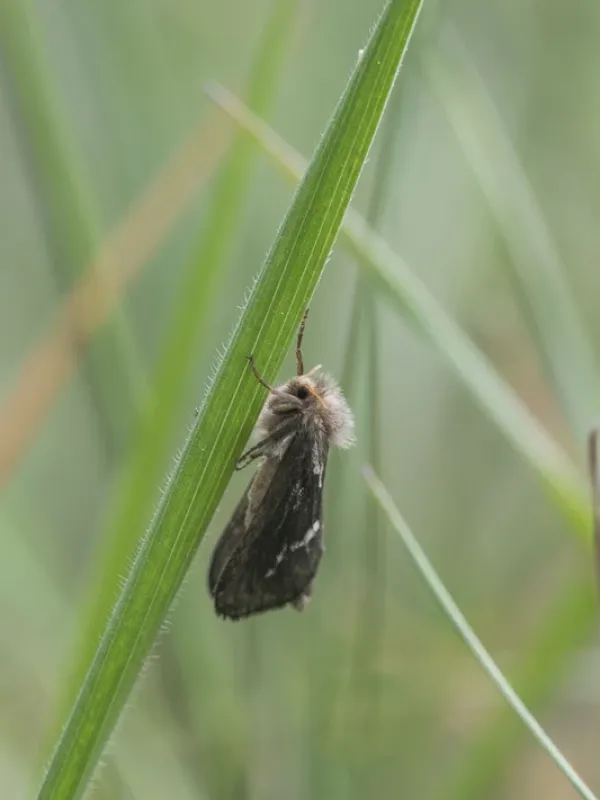
Adult moths have a wingspan of 30–40 mm. Their coloration is typically a blend of yellowish-brown to tan, featuring white markings on the forewings. Adults are nocturnal, active mostly during dusk and early night hours, and are known for their distinct, fluttering flight patterns.
The larvae, which are the main damaging stage, grow up to 35–40 mm long. They have a yellowish-white, cylindrical body and a prominent brown head. Their body surface is relatively smooth, covered only with sparse, fine hairs, adapted for moving through soil layers.
The life cycle is typically univoltine, meaning one generation per year. Larvae overwinter in the soil at various depths. During this period, they remain in a state of diapause or slow feeding, ready to resume active consumption of roots once temperatures rise in the spring.
Females are prolific egg-layers. Eggs are scattered indiscriminately over the soil surface or base of host plants. The eggs hatch into larvae that immediately seek shelter in the soil, beginning their cycle of root destruction almost as soon as they emerge.
What it damages
This pest is highly polyphagous, meaning it feeds on a wide range of plants. Key crops susceptible to damage include hops, wheat, potatoes, carrots, and many types of ornamental grasses and perennial crops found in both fields and gardens.
Larvae feed by gnawing on the roots and the base of the stems. This feeding behavior disrupts the plant's ability to transport water and nutrients. Consequently, young seedlings or plants with shallow roots often die shortly after the infestation begins.
For established crops like hops, the damage is chronic and cumulative. Larvae create tunnels within the rootstock, which not only stunts the growth of the plant but also provides entry points for soil-borne fungal and bacterial pathogens.
Heavily infested fields may show significant yield losses. The impact is often erratic, with patches of withered, dying plants appearing across the field, reflecting the patchy distribution of the larvae in the soil.
Under favorable conditions, particularly in damp, organic-rich soils, the ghost moth population can expand rapidly. In such cases, the ghost moth becomes a primary pest that requires immediate intervention to save the integrity of the crop rotation.
When it appears
Adults typically emerge in late spring to early summer, generally between May and June. During this time, they engage in mating and laying eggs, which signals the beginning of the next generation's growth cycle in the soil.
The most damaging period for crops occurs in the spring, when overwintered larvae become highly active and ravenous. Their hunger is particularly problematic during the germination and establishment phases of many spring-planted crops.
Larval development continues through late summer. By mid-summer, the larvae construct robust, silken-lined chambers in the soil to undergo pupation. The pupal stage lasts a few weeks before the next generation of adults emerges.
Environmental factors, especially soil moisture, dictate the success of the larval stage. Prolonged rainy weather during the spring can boost survival rates, potentially leading to higher pest pressure throughout the summer months.
Agrotechnical monitoring should ideally begin in early spring, specifically targeting areas with high soil moisture where the larvae are most likely to congregate and attack young root systems.
Signs of infestation
A sudden wilting of otherwise healthy-looking plants is the most common sign of infestation. Because the root system is damaged or severed, the plant loses its hydraulic connection to the soil and quickly succumbs to water stress.
Inspection of the soil around the base of the wilted plant will often reveal the presence of silken tunnels. These tunnels are constructed by the larvae for movement and protection within the soil profile.
In hops and similar perennial crops, stunted growth, yellowing foliage, and a general lack of vigor are indicators of root-feeding insects. Digging into the root zone will typically expose the larvae or their fresh feeding galleries.
The appearance of patchy, bare, or dead spots in a field of uniform growth is a visual indicator that soil-dwelling pests are present. These patches often expand over time as the larvae grow larger and increase their food intake.
Monitoring for adult moths near the fields in the evening can provide a warning that egg-laying is occurring, prompting farmers to take preventative measures before the next season's larval population becomes established.
Control measures
Deep plowing in the autumn is the most effective cultural control method. This practice exposes the larvae and pupae to surface predators such as birds and to extreme weather conditions, significantly reducing the population density.
Maintaining a rigorous weed control program is essential. Weeds can serve as an alternative food source for the larvae, allowing the population to persist in a field even when the primary cash crop is absent.
Chemical control usually involves the application of soil-applied insecticides. These treatments are most effective when applied at the time of planting or at the very first sign of damage, ensuring the active ingredients reach the root zone.
Crop rotation remains a fundamental strategy for breaking the pest's life cycle. Avoiding the cultivation of highly susceptible crops in the same field for several consecutive years helps prevent the buildup of the ghost moth population.
Biological control, such as the use of entomopathogenic nematodes or specialized fungi, can be highly effective in moisture-retaining soils. These agents infiltrate the larval tunnels and cause mortality without the negative environmental impact of traditional chemicals.
Taxonomy
- Latin name
- Korscheltellus lupulina
- Order
- Lepidoptera (butterflies)
- Family
- Hepialidae
- EPPO code
- HEPILU
Discussion
No discussions yet — be the first.