
Korscheltellus gracilis
Korscheltellus gracilis
Description
How to identify
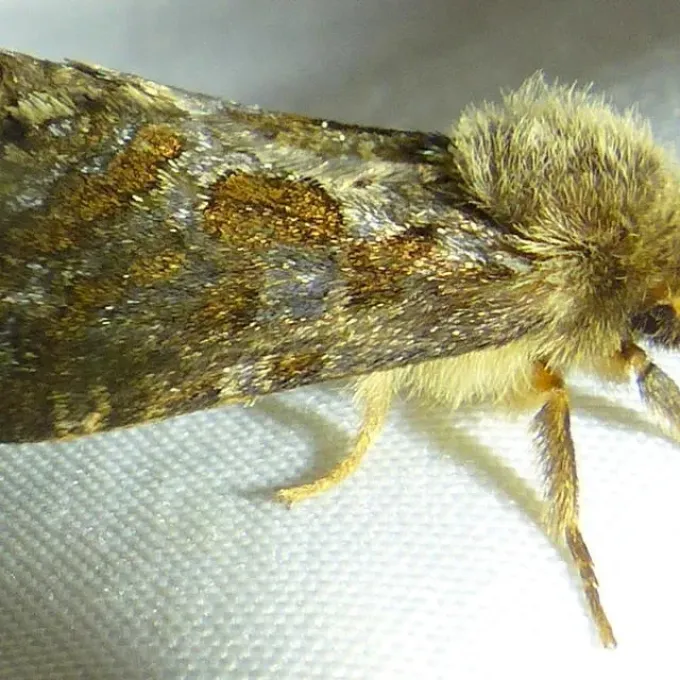
Korscheltellus gracilis, commonly known as a type of ghost moth, belongs to the Hepialidae family. Adult moths are characterized by their nocturnal behavior and highly effective camouflage, which makes them nearly invisible when resting on tree bark.
The adults have a wingspan typical of the genus and possess intricate patterns on their wings, blending shades of brown, grey, and gold. This coloration is a key evolutionary adaptation to avoid detection by avian predators.
The larvae are the primary stage of concern for forestry and horticulture. They possess strong mandibles capable of feeding on tough plant tissues and spend most of their life cycle beneath the soil surface or within the root zone.
Biological development of this species is complex and usually extends over several years. This prolonged life cycle makes the detection of infestations and the timing of control measures significantly more challenging for agronomists.
Recognizing the moth is often limited to light-trapping during the mating season, while the larval stage remains the most damaging aspect that requires close monitoring and intervention.
##damage##The species primarily affects conifer trees, with a strong preference for spruce (Picea). Larvae feed on the roots and the root collar, often girdling the tree and causing significant physiological stress.
Young seedlings in nurseries are at the highest risk. The destruction of their root systems disrupts nutrient and water uptake, leading to rapid decline and, in many cases, the total death of the planting material.
In mature stands, the damage caused by larvae may not lead to immediate tree mortality, but it weakens the trees considerably. This makes the affected trees susceptible to secondary attacks by wood-boring beetles and pathogens.
The feeding activity creates wounds that serve as entry points for soil-borne fungal pathogens, particularly those responsible for root rots, exacerbating the overall damage to the forest health.
The cumulative effect of larval feeding is a significant reduction in growth rates, which represents a substantial economic loss for timber production and reforestation programs.
##signs##The most reliable sign of an infestation is the gradual decline of tree vitality. Affected trees often exhibit yellowing or chlorosis of the needles, starting from the lower branches and progressing upwards.
If an infestation is suspected, inspection of the soil around the base of the tree often reveals frass (larval excrement) and damaged root bark, which are distinct indicators of root-feeding larvae.
Trees severely impacted by root damage may show poor stability. They can be easily tilted or pushed over compared to healthy trees, as their anchor roots have been compromised by the feeding activity.
In nursery settings, patches of stunted or dying seedlings are a telltale sign. Systematic scouting of these patches usually reveals the presence of larvae in the root zones of the dying plants.
Observing the flight activity of adult moths during the summer months near susceptible host stands can serve as an early warning for potential larval pressure in the subsequent seasons.
##control##Management of Korscheltellus gracilis relies heavily on integrated pest management practices. The focus is on preventing infestations through proper nursery hygiene and soil management.
Biological control agents, such as entomopathogenic nematodes (e.g., Steinernema or Heterorhabditis spp.), can be applied to the soil to target and parasitize the larvae effectively without chemical residue.
Mechanical removal of heavily infested seedlings, along with the surrounding soil, is essential to reduce the population density of the pest and prevent its spread to neighboring trees.
Maintaining optimal soil moisture and promoting vigorous growth through balanced fertilization can help trees recover from light feeding damage and enhance their resistance to secondary infections.
- Application of entomopathogenic nematodes in the root zone.
- Sanitary removal and disposal of infested seedlings.
- Use of light traps to monitor adult population levels.
Taxonomy
- Latin name
- Korscheltellus gracilis
- Order
- Lepidoptera (butterflies)
- Family
- Hepialidae
- EPPO code
- KRSCGR
Discussion
No discussions yet — be the first.