

Pest · Diptera (flies) · affects European plum, Field pea, Apple
Especially harmful
Brassica pod midge
Dasineura napi
Description
How to identify
The Brassica pod midge (Dasineura napi) is a small dipteran insect belonging to the Cecidomyiidae family. The adult midge is extremely small, typically measuring 1.5 to 2 mm in length, with delicate legs and transparent wings.
The larvae are bright white or yellowish, legless maggots that reside within the seed pods. Their life cycle is tightly synchronized with the flowering stages of Brassicaceae crops.
The midge typically completes one or two generations per year, with pupation occurring in the soil. Adults emerge in spring when temperatures are favorable, usually coinciding with the onset of flowering in oilseed rape.
Females are incapable of piercing healthy pod walls themselves. They rely on existing entry points, often caused by seed weevils (Ceutorhynchus obstrictus), to deposit their eggs inside the pods.
After hatching, the larvae feed gregariously inside the pod, which provides them with a sheltered environment until they drop to the ground to pupate.
What it damages
The primary hosts of this pest include oilseed rape (canola), mustard, turnip, and other cruciferous vegetables grown for seed. Damage is caused exclusively by the larval stage.
Larvae feed on developing seeds and the inner wall of the pod. This feeding results in pod abortion, seed destruction, and premature ripening of the fruit.
The most severe consequence of midge infestation is the splitting of pods before harvest, which causes massive shedding of seeds onto the ground, leading to significant yield reduction.
In addition to direct seed loss, the feeding punctures provide entry for secondary pathogens, including various fungal diseases like alternaria leaf spot, further deteriorating crop quality.
Economic damage thresholds vary, but even low populations can lead to substantial losses if the infestation occurs during early pod formation stages.
Signs of infestation
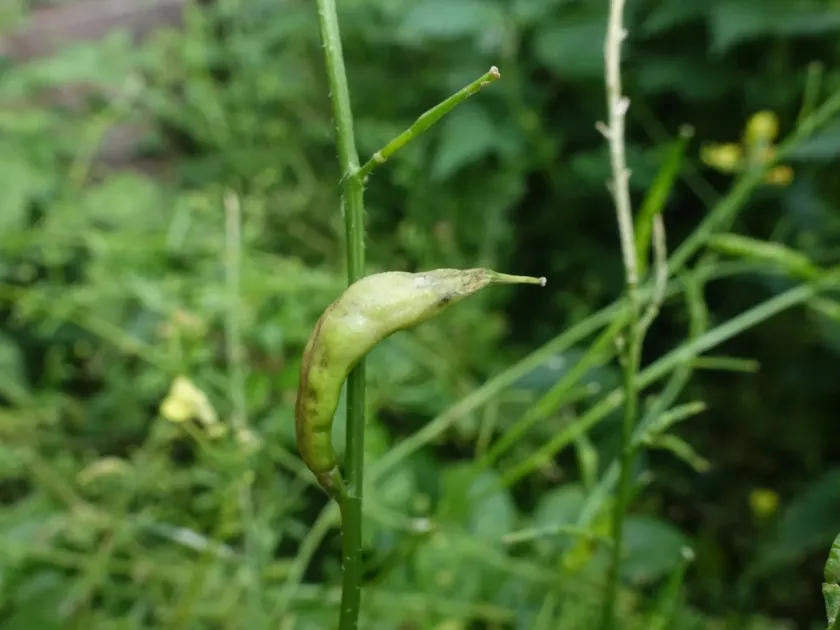
Visual symptoms of an infestation include the premature yellowing or purple discoloration of pods, which often appear swollen and distorted compared to healthy ones.
Upon opening a suspect pod, one can observe multiple small, white, active larvae clustered around the damaged seeds.
Farmers often notice scattered patches of early-maturing plants across the field, where pods appear to have burst or shattered prematurely.
The presence of adults can be detected by examining the inflorescences of the crop during warm, calm evenings, or by using yellow sticky traps.
A high density of shed seeds on the soil surface after passing through the field with equipment is a clear sign that pod midge damage has occurred.
Control measures
Integrated Pest Management (IPM) for the Brassica pod midge emphasizes cultural practices, such as maintaining large distances between new rape fields and previous years' crop sites.
Deep autumn plowing is a recommended agricultural practice to bury pupae present in the soil, effectively reducing the emergence rate of the next generation.
Chemical control must be applied strategically. Because midge activity coincides with flowering, growers must choose insecticides that are least harmful to pollinators.
Controlling the seed weevil is a crucial indirect measure, as eliminating the weevils removes the entry points required by the midge for oviposition.
- Strict field isolation to prevent midge migration.
- Deep tillage to disrupt pupal development.
- Use of bee-safe insecticide applications.
- Frequent field monitoring during flowering.
Content graph
Connections · Brassica pod midge
Most often together:
Marketplace
Products · 1
Biology
Taxonomy
- Latin name
- Dasineura napi
- Order
- Diptera (flies)
- Family
- Cecidomyiidae
- EPPO code
- DASYBR
Community
Discussion
No discussions yet — be the first.