
Japanagromyza
Japanagromyza
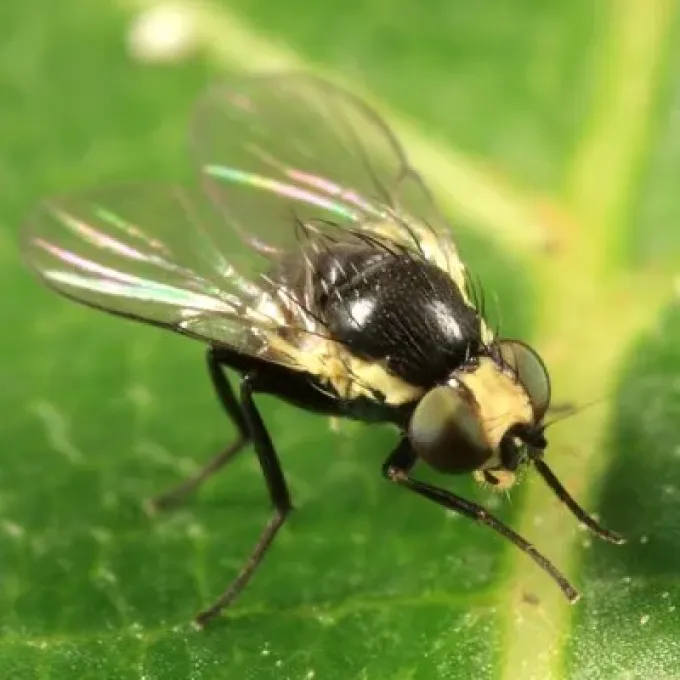
Description
How to identify
Japanagromyza is a genus of insects within the Agromyzidae family, commonly known as leaf-mining flies. These small flies are significant pests in both agricultural and horticultural settings across various climatic zones.
Adults are tiny, often dark-colored insects that are highly mobile. They play a key role in the life cycle by selecting suitable host plants to lay eggs, which directly impacts the severity of subsequent infestations.
The larval stage is the primary cause of damage. Upon hatching, the larvae immediately burrow into the leaf tissue, where they spend their entire developmental period protected from external environmental factors.
The life cycle encompasses four main stages: egg, larva, pupa, and adult. Depending on the species, pupation may occur either within the leaf mine or by the larvae dropping into the soil, where they survive until emergence.
Morphological identification of the genus often relies on detailed examination of the wing venation and male genitalia, as many species within the Agromyzidae family exhibit similar external appearances.
What it damages
Japanagromyza species infest a wide range of plants, including legumes and various ornamental shrubs. The primary damage is caused by larvae feeding on the mesophyll tissue inside the leaves.
This feeding activity creates characteristic serpentine or blotch-shaped mines. These mines disrupt the plant's photosynthetic capacity, leading to reduced energy production and stunted overall growth.
In cases of heavy infestation, the cumulative loss of green leaf area can cause premature senescence and leaf drop. This significantly weakens the plant, making it less resilient to environmental stress and other diseases.
Beyond physical damage, the presence of mines creates openings in the epidermis. These wounds serve as entry points for various bacterial and fungal pathogens, potentially leading to systemic plant infections.
For high-value ornamental crops, the aesthetic damage caused by the visible mines and deformed leaves often renders the plants unsalable, causing significant economic loss to growers.
Signs of infestation
The most recognizable symptom is the presence of winding, whitish, or brownish trails on the leaf surface. These trails, known as mines, often grow in length and complexity as the larva feeds.
Close inspection of a mine often reveals small, dark, granular deposits, which are the frass (excrement) left behind by the larva. This is a definitive sign that a mining insect is responsible for the damage.
Affected leaves may show signs of yellowing, shriveling, or brittleness. In severe infestations, the structural integrity of the leaf is compromised, leading to significant curling and necrosis of the leaf blades.
Adult feeding spots are another indicator. Females use their ovipositors to make small punctures in the leaf surface to feed on plant sap, resulting in a stippled appearance on the foliage.
Plants under high stress may show a rapid decline in vigor. Monitoring the underside of the leaves is crucial, as the larvae or pupae are sometimes visible through the transparent epidermal layer of the leaf.
Control measures
Effective management requires an integrated approach. Biological control is highly successful, as several species of parasitic wasps naturally target and prey upon leaf miner larvae, regulating their populations.
Cultural practices remain essential. This includes the timely removal and destruction of infested foliage to break the pest's life cycle. Maintaining a clean field free of reservoir weed species is also critical.
Chemical control should be implemented only when necessary. Systemic insecticides are generally the most effective, as they are absorbed by the plant tissue, effectively targeting the larvae hiding within the leaves.
Yellow sticky traps are an essential tool for monitoring the adult fly population. Placing these traps early in the season helps detect the start of the pest's activity, allowing for timely preventative actions.
- Regular monitoring of crop foliage for early signs of mines.
- Use of selective pesticides to preserve beneficial insect populations.
- Rotation of crops to reduce the buildup of overwintering populations.
- Ensuring proper plant spacing to improve airflow and reduce humidity levels.
Taxonomy
- Latin name
- Japanagromyza
- Order
- Diptera (flies)
- Family
- Agromyzidae
- EPPO code
- JAPASP
Discussion
No discussions yet — be the first.