
Fern aphid
Idiopterus nephrolepidis
Description
How to identify
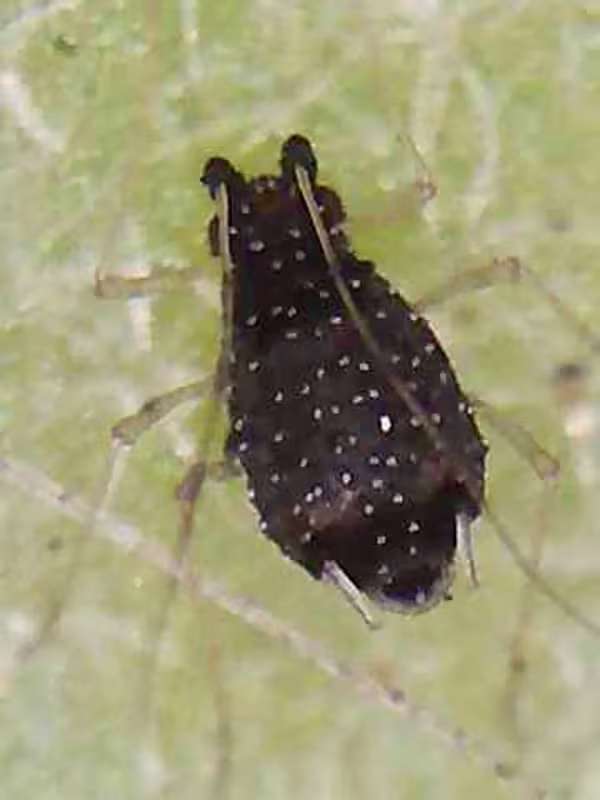
The fern aphid, Idiopterus nephrolepidis, is a minute insect species, typically measuring between 1 to 2 millimeters in body length.
Adult specimens are easily recognized by their dark green to black body color, which contrasts sharply against the bright green fronds of host plants.
A distinctive morphological trait is the presence of transparent wings with conspicuously darkened veins that are visible to the naked eye.
Nymphs are lighter in color, often presenting a yellowish-green shade, and undergo several instar stages before reaching maturity.
These aphids tend to aggregate in groups on the underside of leaves, particularly along the midrib where the sap flow is most concentrated.
What it damages
This pest is highly specialized and primarily attacks various species of ferns, including Nephrolepis, Adiantum, and Asplenium.
By feeding on the plant's vascular sap, they cause significant physiological stress, stunting the growth of tender new fronds.
Affected fronds often exhibit severe distortion, chlorosis, and curling, which compromises the aesthetic value of the ornamental plant.
The secretion of honeydew promotes the growth of sooty mold, a fungus that covers the leaves and hinders the essential process of photosynthesis.
In cases of severe infestation, the plant may lose vigor, experience leaf drop, and eventually succumb if protective measures are not implemented.
When it appears
In indoor environments such as homes, greenhouses, and conservatories, this species can maintain year-round populations due to stable climate conditions.
Rapid population growth is typically observed during periods of high humidity and moderate temperatures, which are optimal for their reproductive cycle.
As reproduction is largely parthenogenetic, a single aphid can colonize an entire host plant very quickly, leading to rapid spread within a collection.
Winged forms facilitate migration between neighboring plants, making it essential to monitor the entire collection when an outbreak is detected.
While their activity decreases in cooler conditions, the colonies can persist at temperatures as low as 15-18 degrees Celsius, allowing them to overwinter indoors.
Signs of infestation
The initial indication of an infestation is often the curling or twisting of developing fronds, which may look stunted or yellowed.
Visible colonies on the underside of leaves and the presence of white, discarded exoskeletons from molting are primary indicators of their presence.
A sticky residue on the upper leaf surface indicates the accumulation of honeydew, which is a sure sign of a sap-sucking pest infestation.
The appearance of a black, velvet-like fungal layer on the leaves confirms the presence of sooty mold, indicating that the aphid colony is well-established.
General loss of plant turgidity and the gradual drying of leaf margins despite regular watering indicate systemic stress caused by the pests.
Control measures
The first step in management is to immediately quarantine the infested plant to prevent the spread of aphids to healthy specimens nearby.
Mechanical control, such as rinsing the fronds with a gentle stream of lukewarm water, can help reduce the initial population density significantly.
For more established colonies, systemic insecticides containing ingredients like imidacloprid should be applied according to the label directions.
Care must be taken to ensure that the chosen insecticide is compatible with ferns, as some species may react negatively to certain chemical carriers.
- Regular inspection of the undersides of fronds
- Isolation of newly purchased plants
- Maintaining optimal humidity levels
- Pruning and destroying severely infested fronds
Taxonomy
- Latin name
- Idiopterus nephrolepidis
- Order
- Hemiptera (bugs, aphids, leafhoppers)
- Family
- Aphididae
- EPPO code
- IDIPNE
Discussion
No discussions yet — be the first.