
Fern aphid
Idiopterus
Description
How to identify
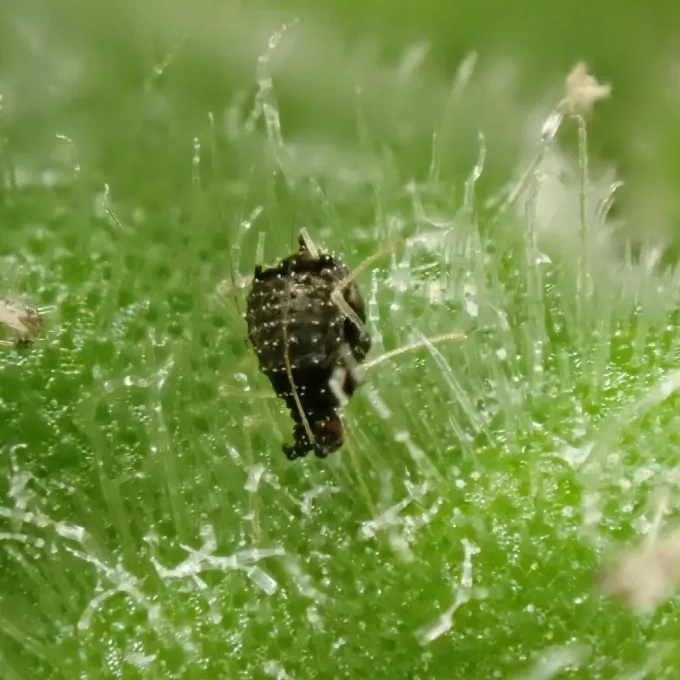
The Fern aphid, scientifically known as Idiopterus nephrelepidis, is a small insect belonging to the family Aphididae. Adults are typically about 1–1.5 mm long and possess a dark, almost black or brownish coloration.
A distinctive feature of this species is its transparent wings featuring dark spots on the veins, which distinguishes it from many other common aphid species. Their long antennae allow them to navigate effectively across the fronds.
These aphids thrive in indoor environments such as greenhouses and homes, where they can reproduce year-round. Their lifecycle is rapid, primarily driven by parthenogenesis, where females produce live young without mating.
Optimal development conditions include moderate temperatures and high humidity, which are precisely the conditions usually maintained for most indoor ferns.
They tend to cluster in dense colonies on the undersides of leaves, often near the midribs, making them difficult to spot during the early stages of an infestation.
What it damages
The primary hosts for this aphid are various fern species, including popular indoor varieties like Nephrolepis (Boston fern), Adiantum (Maidenhair fern), and Pteris.
By piercing the soft tissues of young fronds and feeding on the sap, these insects rapidly deplete the plant's essential nutrients, leading to stunted growth.
Beyond direct physical damage, the Fern aphid is a known vector for various plant viruses, which can cause long-term deformation and systemic health issues in the fern.
The honeydew excreted by the aphids acts as a substrate for sooty mold, a black fungal growth that blocks sunlight and severely impairs the plant's ability to photosynthesize.
If left unmanaged, heavy infestations cause fronds to yellow, curl, and eventually drop off, which can lead to the death of the entire plant.
Signs of infestation
One of the earliest signs is the appearance of tiny black insects clustered along the veins on the underside of the fern fronds.
Sticky residue or shiny droplets on the leaves or the surface beneath the plant indicate the presence of honeydew secreted by the aphid colony.
Deformation of young, unfurling fronds is a clear symptom of sap-sucking activity that disrupts normal tissue development.
The development of a black, velvety sooty mold on the foliage is a secondary symptom caused by the sugar-rich waste left behind by the aphids.
You may also observe small, white, papery husks on the leaves, which are the cast skins left behind by the aphids as they go through their growth molts.
Control measures
The first step in control is to isolate the infected plant immediately to prevent the pests from spreading to other plants in your collection.
Mechanical removal through a gentle but thorough wash with lukewarm water can significantly reduce the population, especially if the infestation is caught early.
For more severe cases, apply systemic insecticides that contain active ingredients such as imidacloprid or acetamiprid to effectively target the hidden insects.
Maintaining proper plant hygiene by regularly dusting leaves and removing any dead or yellowing foliage helps in early detection and prevents potential outbreaks.
Always inspect new plant additions closely before introducing them to your existing collection to ensure no pests are brought into your environment.
Taxonomy
- Latin name
- Idiopterus
- Order
- Hemiptera (bugs, aphids, leafhoppers)
- Family
- Aphididae
- EPPO code
- IDIPSP
Discussion
No discussions yet — be the first.