
Yellow-breasted Chat
Icteria virens
Description
How to identify
The Yellow-breasted Chat (Icteria virens) is a unique bird species, formerly classified within the wood-warbler family (Parulidae).
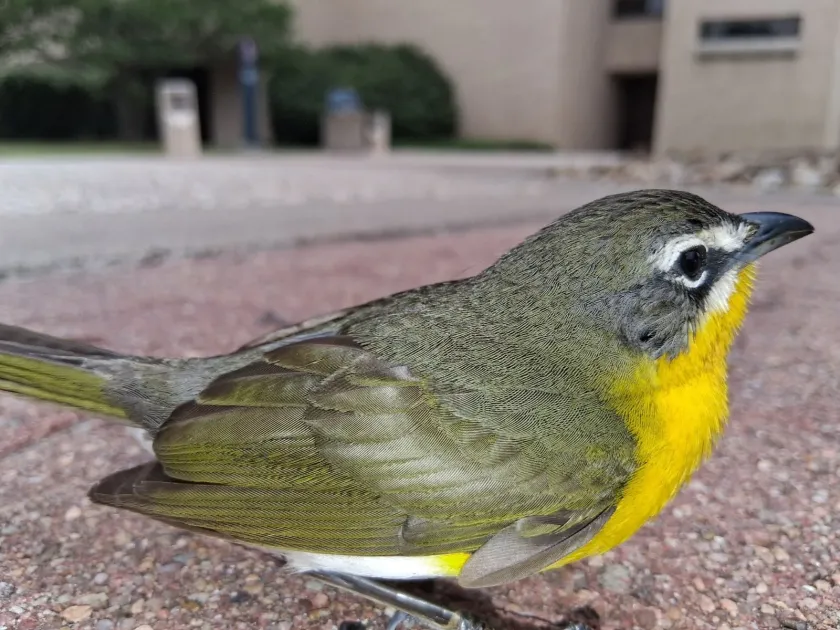
It is easily recognized by its olive-green back, bright yellow breast, and white belly, making it one of the most colorful birds in North American thickets.
Adults possess a heavy, black bill and distinctive white spectacles (rings around the eyes) that distinguish them from other small passerines.
Despite being a member of the warbler group, it is much larger and exhibits secretive behavior, preferring to hide in dense shrubbery.
Their vocalizations are highly complex, consisting of various whistles, cackles, and clucks, which are often the primary way to detect their presence.
What it damages
While primarily insectivorous, the Yellow-breasted Chat can cause minor damage to berry crops, specifically blackberries and raspberries during the harvest season.
The birds peck at ripened fruit, which compromises the quality of the produce and can lead to secondary fungal infections in the berries.
Damage is typically localized and rarely reaches the level of significant economic loss compared to more aggressive bird pests.
In early spring, they may occasionally damage tender buds on bushes when other natural food sources are not yet fully available.
They contribute to the dissemination of seeds from both weeds and beneficial shrubs, which can have mixed impacts on orchard management.
When it appears
The presence of these birds on agricultural land is strictly tied to their breeding season, which occurs from May through August.
The peak period of interaction with orchard crops is during June and July, when chicks are being fed and summer berries are ripening.
By late August, the birds conclude their breeding activities and prepare for migration to their wintering grounds in the tropics.
Spring activity is focused on territorial establishment and insect hunting, with minimal interest in fruit until later in the season.
During the autumn migration, they are typically found in scrub habitats far from commercial gardens and farms.
Signs of infestation
Visible signs of their feeding include punctured or partially eaten berries found on the stems of shrubs.
The presence of fecal droppings on foliage and below nesting or feeding shrubs is a common indicator of their frequent visits.
The distinct, loud, and varied songs originating from dense vegetation help confirm the presence of the species in the area.
Discarded berry skins and debris beneath the bushes are tell-tale signs that the birds have been consuming the fruit crop.
Damaged apical buds in the early season can also be an indicator of their presence during times of food scarcity.
Control measures
Physical exclusion, such as the use of netting over berry bushes, remains the most effective method to prevent bird damage.
Reflective devices and visual deterrents, such as predator decoys or shiny tape, are useful for protecting smaller gardens.
In larger operations, bio-acoustic devices that play distress calls can effectively keep the birds away from ripening fruit.
Maintaining a timely harvest schedule ensures that overripe fruit, which is most attractive to birds, is not left on the plants.
Planting native fruiting shrubs at the edge of the property can serve as a buffer, drawing the birds away from the primary commercial crops.
Taxonomy
- Latin name
- Icteria virens
- Family
- Parulidae
- EPPO code
- ICTIVI
Discussion
No discussions yet — be the first.