
Yellow-rumped warbler
Dendroica coronata
Description
How to identify
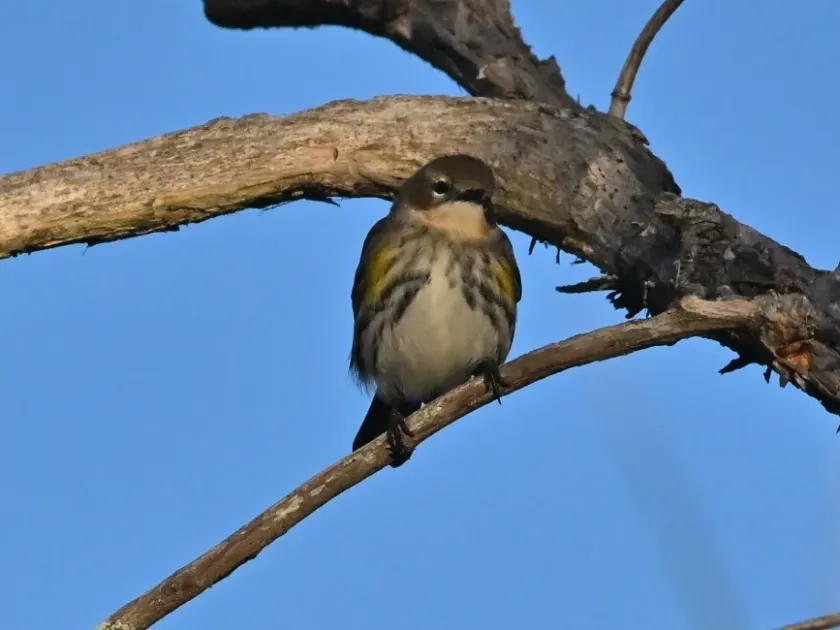
The yellow-rumped warbler (Setophaga coronata, formerly Dendroica coronata) is a member of the wood-warbler family (Parulidae). Known as a songbird, it poses specific challenges for berry growers during its migration seasons.
This bird is distinguished by its small size and iconic yellow patches on the rump, sides, and crown, which are most visible during the breeding season and provide a reliable identification feature.
Its biology is unique among warblers because of its ability to digest the waxes found in bayberries and other fruits, allowing it to survive in environments where others cannot.
Yellow-rumped warblers are highly social during migration and often travel in large flocks, which significantly increases the risk of localized damage in orchards.
They are migratory birds with a broad range across North America, and their movement patterns are closely tracked by agricultural specialists in berry-producing regions.
What it damages
These birds primarily damage high-value berry crops such as blueberries, raspberries, currants, and various ornamental plants with small fruits that serve as their primary diet.
Feeding behavior involves pecking at mature berries, which creates entry points for fungal infections and renders the fruit unfit for fresh market consumption.
Besides berries, they may cause mechanical damage to young buds and shoots while foraging for insects, which can lead to stunted growth and reduced future yields.
The accumulation of bird excrement on foliage and fruit poses sanitation risks, potentially violating food safety standards required for commercial berry distribution.
Significant infestations can lead to a drastic reduction in total yield, sometimes resulting in losses of up to 40% if the flock remains undisturbed for several days.
When it appears
The period of highest risk occurs during the spring and fall migration windows when the birds travel in large, hungry groups between nesting and wintering grounds.
Spring damage is often associated with the consumption of developing buds, which can negatively impact the plant's ability to produce flowers and fruit later in the season.
Fall migration is particularly critical for late-ripening berry varieties, as the birds concentrate their foraging efforts to build fat reserves for long-distance flights.
In most regions, farmers need to be vigilant for a period of three to six weeks depending on local weather conditions that might delay or accelerate bird migration.
During the summer breeding season, these birds focus on insect consumption to provide protein for their nestlings, making them less of a threat to berry production.
Signs of infestation
One of the most obvious signs of a yellow-rumped warbler infestation is the presence of partially eaten berries left on the branches or scattered on the ground.
Bird droppings containing visible seeds or undigested fruit skins found near the base of the bushes are definitive evidence of their activity.
Observing groups of small birds with yellow rump patches in the field during the early morning hours provides visual confirmation of their presence.
Small, irregular marks or scratches on the stems of young plants are indicative of the birds searching for bark-dwelling insects.
- Small, pecked-out holes in the berries.
- Droppings containing fruit seeds.
- Sudden disappearance of significant portions of the crop.
- High activity of small, yellow-marked birds in the orchard canopy.
Control measures
Physical exclusion through the use of bird netting over berry rows is the most effective and reliable method to prevent crop loss during migration peaks.
Acoustic deterrents that broadcast distress calls or sounds of avian predators can be used to disrupt the flock's behavior, though they should be moved periodically.
Visual deterrents, including holographic tape and predator decoys, can provide short-term relief, especially when installed in combination with other methods.
Proactive harvesting, where berries are picked as soon as they reach full maturity, reduces the exposure window for bird attacks.
Integrated pest management strategies should include monitoring migration timing to ensure that protective measures are in place exactly when the threat level increases.
Taxonomy
- Latin name
- Dendroica coronata
- Family
- Parulidae
- EPPO code
- DNDCCO
Discussion
No discussions yet — be the first.