
Currant-grass aphid
Hyperomyzus rubicumberlandi
Description
How to identify
The currant-grass aphid (Hyperomyzus rubicumberlandi) is a small sap-sucking insect of the family Aphididae. It is a highly specialized species that requires specific hosts to complete its complex biological cycle.
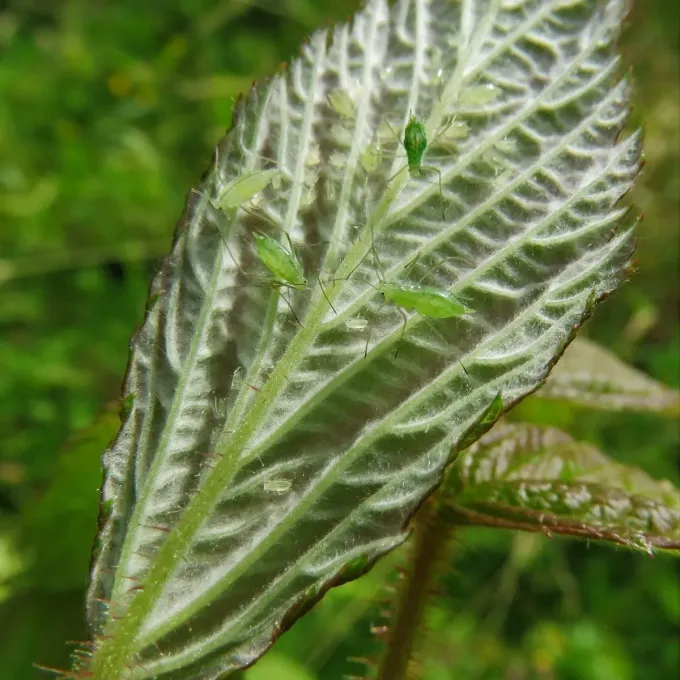
Adult aphids are typically pale green or yellowish, allowing them to blend into the foliage. They possess long, thin siphunculi and are capable of rapid reproduction through parthenogenesis during the summer months.
The winged forms, known as alates, are responsible for long-distance dispersal and migration between their primary hosts, the Ribes genus, and secondary grass hosts.
Identifying this aphid in the field requires close inspection of the leaf undersides, particularly on new growth. Their small size and specific coloring often make them blend into the plant's veins.
Morphological examination under magnification is often necessary to distinguish this species from other common aphid pests that may occupy the same host plants.
What it damages
Aphids cause severe damage by piercing plant tissues with their stylets and removing nutrient-rich phloem sap. This leads to reduced plant vigor, stunted growth, and distorted development of shoots.
The feeding process triggers physiological changes in the leaves, resulting in severe curling, yellowing, and eventual chlorosis of the affected plant parts.
Furthermore, this aphid serves as a vector for various plant viruses, which can cause systemic infections that are often more devastating to the plant's health than the feeding damage itself.
The secretion of honeydew promotes the growth of sooty mold, a dark fungal layer that covers the leaves and hinders the photosynthetic process by blocking sunlight.
Economic losses are cumulative, as repeated seasonal infestations reduce the plant's ability to store carbohydrates, directly impacting yield volume and berry quality.
When it appears
The life cycle begins in early spring, when nymphs hatch from overwintered eggs deposited on the bark of currant bushes. These "founder" individuals quickly colonize emerging buds.
As the season progresses and temperatures increase, winged forms emerge and migrate to secondary grass hosts, where they continue their life cycle through several generations.
In the autumn, a reverse migration occurs. Winged aphids return to the primary currant hosts to produce sexual morphs that mate and lay eggs, which serve as the winter survival stage.
Optimal population growth occurs during mild, humid springs. High temperatures and dry conditions can slow down reproduction or force earlier migration to alternative hosts.
Effective scouting during the spring period is essential, as managing the early colonies is much easier than controlling the widespread infestations that occur later.
Signs of infestation
The most prominent sign of an infestation is the curling and distortion of young leaves at the shoot tips. These leaves often turn yellow or develop a mottled appearance.
The presence of sticky honeydew on the foliage and stems is a strong indicator of aphid activity. This substance is highly attractive to ants, which often tend the aphid colonies.
Sooty mold growth, appearing as black patches on the leaf surfaces, is a secondary sign that usually indicates the aphid colony has been established for some time.
Early-season stunting and the failure of new shoots to develop properly are classic symptoms of heavy localized aphid pressure on young plants.
- Curled and discolored shoot tips.
- Sticky honeydew residues.
- Presence of ants on stems.
- Sooty mold on leaf surfaces.
- Reduced plant growth rates.
Control measures
Cultural control practices, such as removing infested shoots and controlling weeds around the base of the bushes, can significantly reduce the initial population size.
Biological control plays a key role, as maintaining populations of natural predators like lady beetles, lacewings, and syrphid flies provides long-term suppression of the pest.
Chemical control should involve the use of systemic insecticides, applied early enough to prevent the leaves from curling, as leaf deformation protects aphids from contact-based sprays.
It is crucial to follow integrated pest management principles by rotating insecticide chemical classes to prevent the development of pesticide resistance in aphid populations.
Always ensure that treatment applications are timed correctly according to the pest's developmental stage and the specific local environmental conditions for optimal efficacy.
Taxonomy
- Latin name
- Hyperomyzus rubicumberlandi
- Order
- Hemiptera (bugs, aphids, leafhoppers)
- Family
- Aphididae
- EPPO code
- HYPERU
Discussion
No discussions yet — be the first.