
Rhinanthus aphid
Hyperomyzus rhinanthi
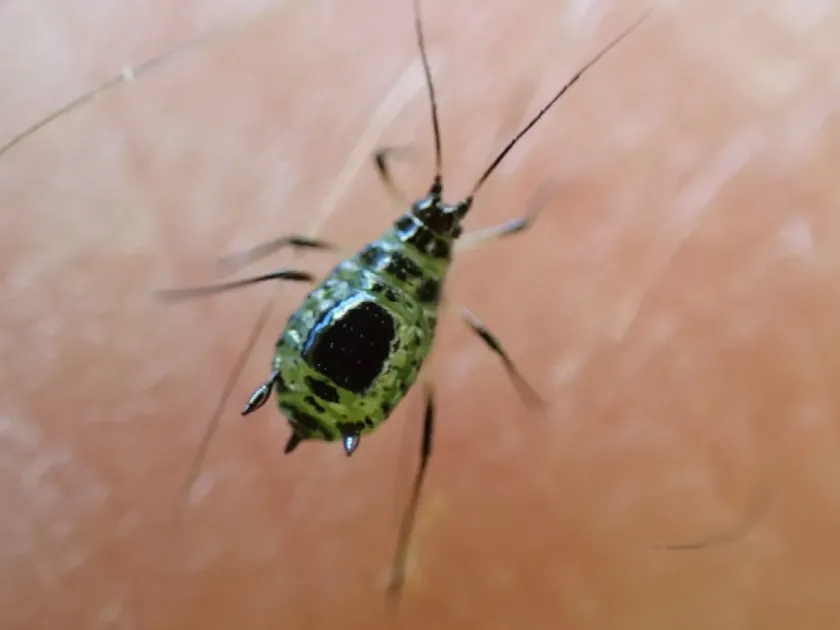
Description
How to identify
The Rhinanthus aphid, scientifically known as Hyperomyzus rhinanthi, belongs to the family Aphididae, which includes many significant agricultural pests. These small insects are highly specialized and typically found in association with plants of the Rhinanthus genus.
Adult aphids exhibit a morphology typical of their family, featuring a soft, pear-shaped body, long legs, and a specialized proboscis for piercing plant tissues and extracting sap. Their coloration is usually a shade of green or yellow, aiding in their concealment against leaves.
The life cycle involves complex generations, often alternating between primary host plants and secondary hosts. Parthenogenesis is the primary mode of reproduction during spring and summer, allowing for rapid exponential growth of colonies.
They possess specialized structures called cornicles, through which they release defensive secretions. These structures are diagnostic characteristics used by entomologists to distinguish this species from other related aphids.
The overwintering phase consists of eggs deposited on the remnants or near the base of host plants. These eggs are highly resilient to cold temperatures, ensuring the survival of the species throughout the winter months.
What it damages
The primary damage is caused by the aphid's feeding habit, which involves the sustained extraction of phloem sap from the host plant. This continuous removal of nutrients significantly weakens the plant's physiological state.
Feeding typically occurs on young leaves, shoots, and developing flower buds, leading to severe leaf curling, stunted growth, and a reduction in the plant's overall vigor.
Beyond direct feeding damage, these aphids serve as significant vectors for plant viruses. The transmission of these pathogens can lead to systemic infections, causing chlorosis, necrosis, and reduced agricultural yield.
The excretion of honeydew serves as a nutrient-rich medium for the growth of sooty mold, a fungal disease that coats the leaves and interferes with photosynthesis, further compounding the damage.
In cases of severe infestation, the cumulative effect of nutrient depletion and virus transmission can lead to the death of young shoots or even the entire plant.
When it appears
Activity begins in early spring as temperatures rise, signaling the hatching of fundatrices (the first generation of aphids) from the overwintering eggs.
The population density peaks during the late spring and early summer months, which coincide with the most vulnerable growth stages of their host plants.
As host plants mature and become less nutritious, the aphid colonies may decline or migrate to different plant hosts, depending on the environmental conditions and the availability of suitable food sources.
Autumn is marked by the production of sexual individuals, which mate and lay eggs on the preferred host plants, marking the end of the active seasonal cycle.
Environmental factors such as high humidity and stable temperatures promote faster development, while excessive heat or rainfall can negatively impact colony size.
Signs of infestation
Early signs of an infestation include the appearance of curled or deformed leaves, particularly at the terminals of plant shoots where aphids cluster most densely.
The presence of a sticky, shiny substance on the foliage, known as honeydew, is a hallmark sign that an aphid colony is actively feeding on the plant.
One may notice an increased presence of ants on the plant, as they frequently tend to aphid colonies to harvest the honeydew, providing protection to the aphids in return.
In advanced stages of infection, the leaves may become covered in a black, soot-like substance, indicating the presence of secondary fungal growth.
Stunted development, yellowing of foliage, and failure of flowers to develop are clear indicators that the plant is suffering from chronic aphid feeding.
Control measures
Integrated Pest Management (IPM) is the most effective approach for controlling this aphid species, combining cultural, biological, and chemical methods.
Cultural practices, such as the removal of potential host weeds and debris from the field, are critical in reducing the initial population size and preventing the spread of the pest.
Encouraging natural predators such as ladybugs, lacewings, and hoverflies can provide a significant degree of natural control, often keeping aphid populations below economic damage thresholds.
When infestation levels exceed acceptable limits, the application of systemic or contact insecticides may be necessary to protect high-value crops from serious damage.
- Monitor fields regularly during the early growing season.
- Implement crop rotation to break the aphid life cycle.
- Use biological control agents to maintain a balanced ecosystem.
- Apply registered insecticides according to local agricultural guidelines.
Taxonomy
- Latin name
- Hyperomyzus rhinanthi
- Order
- Hemiptera (bugs, aphids, leafhoppers)
- Family
- Aphididae
- EPPO code
- HYPAER
Discussion
No discussions yet — be the first.