
Pale currant aphid
Hyperomyzus pallidus
Description
How to identify
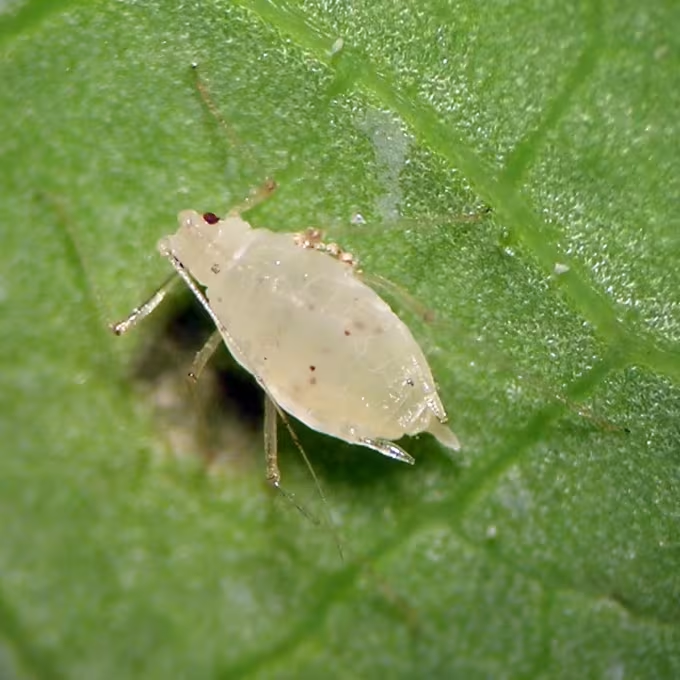
The pale currant aphid (Hyperomyzus pallidus) is a small sap-sucking insect belonging to the family Aphididae. It is characterized by its light, pale-yellowish or whitish coloration, which allows it to camouflage effectively on the undersides of leaves.
This species exhibits a complex lifecycle, typically including both apterous (wingless) and alate (winged) morphs. These winged forms facilitate the rapid spread of the infestation to neighboring plants during the growing season.
The aphid feeds by inserting its stylet into the plant tissue to extract phloem sap. Due to its rapid reproductive cycle, a small colony can quickly grow into a major infestation if left untreated.
The pest overwinter in the egg stage. These eggs are laid by oviparous females in late autumn, tucked into the crevices of young currant stems and bark to survive the winter temperatures.
As a host-specific pest, the pale currant aphid is primarily associated with Ribes species, including black, red, and white currants, as well as gooseberries.
What it damages
The primary damage is caused by both nymphs and adults feeding on the sap. They target the youngest, most succulent leaves and terminal shoots of the berry bushes.
Feeding results in the curling, twisting, and yellowing of the foliage. This distortion interferes with normal plant growth and significantly reduces the photosynthetic capacity of the bushes.
Stunted shoot growth and the loss of apical dominance are common outcomes of heavy infestations. This weakens the plant's overall architecture and vigor for subsequent seasons.
Beyond direct sap depletion, these aphids act as vectors for various plant viruses. Viral transmission can lead to chronic infections, resulting in bush decline and long-term yield reduction.
The physiological stress caused by the feeding disrupts the plant's nutrient distribution, often leading to smaller fruit size and lower sugar content in the harvested berries.
When it appears
The active season begins in early spring, coinciding with the bud break of the host plants. The eggs hatch, and the stem mothers begin feeding immediately on the newly emerged leaves.
Peak infestation levels are typically observed during late May and June. During this window, warm and humid weather conditions provide an ideal environment for rapid population expansion.
In mid-to-late summer, winged forms may move to secondary hosts, though populations on currant bushes can persist throughout the season under favorable environmental conditions.
As autumn approaches, mating occurs, and the females lay winter-hardy eggs on the branches of the currant bushes, completing the annual lifecycle.
The duration of each aphid generation is very short, allowing the population to adapt and multiply rapidly in response to seasonal climate variations.
Signs of infestation
Leaf curling and deformation are the most reliable early indicators of an infestation. These structures, often called "leaf nests," hide the colonies from sight.
The presence of honeydew is a diagnostic sign. This sticky, sugar-rich substance excreted by the aphids can cover the leaves and attract ants, which often farm the aphids.
Sooty mold growth is common on leaves contaminated with honeydew. This black fungal growth inhibits light absorption and can severely stress the plant if left unchecked.
The presence of ants patrolling the terminal shoots is a strong indicator of aphid activity, as ants protect the aphids from predators to maintain their supply of honeydew.
Visual inspection of the underside of the leaves usually reveals clusters of small, pale, pear-shaped insects congregated along the veins.
Control measures
A successful management program integrates cultural, biological, and chemical strategies to maintain aphid populations below the economic injury level.
- Pruning infested tips early in the season to physically remove the initial colonies.
- Controlling ant populations around the base of the bushes to reduce aphid protection.
- Encouraging natural predators such as ladybugs, lacewings, and hoverfly larvae in the garden.
- Applying horticultural oils or soap-based sprays for effective, low-toxicity contact control.
- Using systemic insecticides only when necessary, strictly observing harvest safety intervals.
It is crucial to time insecticide applications correctly, avoiding periods when plants are in bloom to protect essential pollinators like honeybees.
Maintaining good plant health through proper fertilization and watering increases the bush's ability to tolerate aphid feeding and reduces the secondary effects of damage.
Regular monitoring of the undersides of leaves during the spring is the most effective way to detect early infestations and prevent the need for more intensive control measures.
Taxonomy
- Latin name
- Hyperomyzus pallidus
- Order
- Hemiptera (bugs, aphids, leafhoppers)
- Family
- Aphididae
- EPPO code
- HYPEPA
Discussion
No discussions yet — be the first.