
Lapsana aphid
Hyperomyzus lampsanae
Description
How to identify
The Lapsana aphid (Hyperomyzus lampsanae) is a small insect belonging to the order Hemiptera and the family Aphididae. It is a specialized pest primarily associated with plants of the Asteraceae family.
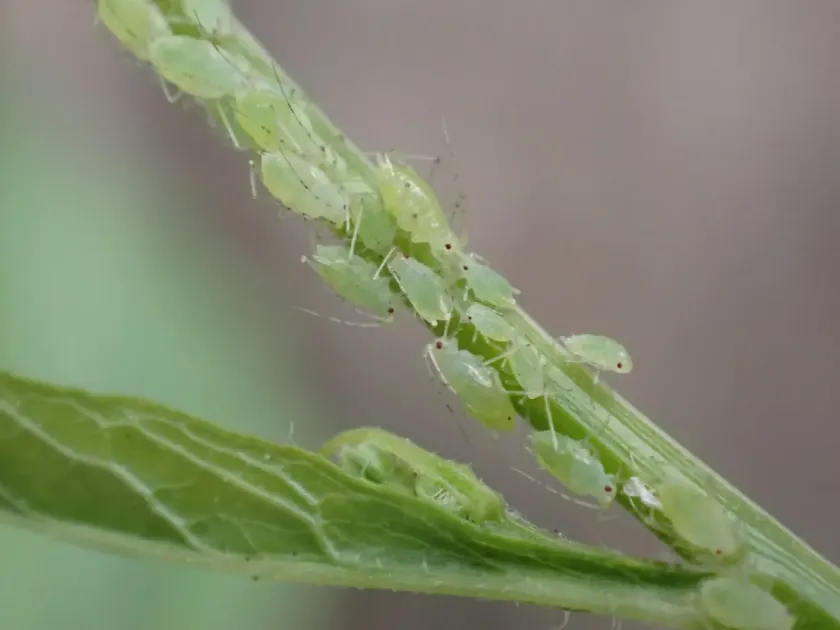
Adult aphids possess a body structure typical of the genus Hyperomyzus, characterized by elongated cornicles that are slightly swollen towards the distal end. Their coloration ranges from light green to yellowish-green, providing effective camouflage against host leaves.
The life cycle involves overwintering eggs laid on plant debris or near the base of host plants. During the growing season, the aphids reproduce parthenogenetically, allowing for rapid population growth under favorable weather conditions.
Winged forms (alatae) appear periodically to facilitate migration to new host plants, ensuring the colonization of surrounding areas and the survival of the species throughout the warmer months.
These insects generally prefer to feed on the underside of leaves and tender growing tips, where they can easily access the nutrient-rich phloem sap.
What it damages
The primary host is the nipplewort (Lapsana communis), though the aphid can also attack various related weed and cultivated plant species within the daisy family.
Damage is caused by the aphids feeding on plant sap, which saps the plant of vital nutrients, leading to reduced growth, vigor, and overall plant health. Severe infestations often result in stunted development.
Heavy feeding typically causes curling, yellowing, and deformation of leaves. In advanced cases, the development of flower buds and the setting of seeds may be significantly impaired or aborted.
The aphids secrete honeydew, a sugary substance that coats the leaf surface. This serves as a growing medium for sooty mold fungi, which create a dark, powdery appearance and block sunlight, inhibiting photosynthesis.
Furthermore, aphids serve as vectors for various plant viruses. As they move from plant to plant, they transmit pathogens that can cause widespread disease throughout a garden or crop field.
Signs of infestation
The earliest sign of infestation is the visible presence of small colonies of aphids on the undersides of leaves or along succulent new stems.
A sticky residue on the foliage, known as honeydew, is a key indicator of aphid activity. This secretion often attracts ants, which tend and protect the aphid colonies from predators.
Curled or distorted leaves are a classic symptom of aphid feeding, as the disruption to the plant's cell growth leads to uneven tissue development.
The presence of a black, soot-like fungal growth on the leaves is a secondary sign that indicates a significant aphid population has been present for an extended period.
Overall plant weakness, drooping foliage, and a general loss of plant luster are observable signs that the aphid colony is actively depleting the plant's resources.
Control measures
Cultural control methods include the removal of host weeds like nipplewort from the vicinity of crops and the diligent cleanup of plant debris at the end of the season to eliminate overwintering sites.
Proper plant spacing is essential, as it improves air circulation and reduces the micro-environmental humidity that aphids often prefer for rapid reproduction and colony expansion.
Encouraging natural predators such as lady beetles, lacewings, and hoverfly larvae is an effective biological control strategy that can keep aphid populations below damaging levels.
In cases of severe infestation, systemic insecticides may be applied to provide long-lasting protection, ensuring that the chemical reaches the aphids during their feeding process.
Regular monitoring of plants allows for early detection, enabling the use of soft-soap sprays or botanical oils to manage small colonies without the need for intensive chemical applications.
Taxonomy
- Latin name
- Hyperomyzus lampsanae
- Order
- Hemiptera (bugs, aphids, leafhoppers)
- Family
- Aphididae
- EPPO code
- HYPELM
Discussion
No discussions yet — be the first.