
Hymeniacidon perleve
Hymeniacidon perleve
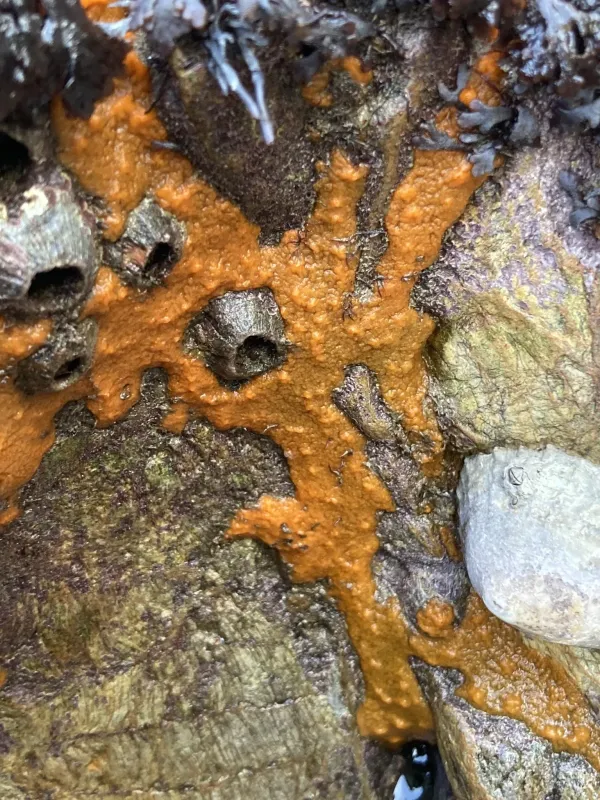
Description
How to identify
Hymeniacidon perleve is a species of marine sponge belonging to the family Hymeniacidonidae, within the order Suberitida. It typically appears as encrusting or massive growths, sometimes forming irregular finger-like lobes.
The coloration of this sponge is typically vivid, ranging from bright orange to yellow or mustard tones, making it easily distinguishable in shallow marine environments.
The texture of the sponge is soft and slightly compressible, characteristic of the genus Hymeniacidon. Its surface is covered with numerous ostia, reflecting its active filtration behavior.
Microscopic identification is crucial, focusing on the spicules. The skeletal structure consists of oxeas that are diagnostic for this specific species when identified by experts.
These organisms are widely distributed in temperate and warm coastal zones, often inhabiting the lower intertidal and subtidal regions where they compete for substrate space.
What it damages
In aquaculture, particularly in shellfish farming, Hymeniacidon perleve is considered a significant biofouling organism rather than a direct pest of terrestrial crops.
It colonizes the shells of commercially important mollusks such as oysters and mussels, which can inhibit their growth by restricting shell movement and access to food.
Dense colonies add significant weight to culture equipment, which can lead to the sagging of nets, loss of equipment, and increased operational costs for maintenance.
The presence of sponge colonies on the surface of shellfish reduces their visual quality, making the product less attractive for the high-end retail market.
Furthermore, the physical abrasion caused by the sponge's skeletal elements can result in minor damage to the mollusk shells, potentially exposing them to secondary infections.
When it appears
The growth and reproductive cycle of Hymeniacidon perleve are closely tied to seasonal changes in water temperature and nutrient availability in the ocean.
Active growth phases occur predominantly during the warmer months, when the metabolism of the sponge is at its peak, facilitating rapid expansion of existing colonies.
The release of larvae usually happens in a seasonal pattern, which necessitates regular monitoring by farm operators during these specific times of the year.
While some colonies may remain stagnant in colder water, they persist as viable organisms throughout the year, ready to resume growth as conditions improve.
Understanding local oceanographic conditions, such as current patterns and seasonal blooms, is essential for predicting periods of high infestation risk.
Signs of infestation
Initial signs of infestation include the appearance of bright, colored patches on culture nets, ropes, and the shells of live oysters or mussels.
As the sponge grows, it forms a spongy, porous layer that feels slightly slippery to the touch, and it may release a distinctive odor upon removal.
- Rapid coverage of shell surfaces by orange or yellow sponge tissue.
- Visible reduction in the growth rates of individual mollusks under high infestation density.
- Increased drag and weight on submerged gear, requiring more frequent boat visits.
- Surface pitting or erosion of mollusk shells caused by the persistent attachment of the sponge base.
Monitoring the filtration efficiency of cultured mollusks can also serve as an indicator, as heavy biofouling often leads to a decrease in overall farm health.
Control measures
Manual cleaning and physical removal of the sponges from equipment are the most reliable methods to control biofouling in aquaculture settings.
Implementing a regular schedule for cleaning nets and cages helps prevent the sponges from reaching a size that becomes difficult to remove effectively.
Applying eco-friendly anti-fouling coatings that inhibit larval settlement can significantly reduce the recruitment rate of these sponges on farming structures.
Optimizing the stocking density of mollusks and selecting sites with strong water currents can make the environment less hospitable for dense sponge colonies.
Research into biological controls and material science—using surfaces that prevent adhesion—continues to be an important area for sustainable aquaculture development.
Taxonomy
- Latin name
- Hymeniacidon perleve
- Family
- Halichondriidae
- EPPO code
- HMNCPE
Discussion
No discussions yet — be the first.