
Hylyphantes
Hylyphantes
Description
How to identify
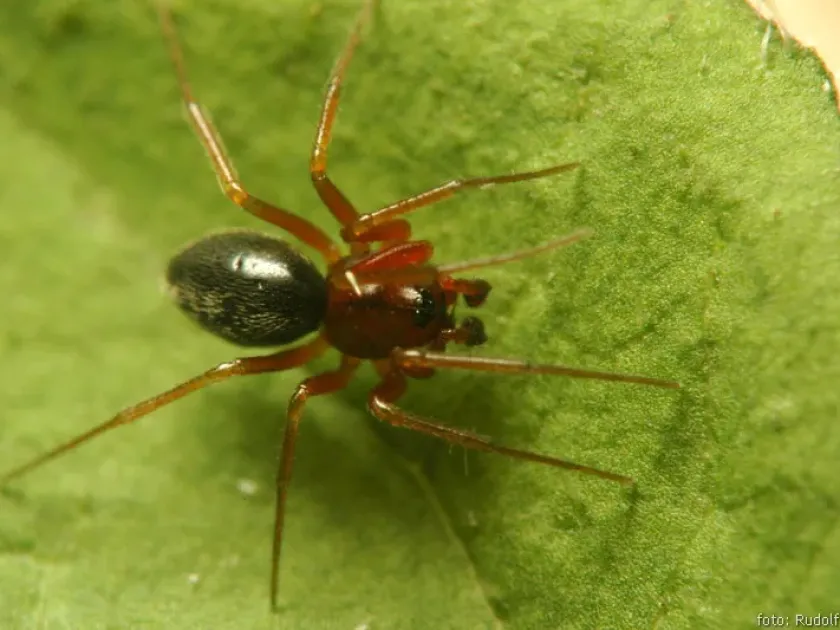
Hylyphantes is a genus of spiders belonging to the family Linyphiidae, known commonly as sheet web spiders. In agricultural settings, these spiders are not pests but rather predatory organisms that play a role in maintaining the biological balance within the crop field.
These spiders are characterized by their small size, usually measuring only a few millimeters in length. Their bodies are typically dark in color, which helps them camouflage effectively within the lower layers of the plant canopy where they reside and hunt.
The most distinctive biological feature of Hylyphantes is their ability to construct fine, sheet-like webs. These webs are stretched horizontally between stems and leaves, serving as efficient traps for various small insects that move through the crop vegetation.
The life cycle involves egg-laying in protective cocoons, which are usually hidden in protected niches near the soil or the base of the plants. The young spiders go through several molting stages, gradually growing and developing their hunting skills.
Hylyphantes are common inhabitants of many agricultural fields, including cereals and legumes. Their presence is generally considered an indicator of a healthy, diverse ecosystem where natural control mechanisms are actively functioning.
What it damages
It is crucial to clarify that Hylyphantes is not a plant pest. They do not consume plant tissues, roots, stems, or fruits. As predators, they feed exclusively on other small insects and arthropods, meaning they cause zero direct damage to crops.
While one might occasionally observe extensive webbing, this does not interfere with the plant's physiological processes, such as photosynthesis or transpiration. The webs are too thin and sparse to cause any significant shading or mechanical damage to the crop.
There is no economic threshold for Hylyphantes because they do not contribute to yield loss. On the contrary, their feeding habits help suppress populations of aphids, thrips, and other actual pests, making them valuable allies for the farmer.
Mistaking these spiders for pests often leads to unnecessary chemical applications. Such interventions are counterproductive as they kill beneficial predators, often resulting in secondary pest outbreaks that are much more difficult to manage than the original situation.
In terms of agricultural impact, Hylyphantes is entirely beneficial. Agronomists should focus on preserving these populations as part of an integrated pest management strategy to reduce dependency on synthetic pesticides.
When it appears
The activity of Hylyphantes begins in early spring, once the soil temperature allows for the emergence of overwintered adults. They immediately start searching for prey within the emerging or established winter crop canopy.
During the summer months, their activity peaks, driven by the higher availability of insect prey. They maintain their webs in areas with sufficient humidity and protection, ensuring a stable environment for continuous hunting throughout the growing season.
As autumn approaches, the spiders prepare for dormancy. They seek sheltered spots near the soil surface, under plant debris, or in the root zones, which provide the necessary insulation to survive the upcoming winter frost.
During the winter, they remain in a state of diapause or reduced metabolic activity. They are highly resilient and can survive cold temperatures in fields where minimal tillage is practiced, as the undisturbed soil protects them from harsh weather.
Their seasonal presence is highly dependent on farming practices. Fields that employ conservation tillage tend to harbor larger populations of Hylyphantes, which contributes to higher levels of natural pest suppression compared to fields that undergo intensive plowing.
Signs of infestation
The primary sign of Hylyphantes presence is the visibility of delicate, horizontal, or sheet-like webs woven between the crop stems. These webs are most easily observed in the early morning when dew droplets highlight the fine silk strands.
Adult spiders can be observed upon careful inspection of the lower plant canopy. Because they are sensitive to vibrations, they may retreat or hide when they detect movement, making them somewhat elusive during standard field surveys.
Entomological surveys using sweep nets or pitfall traps often reveal the presence of these spiders. If these spiders are found, it is a positive sign that the field has enough prey diversity to support a stable predator population.
It is important to differentiate between spider webs and the damage caused by phytophagous mites. Unlike mite damage, which manifests as stippling, chlorosis, or leaf deformation, spider webs leave the plant foliage completely healthy and intact.
Regular monitoring should focus on identifying if the observed organisms are actually causing tissue damage. If the plants are healthy and no lesions are visible, any webs found should be attributed to beneficial predators rather than pests.
Control measures
No control measures are necessary for Hylyphantes, as they are not pests. The recommended strategy is to implement practices that promote their survival, as they provide free, natural pest control services within the agricultural ecosystem.
If for some reason the webbing is perceived as a hindrance to agricultural operations, mechanical disturbance through inter-row cultivation or weeding is sufficient to disrupt their activity and encourage them to move elsewhere without killing them.
Chemical control is strongly discouraged. The use of broad-spectrum insecticides should be avoided, as these products are indiscriminate and kill beneficial spiders much more effectively than the pests they are intended to eliminate.
Focusing on Integrated Pest Management (IPM) is the best approach. By prioritizing biological control and monitoring pest populations accurately, farmers can avoid unnecessary pesticide applications that would otherwise destabilize the predator-prey balance.
Agricultural stewardship involves recognizing the value of such beneficial organisms. Preserving Hylyphantes habitats, such as field margins and avoiding excessive soil disturbance, will yield long-term benefits in terms of pest management and crop stability.
Taxonomy
- Latin name
- Hylyphantes
- Family
- Linyphiidae
- EPPO code
- HYLYSP
Discussion
No discussions yet — be the first.