
Hydrotaea dentipes
Hydrotaea dentipes
Description
How to identify
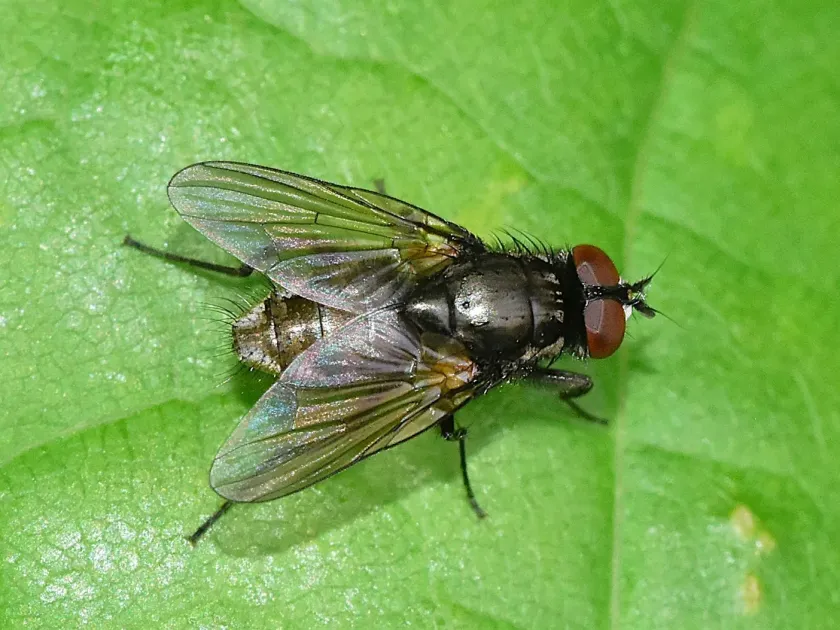
Hydrotaea dentipes, commonly known as a member of the Muscidae family, is a dipteran fly found throughout the temperate regions. Adults measure approximately 5 to 7 millimeters in length and possess a dark, robust body.
The species is taxonomically distinguished by the males, which exhibit characteristic tooth-like projections on the anterior tibiae, serving as a primary identification feature for this specific fly.
The larvae are apodous, cylindrical, and white or cream-colored. They possess a specialized posterior end with respiratory spiracles that allow them to thrive in moist, decaying organic substrates.
The life cycle involves complete metamorphosis: egg, larva, pupa, and adult. Females typically oviposit in decomposing matter, manure, or high-moisture soils where the larvae find an abundant food source.
These flies are cosmopolitan and are frequently encountered in habitats characterized by high humidity, including agricultural storage areas, stables, and greenhouse environments.
What it damages
While adult flies are often nectar feeders, the larvae can behave as opportunistic pests. They primarily feed on decaying organic matter but can shift to feeding on the tissues of living plants when moisture levels are high.
Cultivated vegetables such as onions, cabbage, and various root crops are susceptible to damage. Larvae penetrate the stems and root collars of young plants, causing direct injury to plant vascular systems.
Plant damage caused by larvae facilitates secondary infections. Bacterial and fungal pathogens often enter through the wounds created by larval feeding, leading to rot and the eventual collapse of the crop.
In greenhouse settings, larvae can become a significant nuisance, particularly in beds with poor drainage. Their concentration near the root zone during the seedling stage can lead to substantial plant loss.
Poor agricultural practices, especially the application of uncomposted manure, create an environment that attracts gravid females, leading to high pest pressure in the subsequent crop cycle.
Signs of infestation
The most prominent sign of infestation is sudden wilting of seedlings or young plants, despite adequate soil moisture, which is often misinterpreted as a soil-borne fungal disease.
Physical inspection of the roots and stems often reveals internal tunneling caused by larval activity. In many cases, the white larvae can be found within these hollowed-out plant tissues.
The presence of adult flies in the vicinity of crops or within greenhouses is a reliable indicator of a potential infestation, as they are drawn to the moist conditions favorable for larval development.
Soil surface inspection near the base of the stems may reveal small entry or exit holes where larvae move between the soil environment and the plant root collar.
Stunted growth, yellowing foliage, and a lack of root resistance when pulling the plant are key clinical symptoms that growers should monitor to detect early stage infestations.
Control measures
The primary control strategy focuses on sanitation and the management of organic matter. Growers must avoid the use of fresh, uncomposted manure to prevent attracting egg-laying flies to the fields.
Maintaining optimal soil moisture and ensuring excellent drainage in greenhouse systems is critical, as Hydrotaea dentipes larvae are highly dependent on high moisture levels to survive.
Biological control agents, such as entomopathogenic nematodes or fungi, can be deployed to the soil to significantly reduce larval populations without negatively impacting crop yield or soil health.
Yellow sticky traps are an effective method for monitoring and capturing adult flies, which helps to break the reproductive cycle and reduce the volume of eggs deposited near valuable crops.
- Removal and destruction of decaying plant material from fields and storage areas.
- Deep soil cultivation after harvest to expose larvae to natural predators and desiccation.
- Installation of fine-mesh screening in greenhouse vents to exclude flies from the environment.
Taxonomy
- Latin name
- Hydrotaea dentipes
- Order
- Diptera (flies)
- Family
- Muscidae
- EPPO code
- HYDTDE
Discussion
No discussions yet — be the first.