
Hydrotaea aenescens
Hydrotaea aenescens
Description
How to identify
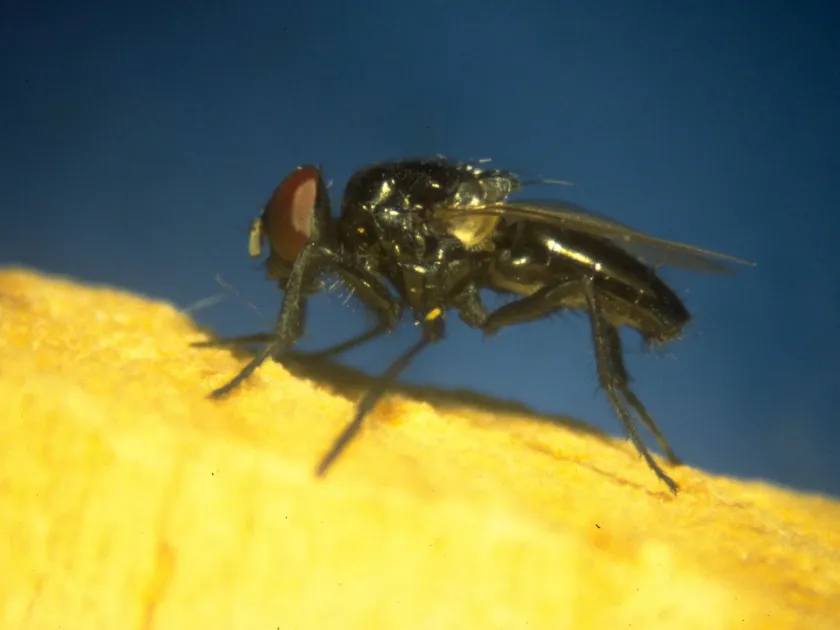
Hydrotaea aenescens is a synanthropic fly species belonging to the Muscidae family. Adult flies are approximately 5 to 6 mm long and are easily recognized by their dark, metallic-black, shiny body coloration.
In males, the eyes are holoptic (meeting at the top of the head), whereas females have dichoptic eyes with a wider space between them. Their mouthparts are of the sponging type, adapted for liquid nutrition.
The larvae are typically maggot-shaped, creamy-white in color, and reach a length of up to 10 mm. They lack a defined head and limbs, possessing segmented bodies with visible posterior spiracles used for respiration.
This species is highly adapted to human-altered environments, particularly intensive livestock and poultry farming, where it finds abundant organic waste for breeding.
The life cycle undergoes complete metamorphosis, including egg, larva, pupa, and adult stages. Development speed is highly dependent on ambient temperature and nutrient availability.
What it damages
Hydrotaea aenescens acts as a significant pest in poultry facilities, where larvae thrive in manure pits and accumulated waste, potentially causing economic loss.
As adult flies move between waste and poultry, they act as mechanical vectors for various pathogens, including bacteria, viruses, and parasites that can infect the flock.
Heavy infestations lead to increased stress levels in birds, causing reduced feed efficiency, lower weight gain, and diminished egg production in laying hens.
The larvae are known to be predatory toward the larvae of other fly species, such as Musca domestica, but they remain a nuisance themselves, requiring strict management.
The accumulation of adult flies causes sanitation issues, often requiring intensive intervention from farm management to prevent the spread of diseases among animals and personnel.
When it appears
The active breeding season begins in late spring when temperatures consistently rise above 10-12 degrees Celsius.
Peak populations are usually observed during the summer months when heat and humidity create optimal conditions for rapid larval development within manure.
As temperatures drop in autumn, fly activity decreases, and adults often seek warmer, sheltered areas within buildings to overwinter.
In climate-controlled or heated agricultural buildings, the life cycle may continue throughout the year without a distinct dormant period.
The fly's ability to produce multiple generations in a single season allows it to quickly re-establish itself if sanitation protocols are neglected.
Signs of infestation
The primary sign of an infestation is the visible presence of large numbers of adult flies around manure piles, feed areas, and near bird housing.
Discovery of larvae within moist, fermenting manure piles or deep-litter systems indicates an active breeding ground.
The presence of pupal cases (puparia) in dry corners, cracks in the floor, or near the edges of poultry cages confirms that development is occurring on-site.
Visible distress in the poultry flock, such as excessive agitation or defensive behavior against persistent flies, serves as a behavioral warning sign.
Surface contamination, characterized by small dark fecal spots on equipment, light fixtures, and wall structures, confirms a high density of the fly population.
Control measures
The most effective management strategy is rigorous sanitation, specifically the frequent removal and proper disposal of poultry manure to disrupt the life cycle.
Implementing proper ventilation and drainage systems to keep litter dry is essential, as the larvae require moisture for survival.
The use of approved residual insecticides on walls and ceilings, combined with the application of larvicides in breeding sites, helps keep populations below economic thresholds.
Integrating biological controls, such as natural parasitoids or entomopathogenic fungi, can provide sustainable long-term management of fly populations.
- Regular removal of manure heaps
- Application of dry litter management
- Use of light traps for monitoring
- Screening of ventilation inlets
- Strategic use of chemical insecticides
Taxonomy
- Latin name
- Hydrotaea aenescens
- Order
- Diptera (flies)
- Family
- Muscidae
- EPPO code
- HYDTAE
Discussion
No discussions yet — be the first.