
Hydrotaea
Hydrotaea
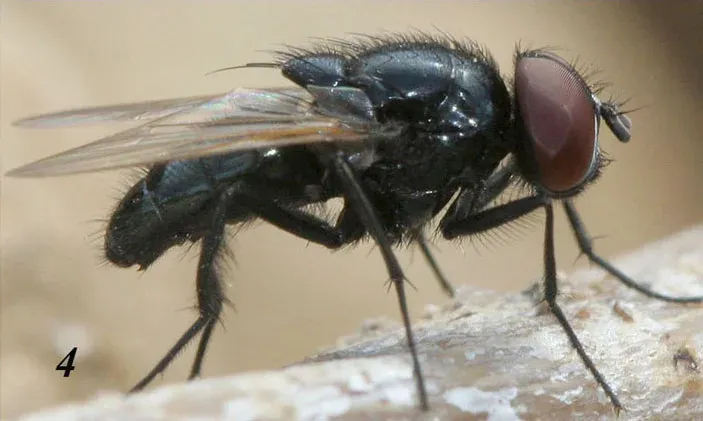
Description
How to identify
Hydrotaea is a genus of flies belonging to the family Muscidae (house flies) within the order Diptera. These insects are typically dark, robust flies, often characterized by a metallic sheen on the thorax and abdomen.
Adult flies are strong fliers and are commonly attracted to organic waste and manure. Their mouthparts are designed for lapping up liquids, although some species have mouthparts adapted for predation on other small insects.
The larvae are cylindrical, legless maggots that thrive in moist, decaying organic matter. Their developmental rate is heavily dependent on ambient temperatures, allowing for multiple generations per season in optimal conditions.
Morphologically, adult males often display specific arrangements of bristles or spines on their mid or hind femora, a diagnostic trait used by entomologists to distinguish Hydrotaea from other common fly genera.
These flies are often indicators of high organic content in the soil or proximity to livestock facilities. Their presence in a field is usually linked to the use of improperly composted organic amendments.
What it damages
The agricultural damage is primarily caused by the larval stage of the insect. Larvae burrow into the roots and stems of vegetable crops, causing mechanical damage that disrupts nutrient uptake.
As the larvae feed, they create tunnels within the root tissues, which significantly weaken the plant. This structural damage leads to stunted growth, yellowing of leaves, and eventual wilting of the crop.
The wounds left by the larvae serve as entry points for secondary pathogens, such as bacteria and fungi. These pathogens cause soft rot, which is often more destructive to the plant than the initial larval feeding.
Seedlings and young plants are particularly vulnerable. Heavy infestations can lead to significant gaps in plant stands, resulting in reduced overall yield and poor crop uniformity.
Furthermore, the presence of these pests complicates harvest operations if the produce itself (such as root vegetables) sustains larval injury, rendering the harvest unmarketable due to decay.
Control measures
Cultural control is the most effective approach. Farmers should only apply fully composted organic matter, as fresh manure attracts adult flies for egg-laying and provides a perfect nursery for larvae.
Deep autumn plowing is a critical practice to expose larvae and pupae in the soil to predators and adverse weather conditions, significantly reducing the overwintering population.
When monitoring indicates a high population, targeted insecticide applications may be necessary. Use only registered products suitable for the specific crop and follow the label strictly to avoid harmful residues.
Maintaining proper field drainage and avoiding waterlogged conditions in the root zone helps create an environment less favorable for larval survival and development.
Yellow sticky traps and pheromone-baited traps should be deployed for early monitoring. Capturing adults early in the season provides an essential signal to initiate timely protective actions.
Taxonomy
- Latin name
- Hydrotaea
- Order
- Diptera (flies)
- Family
- Muscidae
- EPPO code
- HYDTSP
Discussion
No discussions yet — be the first.