
Green hydra
Hydra viridissima
Description
How to identify
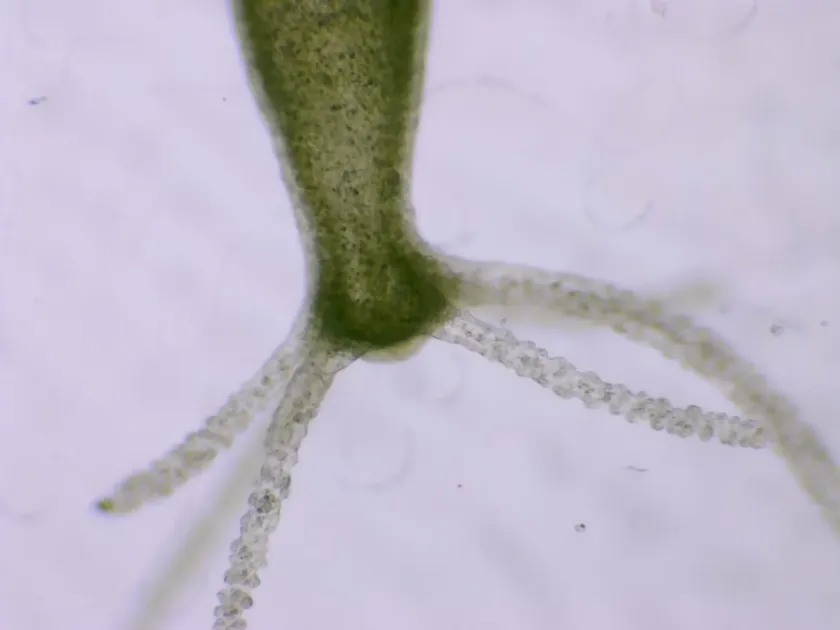
The green hydra Hydra viridissima is a small freshwater polyp belonging to the Hydrozoa class. It is distinguished by its green color, which comes from symbiotic algae known as zoochlorellae.
The organism has a tubular body with tentacles arranged in a ring at the oral end. It uses a basal disc to attach itself firmly to substrates such as plant leaves, stones, or equipment in the water.
Hydras reproduce primarily through budding, but can switch to sexual reproduction when environmental conditions become stressful or unstable.
They are capable of slow movement and can survive in various water conditions, provided there is enough oxygen and a sufficient supply of prey to sustain their population.
While commonly found in wild ponds and lakes, they can accidentally enter agricultural water systems, irrigation tanks, or hydroponic setups.
What it damages
Green hydra is not a herbivore, so it does not feed directly on plant tissues. However, its presence in managed aquatic environments can be highly detrimental to the overall health of the system.
In hydroponic and aquaponic systems, hydras can damage the root systems of young plants using their nematocysts (stinging cells), causing lesions that facilitate secondary fungal or bacterial infections.
In aquaponics, they pose a significant threat to juvenile fish, which may be harmed or killed by the hydra's stinging mechanism during their early stages of development.
Large colonies of hydra can mechanically obstruct water pipes, filters, and nozzles, which disrupts the proper distribution of nutrients to the crops.
The bloom of hydras is often a signal of excessive organic pollution within the water system, which is a pre-existing condition that negatively impacts plant growth and root aeration.
Control measures
Effective control of green hydra starts with strict sanitation protocols, including the thorough cleaning of all water reservoirs, pipes, and pumps used in agricultural settings.
Maintaining high standards of water filtration prevents the introduction of hydra colonies from external natural sources into the controlled agricultural environment.
Reducing the levels of dissolved organic matter and preventing excess feeding (in aquaponics) limits the availability of food sources, thereby inhibiting hydra reproduction.
Mechanical removal and the use of UV sterilization systems are recommended as safe and effective ways to reduce hydra populations without using harmful chemicals.
Monitoring water quality and implementing regular cleaning cycles are the most reliable methods to prevent the proliferation of hydras and maintain a healthy growth environment for crops.
Taxonomy
- Latin name
- Hydra viridissima
- Family
- Hydridae
- EPPO code
- HDRAVI
Discussion
No discussions yet — be the first.