
Freshwater hydra
Hydra
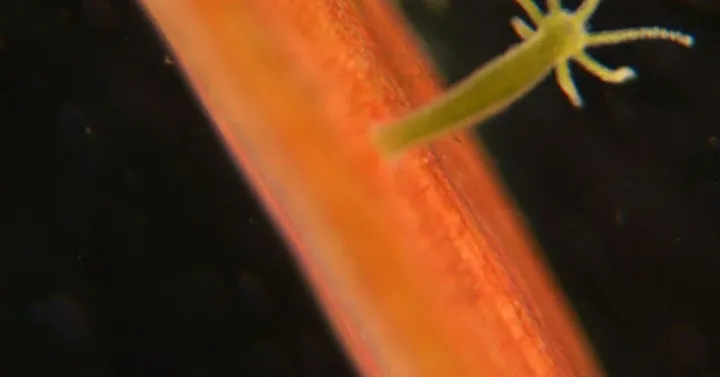
Description
How to identify
The freshwater hydra (genus Hydra) is a small, predatory, fresh-water organism belonging to the phylum Cnidaria and the class Hydrozoa.
They possess a tubular body measuring up to 20 mm, with a sticky foot for attachment and a ring of tentacles equipped with stinging cells.
Hydrae are known for their exceptional regenerative capabilities and ability to move across surfaces through a somersaulting motion.
These organisms reproduce both sexually and through asexual budding, allowing for rapid colonization of available substrates.
They are highly sensitive to environmental quality, often serving as biological indicators for nutrient-rich water conditions.
What it damages
While not direct plant herbivores, hydrae are considered pests in aquaculture and hydro-gardening due to their predatory nature.
They can sting and consume young fry or beneficial microorganisms, disrupting the ecological balance in nursery tanks.
The stinging cells can cause micro-injuries to the delicate root systems of plants grown in aquatic or hydroponic mediums.
Large colonies can physically encrust plant surfaces, potentially blocking nutrient uptake and hindering photosynthesis in aquatic vegetation.
Their presence in aquaponic systems signals a disruption in biofiltration, which indirectly impacts the growth and health of cultivated crops.
When it appears
Hydra populations tend to peak during warmer months when water temperatures provide ideal conditions for metabolic activity and reproduction.
The abundance of prey items, such as small crustaceans or larvae, directly influences the growth rate of hydra colonies throughout the season.
In climate-controlled environments like indoor hydroponics or aquariums, hydrae can persist and reproduce continuously throughout the year.
During colder periods, they may enter a dormant state, forming resistant cysts that settle on the substrate to survive unfavorable conditions.
Significant infestations are often linked to seasonal changes in water quality or the introduction of untreated water from outdoor sources.
Signs of infestation
Visual confirmation of hydra is characterized by the presence of small, jelly-like translucent polyps attached to tank walls or plant leaves.
Their delicate tentacles appear as swaying, spider-web-like structures moving freely in the water column when waiting for prey.
A sudden decline in the population of daphnia or other small beneficial aquatic life is a primary indicator of a hydra outbreak.
The presence of fine mucous films on submerged roots or stems can sometimes accompany high concentrations of these cnidarians.
If touched or disturbed, hydrae exhibit a characteristic rapid contraction, shrinking into small, inconspicuous bumps.
Control measures
Biological control involves introducing fish species known to prey on hydra, such as gouramis or mollies, into the affected system.
Chemical intervention may include the use of copper-based solutions, though this requires careful dosage to avoid harming plants or beneficial species.
Reducing the frequency and volume of feeding limits the nutrient surplus that hydrae rely on for their rapid population expansion.
Manual removal of visible colonies combined with frequent partial water changes can help stabilize the environment and reduce pest numbers.
Systemic disinfection using hydrogen peroxide or other safe agents is recommended for hardware sanitization in professional aquatic setups.
Taxonomy
- Latin name
- Hydra
- Family
- Hydridae
- EPPO code
- HDRASP
Discussion
No discussions yet — be the first.