
Hydra oligactis
Hydra oligactis
Description
How to identify
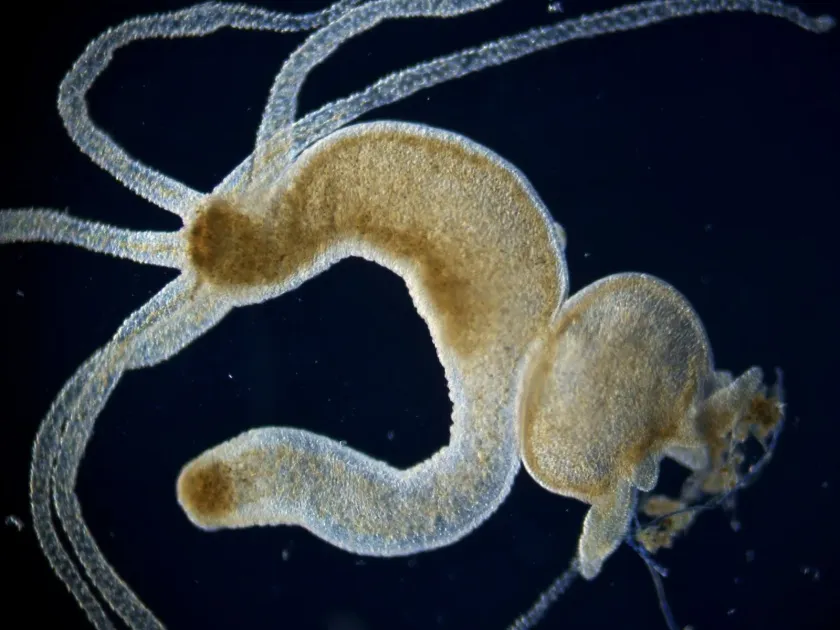
Hydra oligactis is a species of freshwater cnidarian that belongs to the Hydridae family. It is characterized by its brown color and long, highly contractile tentacles.
These organisms are typically found attached to stones, stems of aquatic plants, or the glass surfaces of aquarium tanks using their adhesive basal disc.
They possess stinging cells known as nematocysts on their tentacles, which they use to capture small prey like water fleas, cyclops, and fry.
Hydras exhibit remarkable regenerative abilities, meaning that even a small fragment of the body can grow into a complete individual under favorable conditions.
The morphology of Hydra oligactis includes a tubular body that can extend significantly when searching for food, making it an efficient ambush predator.
What it damages
Hydra oligactis primarily causes damage by preying on young fish fry and beneficial microorganisms that maintain the water quality for aquatic flora.
While they do not directly feed on plant tissue, their dense colonization on leaves can block sunlight, hindering photosynthesis and preventing healthy leaf growth.
The toxic venom released by the tentacles can cause localized chemical burns to young, fragile seedlings or new vegetative shoots, leading to stunted growth.
Large colonies of hydra disrupt the delicate ecological balance in a tank, often causing stress to both flora and fauna due to the constant presence of stinging threats.
Economic damage in aquaculture is mainly indirect, resulting from the loss of fish stock and the degradation of decorative aquatic plant aesthetics.
When it appears
Hydra oligactis can persist throughout the year, provided the water temperature remains within a range conducive to their metabolism (usually 15°C–25°C).
Population surges frequently occur during warmer months or when there is an excess of organic waste, which increases the density of prey species.
They are particularly active in systems where there is a constant supply of microscopic food and minimal water turbulence, allowing them to extend their tentacles fully.
Under seasonal shifts or unfavorable conditions, they can form dormant stages (cysts) that survive until the environment becomes suitable for reproduction again.
Increased growth in aquatic plant populations during spring often provides more surface area for hydra to attach and expand their colonies.
Signs of infestation
The most visual sign of an infestation is the appearance of small, brownish, hair-like structures on the aquarium glass or on the edges of plant leaves.
A tell-tale sign is the quick contraction of the tentacles when the hydra is disturbed or exposed to light, causing them to shrink into a small, inconspicuous bump.
A noticeable decline in the population of daphnia and other beneficial micro-crustaceans is a common indicator of a growing hydra presence.
Stunted growth or necrosis on young, delicate leaves may suggest the hydra colonies are stressing the plant tissue through their persistent stinging activities.
- Brown, jelly-like clusters attached to submerged surfaces.
- Rapid disappearance of newly hatched fish fry.
- Visible colonial growth on the stems of aquatic plants.
Control measures
Biological control involves introducing fish species known to prey on hydra, such as certain gouramis or paradise fish, which can effectively clear an infestation.
Chemical control can be achieved with specific anti-parasitic medications, but one must be careful to select options safe for existing plant and fish life.
Manual removal using a clean soft brush or scraping can be effective for smaller, contained populations, though it is time-consuming and often incomplete.
Reducing the frequency and amount of feeding in the aquarium helps starve the hydra population, as they rely heavily on the availability of suspended food.
For new aquatic plant acquisitions, a brief dip in a mild disinfectant or salt solution is recommended to prevent the introduction of hydras into the main system.
Taxonomy
- Latin name
- Hydra oligactis
- Family
- Hydridae
- EPPO code
- HDRAOL
Discussion
No discussions yet — be the first.