
Tartarian honeysuckle aphid
Hyadaphis tataricae
Description
How to identify
The Tartarian honeysuckle aphid (Hyadaphis tataricae) is a specialized insect species belonging to the family Aphididae. It is considered a major pest of various ornamental honeysuckle species, specifically affecting the Lonicera genus.
Adult aphids are tiny, typically measuring 1.5 to 2.5 mm in length. Their bodies appear light green to yellowish-green, which provides effective camouflage against the honeysuckle foliage.
The life cycle begins in early spring when overwintered eggs hatch into stem mothers. These aphids begin their life cycle by colonizing the newly opening buds at the tips of the shoots.
The reproduction is rapid and parthenogenetic, meaning the colony size can explode within just a few weeks. The aphid goes through multiple generations, including both wingless and winged individuals.
Winged forms allow the pest to spread to neighboring bushes, making it a persistent problem in landscape plantings and hedge rows throughout the growing season.
What it damages
The primary damage is caused to the terminal growth of the honeysuckle. The aphids feed by sucking phloem sap, which deprives the plant of essential nutrients needed for healthy development.
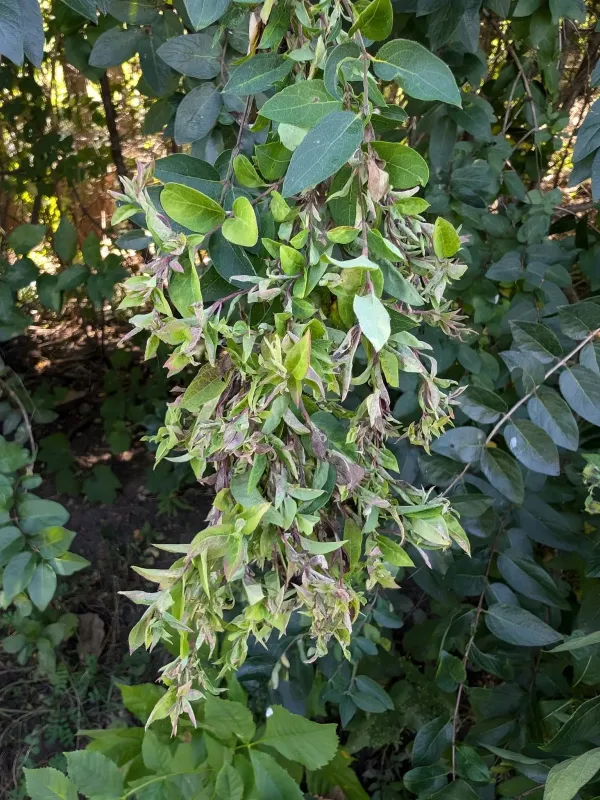
As a result of intensive feeding, the growth of new shoots is severely stunted. The shoots become curled and twisted, a condition often referred to as "witches' brooms" due to the dense proliferation of stunted leaves.
The leaves affected by the aphid show significant distortion and discoloration. They often curl up, creating a protective hideout for the aphids, which makes physical removal or direct contact insecticide application difficult.
Premature leaf drop is a common consequence of heavy infestation. This weakens the shrub's overall health, reducing its vigor and its ability to withstand extreme temperatures or winter conditions.
In cases of neglect, the cumulative damage can lead to the death of terminal buds and can drastically diminish the aesthetic value of the plant in gardens and public landscapes.
Signs of infestation
The most distinctive symptom of infestation is the tight curling of terminal leaves. These clusters of leaves form compact, knot-like structures that are impossible for the plant to straighten out.
Opening these curled leaves reveals dense colonies of pale green aphids clustered together. These colonies are often attended by ants, which feed on the honeydew secreted by the aphids.
Sticky honeydew buildup on the leaves and stems is another clear sign. This sugary substance often leads to the growth of sooty mold, which appears as a black, dusty layer on the foliage.
Growth distortion of the shoots is highly noticeable. The internodes become shortened, and the bush loses its natural elegant structure, looking overgrown and messy due to the abnormal foliage density.
Yellowing of leaves in mid-summer is another indicator, as the plant struggles to transport water and nutrients through the heavily damaged and infested vascular tissue.
Control measures
Pruning is the most effective mechanical control method. Removing and destroying the infested tips early in the spring helps to significantly reduce the overall population of the aphids on the bush.
Chemical control should rely on systemic insecticides. Because the aphids are protected inside the curled leaves, systemic products that move through the plant sap are more effective than contact sprays.
Biological control involves conserving natural predators such as lady beetles, hoverflies, and lacewings. These beneficial insects can play a key role in keeping aphid numbers below the economic threshold.
Good cultural practices, such as proper fertilization and irrigation, help the plant recover from aphid damage. Healthy plants are generally more resilient and suffer less from the secondary effects of infestation.
Key recommendations for protection:
- systemic insecticides containing imidacloprid or acetamiprid;
- pruning out infested tips before the aphid populations peak;
- using neem oil as an organic deterrent;
- applying horticultural oils in early spring to kill overwintered eggs.
Taxonomy
- Latin name
- Hyadaphis tataricae
- Order
- Hemiptera (bugs, aphids, leafhoppers)
- Family
- Aphididae
- EPPO code
- HYADTA
Discussion
No discussions yet — be the first.