
Honeysuckle aphid
Hyadaphis passerinii
Description
How to identify
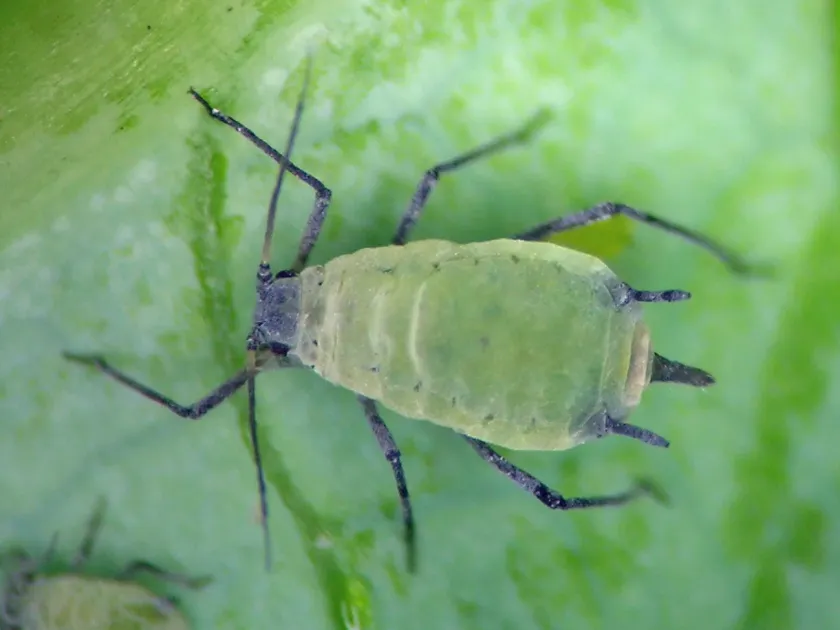
The honeysuckle aphid (Hyadaphis passerinii) is a member of the Aphididae family. These small insects are typically pale green or yellowish-green, measuring about 2 mm in length, which allows them to blend in perfectly with the tender growth of the host plant.
Their life cycle includes both wingless and winged forms. The winged individuals appear during the warmer months, facilitating the spread of the colony to nearby healthy plants and ensuring the survival of the population through the season.
What it damages
This species primarily targets various species of honeysuckle (Lonicera). They congregate in large numbers on the undersides of leaves and at the tips of new, succulent shoots to extract plant sap.
Continuous feeding by large aphid colonies drains the plant of vital nutrients. This weakening effect is particularly detrimental to young shrubs, as it stunts growth and reduces the overall vigor of the plant during the critical spring growing season.
When it appears
The honeysuckle aphid overwinters as eggs laid on the bark of the host plant near the buds. As the buds break in early spring, the eggs hatch into nymphs, marking the beginning of the annual infestation cycle.
The population reaches its peak density during late spring and early summer when the plant produces the most tender new growth. After this, populations may fluctuate depending on environmental conditions and the presence of natural predators.
Signs of infestation
Infestation is clearly visible through the curling and yellowing of terminal leaves. These curled leaves often serve as protected environments where the aphids can feed and reproduce undisturbed.
Another classic symptom is the accumulation of honeydew, a sticky substance excreted by the aphids. This secretion often leads to the development of sooty mold, a dark fungus that covers the leaves and hinders photosynthesis.
Control measures
Cultural control is the first line of defense; pruning and destroying infested shoot tips early in the season can significantly reduce the aphid population. Maintaining plant health through balanced watering and avoiding excessive nitrogen fertilizer prevents overly lush growth that attracts these pests.
Biological control is highly recommended, as ladybirds, lacewings, and hoverfly larvae are effective natural predators. If infestation levels exceed economic thresholds, insecticidal soaps, horticultural oils, or systemic insecticides may be used to suppress the population while minimizing harm to beneficial insects.
Taxonomy
- Latin name
- Hyadaphis passerinii
- Order
- Hemiptera (bugs, aphids, leafhoppers)
- Family
- Aphididae
- EPPO code
- HYADPA
Discussion
No discussions yet — be the first.