
Fennel aphid
Hyadaphis foeniculi
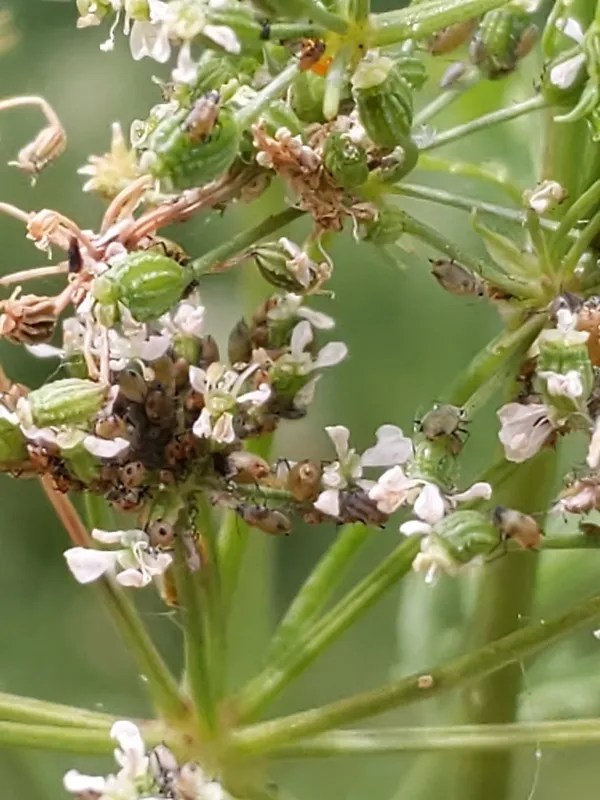
Description
How to identify
The fennel aphid (Hyadaphis foeniculi) is a small sap-sucking insect belonging to the family Aphididae, order Hemiptera, commonly found on umbelliferous plants.
Adult aphids measure approximately 1.5 to 2.5 mm in length. They are typically light green or yellowish-green, allowing them to blend into the foliage of host plants.
The life cycle involves overwintering as eggs on biennial or perennial host plants. As temperatures rise in spring, nymphs emerge to begin feeding and multiplying.
Populations can grow extremely fast, with the species producing many generations per season. They primarily congregate on the underside of leaves and around the flower heads.
Both winged and wingless forms exist within the colony. Winged individuals serve as the primary means of migration, allowing the pest to infest new areas quickly.
What it damages
This pest mainly targets crops in the Apiaceae family, including fennel, dill, carrots, parsley, and parsnips, causing significant stress to the host plants.
By piercing plant tissues and extracting sap, the aphid drains vital nutrients. This process causes stunted growth, wilting, and a substantial reduction in total yield.
Severe infestations lead to the curling and deformation of leaves. When feeding occurs on flower stalks, it often prevents successful seed formation, which is critical for crops like dill.
The secretion of honeydew promotes the growth of sooty mold, a fungus that covers the plant surfaces in black, hindering photosynthesis and reducing product quality.
Fennel aphids are also known vectors for various plant viruses. Viral transmission can result in systemic infection, often necessitating the complete removal of infected crops.
Signs of infestation
The most visible sign of an infestation is the curling and distortion of new, tender leaves at the plant apex, which become crinkled and stunted.
A closer inspection of the undersides of leaves will reveal clusters of small green insects. Large colonies may appear as a dense, moving layer on the stems.
The presence of a sticky, glistening substance (honeydew) on leaves and stems is a hallmark sign. Over time, this substance turns black due to the accumulation of sooty mold.
Affected plants often appear yellowed or chlorotic due to prolonged sap extraction. In later stages, the plants may lose vigor and stop growing entirely.
The presence of ants patrolling the plants is a strong indicator of aphid activity, as ants protect aphids in exchange for the honeydew they produce.
Control measures
Cultural control involves maintaining weed-free gardens, as many common weeds serve as secondary hosts for the fennel aphid during the off-season.
Biological control is highly effective; encouraging natural predators such as ladybugs, lacewings, and hoverflies can help suppress aphid populations naturally.
Chemical control should be used as a last resort, utilizing selective insecticides that are safe for use on vegetables and have short pre-harvest intervals.
Monitoring is crucial for early detection. Inspecting crops weekly during the growing season allows for targeted treatments before the population reaches an uncontrollable level.
- Rotate insecticides to avoid the development of pest resistance.
- Use insecticidal soaps or horticultural oils for mild infestations.
- Ensure adequate plant spacing to reduce humidity and aphid spread.
Taxonomy
- Latin name
- Hyadaphis foeniculi
- Order
- Hemiptera (bugs, aphids, leafhoppers)
- Family
- Aphididae
- EPPO code
- HYADFO
Discussion
No discussions yet — be the first.