
Honeysuckle aphid
Hyadaphis
Description
How to identify
The genus Hyadaphis belongs to the order Hemiptera and the family Aphididae. These are small insects that function as primary pests for various host plants.
Adult aphids typically measure between 2 and 2.5 mm in length. Their coloration ranges from pale green to yellowish-green, providing effective camouflage on the undersides of leaves.
A distinctive feature of this genus is the presence of club-shaped siphunculi (cornicles) on the dorsal side of the abdomen, which is a key diagnostic characteristic for experts.
The life cycle involves both apterous (wingless) and alate (winged) forms. The winged individuals are responsible for the dispersal of the colony to new host plants during the season.
Aphids of this genus are characterized by high reproductive rates, often reproducing parthenogenetically during the spring and summer months.
What it damages
Hyadaphis foeniculi, the most notable species, primarily targets members of the Apiaceae family, including carrots, fennel, dill, and parsley.
The primary host for many species in this genus is honeysuckle (Lonicera), where the pest overwinters and begins its spring life cycle before moving to secondary hosts.
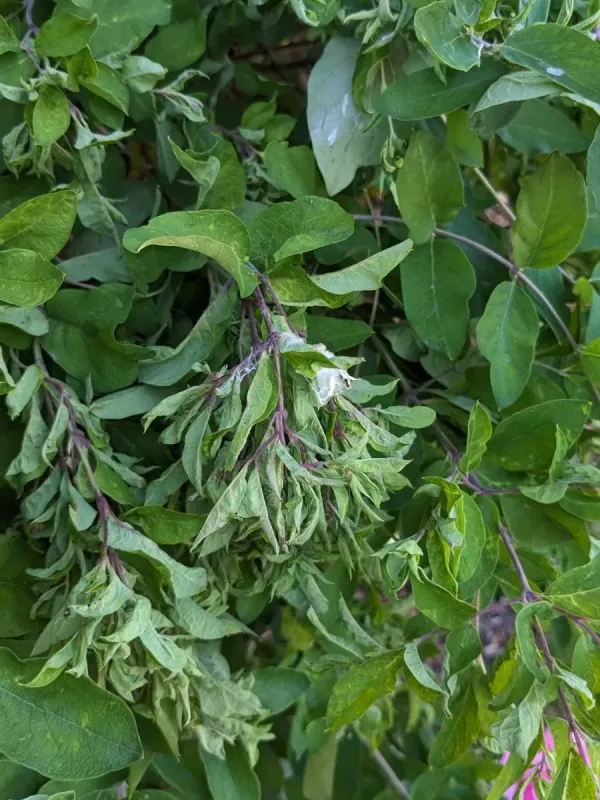
Feeding occurs by sucking phloem sap, which causes the leaves to curl, yellow, and eventually wither as the plant loses vital nutrients and energy.
Damage is further compounded by the transmission of plant viruses. Aphids inject viral pathogens into the host plant tissue during feeding, leading to stunted growth and reduced crop quality.
Large colonies can quickly cover entire shoots and flower heads, preventing normal development and often causing the total loss of the harvest on infested plants.
When it appears
The cycle begins in early spring with the hatching of nymphs from eggs that have overwintered on the bark of primary host plants like honeysuckle.
As spring progresses, winged forms develop and migrate to vegetable gardens, colonizing secondary host plants such as carrots and other umbelliferous crops.
Throughout the summer, several generations are produced, with development times highly dependent on environmental conditions, particularly temperature and humidity.
In the autumn, winged aphids return to their primary winter hosts to mate and deposit eggs, ensuring the survival of the population through the cold season.
Mild and dry weather conditions are particularly favorable for rapid population growth, often leading to outbreaks that require immediate intervention.
Signs of infestation
The most visible sign of an infestation is the curling and distortion of leaves, which often hide the aphids on the underside or within the twisted foliage.
The secretion of honeydew, a sticky waste product, creates an ideal environment for sooty mold, appearing as a black, dusty layer on leaves and stems.
Growth points and new buds appear stunted or deformed. In flowering plants, the development of the flower stalks is significantly hampered or completely arrested.
The presence of ants is a common indicator, as they "farm" the aphids for their honeydew and actively protect them from natural predators.
Careful inspection of the lower leaf surfaces and the base of flower stalks will reveal clusters of these small, pale insects concentrated in dense, feeding groups.
Control measures
Cultural control measures, such as removing weeds from the Apiaceae family and maintaining spatial isolation between honeysuckle and vegetable plots, are highly effective.
Encouraging natural predators, including ladybugs (Coccinellidae), lacewings, and hoverflies, is a sustainable way to keep aphid populations below the economic injury level.
When chemical intervention is required, systemic insecticides are the most effective choice, as they ensure coverage within the plant tissues where aphids feed.
Timely application is crucial, as treating once the leaves have already curled provides the insects with a physical barrier against contact-based control methods.
Regular monitoring of crops is recommended to identify the onset of infestation and prevent rapid spread through the garden or farm field.
Taxonomy
- Latin name
- Hyadaphis
- Order
- Hemiptera (bugs, aphids, leafhoppers)
- Family
- Aphididae
- EPPO code
- HYADSP
Discussion
No discussions yet — be the first.