
Hoplotylus femina
Hoplotylus femina
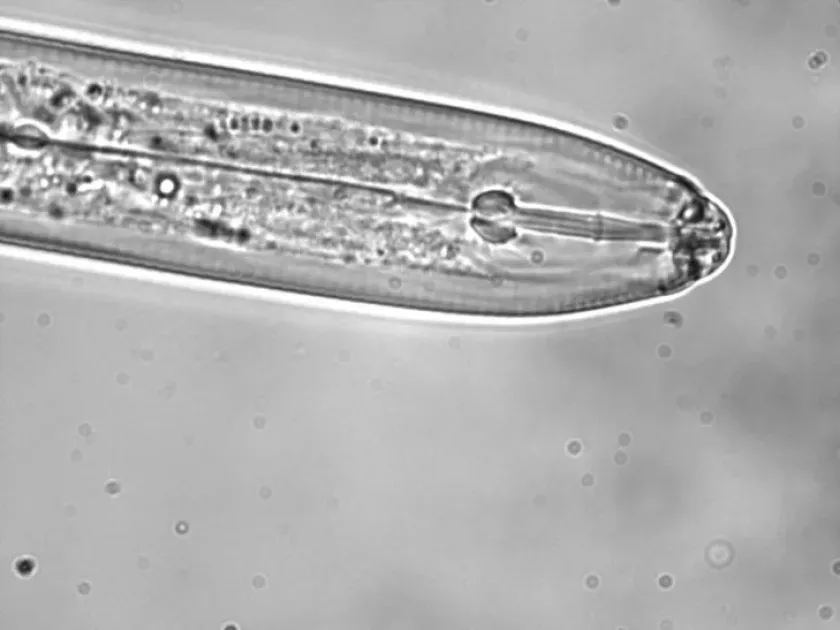
Description
How to identify
Hoplotylus femina is a microscopic roundworm classified within the order Tylenchida and the family Hoplolaimidae. It is a specialized endoparasite that lives and feeds within the tissues of host plant roots.
The morphology of this nematode is characterized by a slender, vermiform body. Like other plant-parasitic nematodes, it possesses a stylet, a hollow, needle-like structure used to penetrate plant cells and extract nutrients.
Its biological cycle includes eggs, juvenile stages, and adult worms. The nematode spends a significant portion of its life in the soil or inside the root cortex, depending on the stage of its development.
Reproduction is efficient under favorable soil moisture and temperature conditions, allowing the population density to increase rapidly if host plants are consistently available.
Identification typically requires laboratory extraction techniques, such as the Baermann funnel or centrifugal flotation, followed by microscopic examination of morphological diagnostic features.
What it damages
This nematode species is an obligate parasite that targets the root systems of various agricultural and ornamental crops, leading to significant physiological stress in the host.
By feeding on root cells, the nematode causes disruption of the vascular tissues, which impairs the plant's ability to transport water and minerals from the soil to the leaves.
The feeding activity often results in stunted root growth and the development of necrotic lesions, which serve as entry points for secondary soil-borne pathogens like fungi and bacteria.
As the root system becomes compromised, the overall health and vigor of the host plant decline significantly, often resulting in reduced yields or complete crop failure in severe cases.
The impact of Hoplotylus femina is particularly pronounced in intensive production systems where host crops are grown in monoculture without proper soil management.
Signs of infestation
Symptoms of infestation by this nematode are often non-specific and can be mistaken for nutrient deficiencies, drought stress, or general lack of soil fertility.
Above-ground, plants exhibit symptoms such as reduced growth rates, yellowing of the leaves (chlorosis), and a general lack of vigor that does not respond to standard fertilization.
The root system, if inspected closely, may show reduced mass, discoloration, and signs of decay, which are indicative of severe parasitic feeding and cellular destruction.
In field settings, the infestation often appears in patchy, uneven patterns, reflecting the localized distribution of the nematode population within the soil profile.
- General stunting and lack of plant development.
- Persistent leaf chlorosis and wilting.
- Poor response to water and fertilizer application.
- Root system decay and localized necrosis.
- Significant decline in agricultural productivity.
Control measures
Integrated Pest Management (IPM) is the most effective approach for controlling Hoplotylus femina, emphasizing prevention over curative treatments.
The use of nematode-free planting material is the primary defense strategy, as this prevents the introduction of the pest into previously uninfested fields or greenhouses.
Crop rotation remains a fundamental agricultural practice; growing non-host crops for several seasons can effectively starve the nematode population in the soil.
In greenhouse operations, soil steaming and solarization are highly effective methods to eliminate the pest from the growing medium before planting new crops.
Chemical control via the application of nematicides may be utilized in extreme cases, though such products must be applied according to local regulations to ensure environmental safety.
Taxonomy
- Latin name
- Hoplotylus femina
- Order
- Nematodes
- Family
- Pratylenchidae
- EPPO code
- HOPTFE
Discussion
No discussions yet — be the first.