
Grape leaf miner
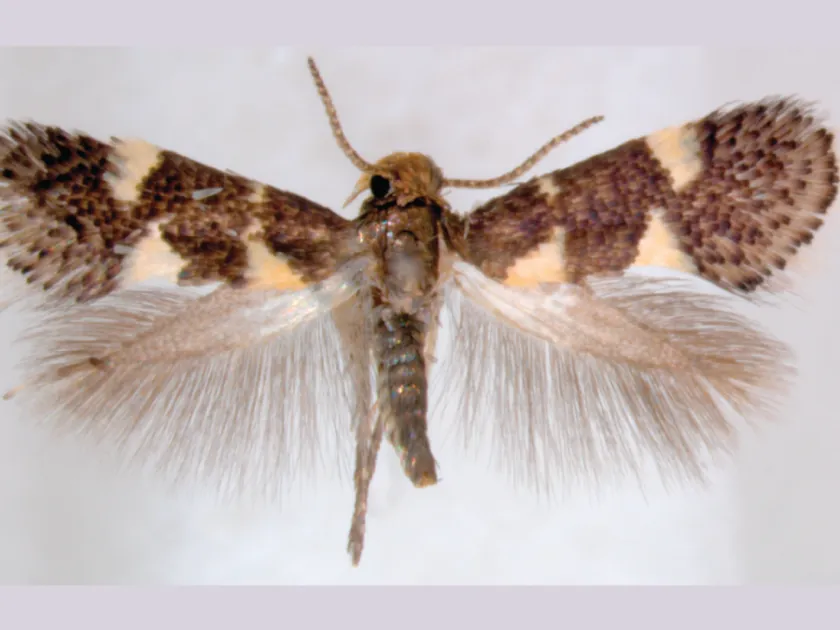
Holocacista capensis
Description
How to identify
The grape leaf miner, Holocacista capensis, is a tiny moth belonging to the Heliozelidae family. It is a specialized pest that specifically targets cultivated grapevines and related species, making it a concern for vineyard management.
The adult moth is very small, often measuring only a few millimeters in wingspan. Because of its size and cryptic coloration, it is rarely seen by growers unless specific monitoring traps are deployed in the vineyard.
The life cycle of the moth consists of an egg, larva, pupa, and adult stage. The larval stage is the most impactful, as it creates tunnels or "mines" within the leaf tissue to feed, hidden from most external threats.
This pest is highly sensitive to environmental factors. Temperature and humidity play a significant role in determining how many generations of the moth will emerge during a single growing season.
Identifying the species usually requires professional expertise or microscopic inspection of the larval galleries found within the damaged leaves of the grapevines.
What it damages
The larvae cause damage by feeding on the mesophyll tissue inside the grape leaves. This activity creates serpentine or blotch-like mines that disrupt the plant's ability to perform photosynthesis efficiently.
Severe infestations can lead to significant defoliation, particularly in younger vines. The loss of leaf surface area reduces the plant's vigor and its ability to store energy for the next growing season.
The damage caused by the larvae also leaves the vine open to secondary infections. Fungi and bacteria can easily invade the weakened tissue, leading to localized leaf necrosis and further stress to the plant.
In mature vineyards, excessive leaf damage can lead to lower sugar accumulation in the grapes. This affects the overall quality and chemical balance of the fruit, making it less suitable for winemaking.
Consistent damage over multiple years weakens the vine's structural integrity, making it more susceptible to winter frost injury and reducing the overall lifespan of the vineyard plantation.
Signs of infestation
The primary symptom of a grape leaf miner infestation is the appearance of distinct, winding tunnels on the leaves. These mines are typically light-colored, reflecting the loss of green tissue inside the leaf.
As the larva grows, the mine often expands, turning into a larger, irregular blotch. Growers can spot these areas by inspecting the canopy, especially the leaves located in the middle and lower parts of the vine.
Examining the leaf against direct sunlight allows for easy detection of the mines. The empty galleries appear as translucent areas within the leaf blade, clearly showing the path the larva has traveled.
The presence of dark, granular excrement within the mines is a diagnostic sign of active feeding. If the mine is empty, the larva may have already exited to pupate, leaving behind a small emergence hole.
- Visible thin, winding pale galleries on the leaf surface.
- Translucent blotches when viewed under strong light.
- Presence of tiny dark pellets (frass) within the leaf mines.
- Premature yellowing and drying of the leaf foliage.
Control measures
Effective control starts with good vineyard hygiene. Removing and burying or burning fallen leaves is essential, as this destroys the pupae that overwinter in the leaf litter, reducing the next year's population.
Chemical control should be targeted during the adult flight period or when the eggs are hatching. Using systemic insecticides can be effective because the chemical penetrates the leaf tissue to reach the larvae.
Pheromone traps are highly recommended for monitoring purposes. By tracking the number of trapped males, growers can accurately determine the start of the moth emergence and apply treatments only when necessary.
Biological control agents, including various species of parasitic wasps, are often present in healthy vineyards. Their conservation through minimal use of broad-spectrum pesticides is a key strategy in long-term pest management.
Promoting vine health through proper irrigation and balanced fertilization helps the plants withstand damage. A healthy, robust vine can often compensate for moderate leaf loss without significant impact on fruit quality.
Taxonomy
- Latin name
- Holocacista capensis
- Order
- Lepidoptera (butterflies)
- Family
- Heliozelidae
- EPPO code
- HOLKCA
Discussion
No discussions yet — be the first.