
Grape leafminer
Antispila ampelopsifoliella
Description
How to identify
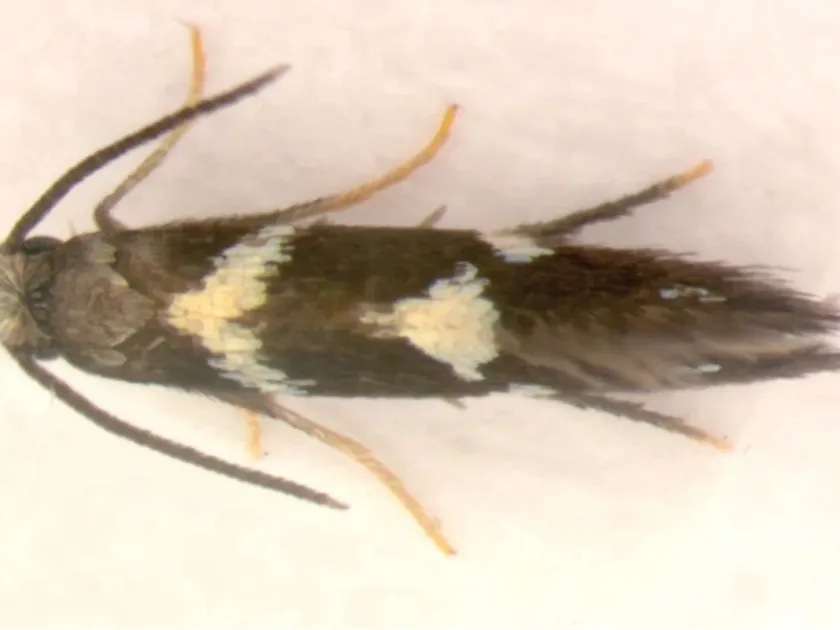
The grape leafminer (Antispila ampelopsifoliella) is a small moth belonging to the Heliozelidae family. It is a specialized pest that impacts the foliage of grapevines and related species.
The adult moth is extremely small with metallic-colored wings, making it difficult to detect in a dense vineyard canopy. They are most active during warm periods.
Larvae are internal feeders, living and developing entirely within the leaf tissue, which provides them with constant food and protection from the environment.
Taxonomically, the insect is part of the Lepidoptera order, which includes a wide range of moths and butterflies that affect agricultural crops.
Understanding its biology is essential for management, as the life cycle is highly adapted to the host plant’s developmental stages throughout the growing season.
What it damages
This pest affects both cultivated grapes and wild varieties, such as Virginia creeper, which often act as reservoir hosts near commercial vineyards.
Larvae consume the leaf parenchyma, leaving the epidermal layers intact, which results in the characteristic mining damage visible as blotches or tunnels.
Reduced photosynthetic capacity caused by significant leaf mining can lead to decreased berry size and lower sugar content, affecting the overall quality of the harvest.
Heavy infestation can cause premature leaf drop, which weakens the vines and interferes with the development of canes needed for the following year's growth.
Damaged leaves are also more prone to secondary infections, increasing the stress on the vineyard and requiring additional management inputs.
When it appears
Adult moths typically emerge in late spring, aligning with the appearance of young leaves, which are ideal for egg-laying and larval feeding.
Larval activity peaks during mid-summer, when temperatures are optimal for growth and development, leading to the formation of the most visible leaf mines.
As summer draws to a close, mature larvae prepare for diapause by cutting out leaf disks, which drop to the ground to serve as overwintering sites.
The number of generations per year depends on the local climate, with warmer regions potentially seeing more frequent cycles and higher pest pressure.
Monitoring for signs of larval feeding should be continuous from late spring through late summer to prevent population surges in the vineyard.
Signs of infestation
The primary sign of infestation is the presence of winding, translucent tunnels (mines) appearing on the upper surface of the leaves during the growth phase.
Small dark spots representing larval frass (waste) are often visible within the mined sections, confirming that the larvae are active inside the leaf.
The most distinctive symptom is the appearance of perfectly circular holes in the foliage, created when the mature larva cuts a disc from the leaf to pupate.
Premature chlorosis or yellowing of individual leaves often precedes the total drying and falling of the damaged leaf tissue.
- Winding tunnels or mines in leaves
- Accumulated dark frass inside mine patterns
- Circular exit holes in the leaf blades
- Premature shedding of foliage
Control measures
Sanitation is the most effective management strategy; removing and destroying fallen leaves during the dormant season eliminates the primary overwintering pupae.
Cultivation of the soil under the vine canopy in late autumn or early spring can bury or damage the overwintering pupae, significantly reducing the spring population.
Chemical control with systemic insecticides may be necessary during peak larval activity if infestation levels threaten the vine's health and productivity.
Encouraging natural predators and parasitic wasps in the vineyard ecosystem can provide a level of biological control that keeps pest populations at manageable levels.
Integrated Pest Management (IPM) practices, including regular monitoring and timely intervention, are the best defense against persistent leafminer outbreaks.
Taxonomy
- Latin name
- Antispila ampelopsifoliella
- Order
- Lepidoptera (butterflies)
- Family
- Heliozelidae
- EPPO code
- ANTSAM
Discussion
No discussions yet — be the first.