
Antispila
Antispila
Description
How to identify
Antispila is a genus of tiny moths belonging to the family Heliozelidae. These insects are characterized by their extremely small size, making them difficult to spot in garden environments.
The defining trait of this pest is the larval stage, which lives a concealed life inside leaf tissues, creating distinct patterns known as leaf mines.
Adult moths are generally dark with a metallic sheen, but due to their minute size, identification usually relies on observing the damage left on the leaves rather than the insects themselves.
Taxonomically, the genus falls under the order Lepidoptera. In agricultural settings, the grapevine-infesting species is of particular interest to growers.
Precise species identification often requires microscopic examination of the adult genitalia, as morphological features are highly conserved within the genus.
What it damages
The primary host for Antispila is the grapevine (Vitis vinifera). Depending on the specific species, they may also inhabit other woody or shrubby plants.
Larvae feed on the leaf parenchyma, excavating tunnels between the upper and lower epidermis, which impairs photosynthesis and leads to premature leaf fall.
Significant infestations can weaken the vines, adversely affecting sugar accumulation in grapes and reducing the plant's overall vigor and winter hardiness.
Widespread damage to the leaf canopy reduces the plant's ability to produce necessary energy, which can lead to lower fruit yields in subsequent growing seasons.
In viticulture, maintaining a healthy leaf canopy is essential for ripening, and the presence of these miners directly threatens the metabolic efficiency of the vines.
When it appears
The life cycle of Antispila is closely synchronized with the phenology of the vine. Adult emergence typically coincides with the period of active leaf development.
Depending on regional climatic conditions and heat units, the moth may complete one or multiple generations within a single growing season.
The period of peak larval activity occurs in mid-summer, as they aggressively consume leaf tissue from within the protective leaf layers.
Pupation often occurs on the plant itself or in the leaf litter below, where the insect may enter a dormant phase to survive unfavorable conditions.
Effective management includes monitoring adult flight using pheromone traps to accurately time interventions against emerging larvae.
Signs of infestation
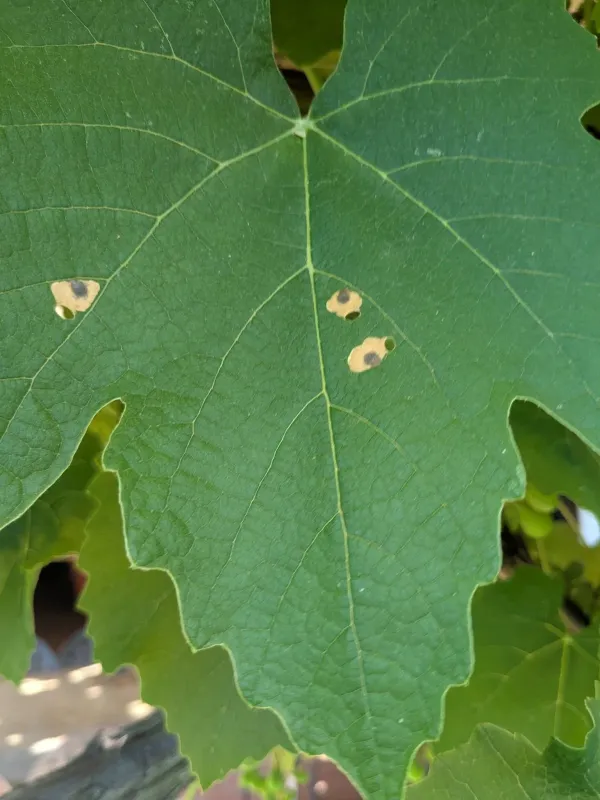
The first signs of infestation are small, pale spots on leaves that gradually turn brown as the larvae excavate their mines.
Antispila mines are often rounded or oval. A small hole in the center of the mine is usually visible, which the larva uses to expel waste.
A unique characteristic is the larva's habit of cutting out a section of the leaf to create a case, inside which it pupates.
Against the light, the damaged leaves look like a delicate network, as the miners clear the internal tissue, leaving only the outer leaf layers.
- Appearance of distinct round spots (mines) on the foliage.
- Presence of dark frass (excrement) within the mining tunnels.
- Premature yellowing and shedding of infected leaves.
- Dropping of the central part of the mine after pupation.
Control measures
Managing Antispila requires an integrated approach that combines cultural practices with targeted chemical interventions.
Deep cultivation of the soil in vineyards during the off-season is highly effective at destroying overwintering pupae hidden in the ground or litter.
Systemic insecticides should be applied during the initial larval hatch, before the insects create protective mines that shield them from contact sprays.
Removing and destroying fallen leaf litter in the autumn is a critical step in reducing the local pest population and preventing early spring outbreaks.
Biological control methods, including the use of entomopathogenic agents or encouraging natural parasitoid populations, are valuable in sustainable viticulture programs.
Taxonomy
- Latin name
- Antispila
- Order
- Lepidoptera (butterflies)
- Family
- Heliozelidae
- EPPO code
- ANTSSP
Discussion
No discussions yet — be the first.