
Thorne root-lesion nematode
Hirschmanniella thornei
Description
How to identify
The Thorne root-lesion nematode (Hirschmanniella thornei) belongs to the order Tylenchida and the family Pratylenchidae. It is a migratory endoparasitic nematode that spends the majority of its life cycle within plant roots.
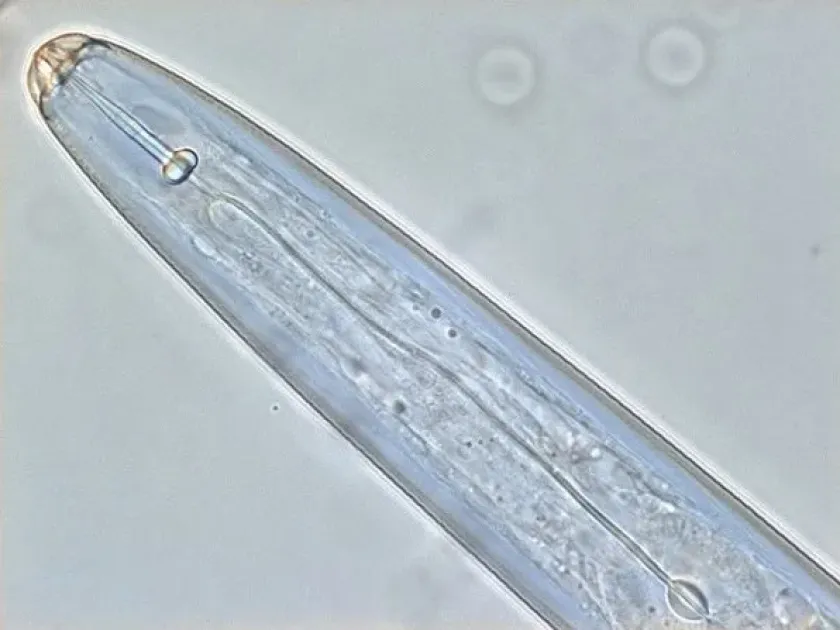
The morphology of this nematode is characterized by a slender, vermiform body measuring approximately 1.0–1.5 mm in length. It possesses a distinct cephalic region and a functional stylet used for feeding.
Its biological cycle includes eggs, four juvenile stages, and adult stages. The nematodes move actively within the root cortex, causing mechanical damage while simultaneously feeding on the cells.
They are capable of surviving in the soil environment for periods when living roots are unavailable, making them persistent pests in diverse agricultural ecosystems.
Species identification relies on molecular or morphological analysis by trained nematologists, as distinguishing Hirschmanniella species in the field is impossible.
What it damages
Hirschmanniella thornei primarily targets cereal crops, including wheat and barley. It is considered a significant pest in regions where monoculture farming is practiced.
Apart from cereals, it can parasitize several other plants, including pulses and various weed species, which act as alternative hosts for the nematode population.
The primary damage occurs through the destruction of root cortical cells. The nematode consumes cellular contents, leading to localized cell death and the formation of characteristic lesions.
By disrupting root function, the nematode reduces the plant's ability to uptake water and essential mineral nutrients, leading to impaired plant vigor.
These infestations significantly impact crop yield and grain quality, often leading to patchy distribution in fields and reduced overall productivity of the crop stand.
Signs of infestation
Above-ground symptoms of Thorne root-lesion nematode infestation include stunted plant growth, chlorosis, and reduced tillering, which may be mistaken for nutrient deficiency.
When examined closely, the roots exhibit necrosis and dark-colored lesions, which result from the nematode's migration and feeding activity inside the roots.
The root system often appears underdeveloped, with fewer lateral roots and an overall compromised structure that is prone to further environmental stress.
During dry spells, infested plants show signs of wilting earlier than healthy plants because the compromised root system cannot meet the water demand of the canopy.
In cases of severe infestation, the cumulative damage can lead to root system decay, especially if secondary soil-borne pathogens exploit the lesions created by the nematodes.
Control measures
Management of H. thornei focuses on integrated pest management strategies, starting with long-term crop rotation cycles that incorporate non-host crops to starve the nematode population.
Maintaining high levels of soil fertility and utilizing balanced nutrition helps plants better tolerate nematode-induced stress and supports faster root recovery.
Sanitation practices, such as ensuring that farm equipment is thoroughly cleaned before moving from infested to non-infested fields, are crucial for preventing spread.
The use of certified, clean planting material is a fundamental step to ensure that new fields do not become primary sites of nematode infestation.
- Selecting nematode-resistant or tolerant crop varieties.
- Implementing weed control to eliminate alternative hosts.
- Monitoring soil populations through pre-planting nematode testing.
Taxonomy
- Latin name
- Hirschmanniella thornei
- Order
- Nematodes
- Family
- Pratylenchidae
- EPPO code
- HIRSTH
Discussion
No discussions yet — be the first.