
Willow gall midge
Hexomyza schineri
Description
How to identify
The willow gall midge (Hexomyza schineri) is a small fly belonging to the Agromyzidae family. While the adult fly is rarely seen, it is a significant pest of willow trees due to the distinct damage its larvae cause.
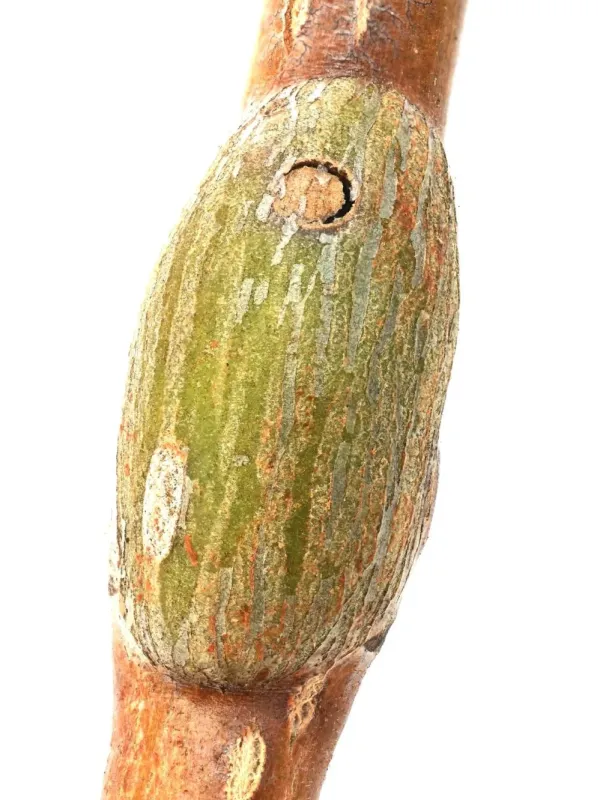
The insect produces galls, which are abnormal growths or swellings on the branches of willow trees. These galls serve as a protective housing for the developing larvae throughout their growth cycle.
Each gall is typically created by a single larva. The internal environment of the gall provides the necessary nutrients for the larva and shields it from external threats, such as predators or extreme weather.
Adult midges are small, dark flies. They play a key role in the life cycle by carefully selecting branches for egg-laying, which dictates where the galls will appear on the tree.
Identifying this pest is relatively straightforward because the galls are persistent structures that remain on the willow branches long after the infestation is established.
What it damages
This pest exclusively targets willow species (Salix). It is particularly detrimental to ornamental willow varieties grown in landscaping and public garden settings for their aesthetic value.
Larval feeding activity affects the cambium and bark of the shoots. This structural damage disrupts the flow of nutrients and water within the affected branch, weakening it over time.
The presence of galls makes the willow branches fragile. Branches with multiple galls are prone to breaking under heavy snow loads or during high winds, compromising the tree's architecture.
A heavy infestation can lead to a general decline in the tree's vigor. The crown may become sparse, and the growth rate of new shoots often slows down, reducing the plant's ornamental appeal.
In cases of severe infestation, the cumulative stress on the willow can lead to dieback of entire branches, necessitating structural pruning and specialized care to restore the tree.
When it appears
The willow gall midge follows a strict one-year life cycle. The timing of its development is closely synchronized with the willow's seasonal growth and sap flow.
Adult midges emerge in late spring or early summer to mate. The females then deposit their eggs under the bark of young willow shoots, initiating the formation of the gall.
Throughout the summer months, the larva feeds within the developing gall, causing the plant tissue to swell around it. This is a period of active growth for both the insect and the gall structure.
By autumn, the larva reaches maturity. It remains inside the gall, entering a state of dormancy, which allows it to survive the winter months protected within the branch tissue.
As spring returns, the larvae pupate inside their galls. Once the pupal stage is complete, the new generation of adult flies emerges, starting the cycle anew.
Signs of infestation
The most prominent sign of infestation is the appearance of distinct, spherical or elongated galls on the branches. They often blend in with the color and texture of the willow bark.
Infected branches often show signs of distortion or thickening. The presence of these growths may cause the branch to bend or grow at unnatural angles compared to healthy shoots.
Upon closer inspection, small, neat exit holes may be visible on the surface of the galls. These holes indicate that the adult midge has already emerged from that specific gall.
Clusters of galls on a single branch are common during severe outbreaks. This pattern indicates that the environment is highly favorable for the midge population in that area.
While the galls are the main sign, gardeners should also look for signs of branch weakness or premature drying of shoots that have been heavily infested by the larvae.
Control measures
Physical removal is the most recommended control method. By pruning and destroying the affected branches, gardeners can effectively reduce the midge population on the tree.
It is crucial to dispose of the pruned material properly, preferably by burning or deep burial, to ensure the larvae inside the galls do not complete their development.
Sanitation pruning should be carried out during the dormant season, before the adults emerge in the spring. This strategy removes the overwintering larvae before they can reproduce.
Chemical control is generally ineffective due to the larvae being shielded inside the woody galls. Therefore, focus should remain on cultural practices rather than pesticides.
Promoting general tree health through adequate irrigation and nutrient management helps the willow tree recover from damage and enhances its natural resilience against further pest attacks.
Taxonomy
- Latin name
- Hexomyza schineri
- Order
- Diptera (flies)
- Family
- Agromyzidae
- EPPO code
- MEAGSC
Discussion
No discussions yet — be the first.