
Gall-forming agromyzid fly
Hexomyza
Description
How to identify
The gall-forming agromyzid fly belongs to the family Agromyzidae. Unlike typical leaf miners, the genus Hexomyza induces the formation of galls on host plants.
The adults are small, dark-colored flies, typical of the Agromyzidae family, which are active primarily during the spring and early summer months.
The life cycle involves the female laying eggs under the bark of young twigs, which triggers a localized tissue response from the host plant.
The larvae develop inside these galls, feeding on the hypertrophied plant tissue throughout their development until pupation.
Taxonomically, they are classified within the order Diptera, known for their highly evolved relationship with specific host tree species.
What it damages
These flies primarily attack willow (Salix) and poplar (Populus) species, forming noticeable swellings on branches.
The damage disrupts the normal vascular flow within the twig, which can lead to reduced vigor of the affected branch and impaired growth.
The galls create entry points for secondary pathogens, such as fungi and bacteria, which can cause significant cankers on the woody parts.
In forest nurseries and ornamental plantings, the structural damage caused by these galls can lead to stem breakage and deformed branch architecture.
Although the pest rarely causes tree mortality, it significantly reduces the health and aesthetic quality of the affected host plants.
Signs of infestation
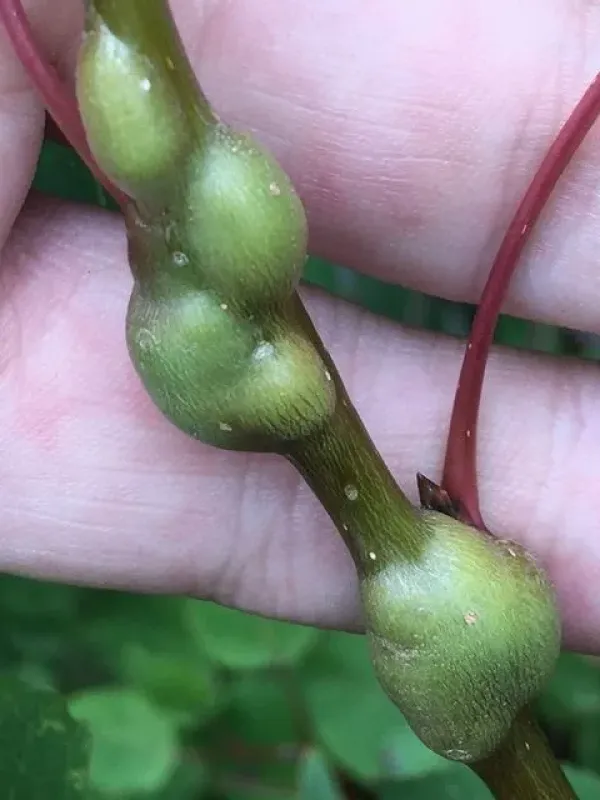
The primary sign of infestation is the presence of distinct woody galls on the current or previous year's growth of the twigs.
These galls appear as hard, smooth, or cracked swellings, varying in shape and size depending on the specific host and fly species.
Upon closer inspection, small, circular exit holes indicate that the adult flies have already emerged from the galls.
If the bark on the gall is peeled back, one can often find internal chambers that house the larvae or pupal cases.
Increased susceptibility to wind damage is observed in heavily infested branches due to the structural weakness of the gall tissue.
Control measures
The most effective management strategy is the mechanical removal and destruction of infested branches before the adult flies emerge.
Pruning should be performed during the dormant season to ensure that all larvae inside the galls are removed from the site.
In cases of severe infestation, systemic insecticides applied during the adult flight period can reduce egg-laying rates, though success is limited.
Promoting overall tree vigor through proper irrigation and soil management helps the plants recover and withstand secondary infections.
Integrated Pest Management (IPM) programs should prioritize site inspections and rapid sanitation to prevent the spread of the fly population.
Taxonomy
- Latin name
- Hexomyza
- Order
- Diptera (flies)
- Family
- Agromyzidae
- EPPO code
- HEXYSP
Discussion
No discussions yet — be the first.