
Ghost moth
Hepialus humuli
Description
How to identify
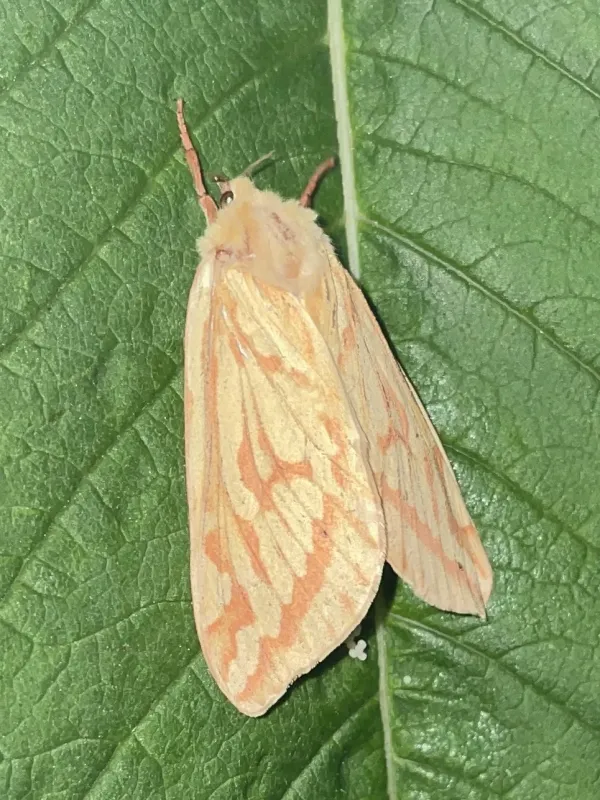
The Ghost moth (Hepialus humuli) belongs to the family Hepialidae, order Lepidoptera. It is a large moth with a wingspan reaching up to 70 mm.
Sexual dimorphism is distinct: males are typically silvery-white, while females are yellowish-ochre with brown markings on their forewings.
Larvae are cream-colored, cylindrical caterpillars with a brown head and characteristic dark sclerotized plates on each body segment.
The larvae live underground, feeding on roots, which makes them difficult to monitor throughout their development cycle.
Their life cycle typically spans one year, though it can extend to two years in cooler climates depending on environmental factors.
What it damages
The primary host for this pest is common hop, where larvae tunnel into the rootstock, significantly damaging the plant's structural integrity.
Beyond hops, the larvae are known to attack various root crops including potatoes, carrots, and sugar beets, leading to severe commercial losses.
Young nursery stocks and fruit tree seedlings are also susceptible to root damage, which can lead to stunted growth or total plant mortality.
The damage is caused exclusively by the feeding larvae, which sever roots and cause necrosis in the underground stem tissues.
Infestation often results in uneven crop emergence and significant reduction in root quality, making the produce unsalable.
Signs of infestation
The initial sign of infestation is localized wilting of plants, which often occurs despite adequate moisture levels in the soil.
Root systems of affected plants often show clear evidence of boring, with larval excrement found in tunnels near the crown of the root.
Evening observations may reveal the characteristic hovering flight of male moths, which indicates that the adult population is active.
A decline in plant vigor over large areas, combined with patches of dead or yellowing vegetation, typically points to larval activity.
Surface soil disturbance around the base of the plant can sometimes be observed as the larvae move through the soil profile.
Control measures
Thorough cultivation of inter-row spaces is highly recommended to physically disturb larval habitats and expose them to natural predators.
Strict crop rotation should be practiced to prevent the buildup of pest populations, particularly on fields with a history of infestation.
Maintaining a clean field by removing all weeds is essential, as these plants often serve as alternative food sources for the larvae.
Application of soil-applied insecticides may be necessary in severe cases to suppress larval populations during the peak feeding season.
Biological control using entomopathogenic nematodes has proven to be a sustainable and effective method for reducing larval densities in soil.
Taxonomy
- Latin name
- Hepialus humuli
- Order
- Lepidoptera (butterflies)
- Family
- Hepialidae
- EPPO code
- HEPIHU
Discussion
No discussions yet — be the first.