
Hepialus hecta
Hepialus hecta
Description
How to identify
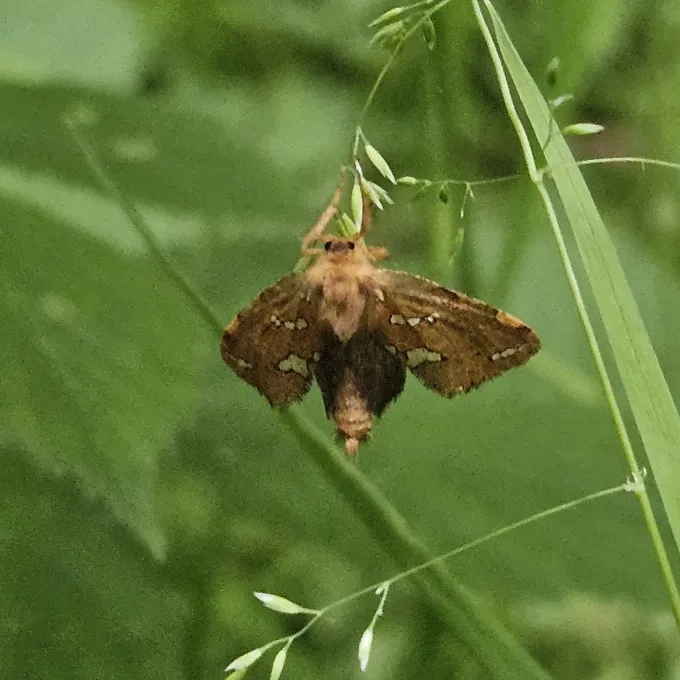
Hepialus hecta, commonly known as the Gold Swift, belongs to the family Hepialidae in the order Lepidoptera. The adult moth is characterized by a wingspan of 25–35 mm and a brownish-yellow coloration with distinctive silver-colored markings.
These moths are strictly nocturnal, with flight activity occurring during summer evenings. Their lifecycle is intimately linked to moist soil conditions, which are essential for the survival of the larvae.
The larvae are whitish, cylindrical caterpillars with a dark head. They spend their entire developmental period underground, feeding on the roots and underground stems of various host plants, which makes them difficult to monitor.
Pupation occurs within the soil inside silk-lined chambers. Before the adult emerges, the pupa partially moves to the soil surface, leaving behind a characteristic empty pupal casing.
The life cycle can span up to two years, meaning that larvae of different ages may coexist within the same soil profile, ensuring a continuous threat to susceptible crops throughout the season.
What it damages
The primary damage is caused by the larvae feeding on the root systems of both wild and cultivated plants. This feeding activity disrupts the plant's nutrient and water uptake, leading to severe physiological stress.
Infected plants typically display sudden yellowing and wilting, especially during dry spells, as the compromised root system can no longer sustain the plant's transpiration requirements.
Beyond direct root consumption, the tunnels created by the larvae serve as entry points for various soil-borne pathogens, including bacteria and fungi, which can exacerbate the damage through secondary rot.
Young plants are particularly vulnerable, as their root systems are limited. In many cases, the larvae sever the root collar, resulting in the total loss of the crop in infested areas.
Fields with high soil moisture or those established on reclaimed peatland are most susceptible to infestations, as these environments are highly conducive to the proliferation of the pest.
When it appears
The adult flight period generally occurs during the summer months, from June to August. This is the window for monitoring adult populations and preventing the next generation from laying eggs.
Larval activity peaks in the spring and autumn. During the spring, larvae resume feeding after winter dormancy, coinciding with the rapid growth phase of most agricultural crops.
Because the development cycle can take up to two years, larvae are present in the soil throughout the year, necessitating consistent monitoring and integrated management strategies.
During hot summer weather, larvae may retreat deeper into the soil profile to avoid desiccation, which can temporarily reduce their susceptibility to surface-applied control treatments.
Autumn feeding is critical as larvae build up energy reserves for winter, making this a strategic time for agricultural interventions such as tillage to disrupt their habitat.
Signs of infestation
The most reliable sign of an infestation is the appearance of individual plants that suddenly wilt and lose turgor despite adequate soil moisture. Such plants are easily pulled from the ground due to root destruction.
A close inspection of the soil near the base of the plant often reveals thin silk webbing, which the larvae use to reinforce their underground galleries and provide protection.
Finding empty pupal cases protruding from the soil surface near the root collar is a definitive indicator of an established colony and warrants immediate management action.
Localized patches of dying vegetation are a classic symptom of larval aggregation, where a group of larvae has collectively destroyed the underground root structure in that specific area.
Adult moths seen flying over fields in the evening are a sign of potential infestation risks, as they indicate an active population preparing for reproduction within the immediate vicinity.
Control measures
Integrated pest management is essential for controlling the Gold Swift. Deep autumn plowing is a highly effective cultural control method, as it exposes larvae and pupae to predators and adverse weather.
Implementing a robust crop rotation plan helps prevent the buildup of pest populations, as long-term monocropping in vulnerable areas creates a stable environment for the larvae.
Improving soil drainage is a preventative measure that makes the environment less favorable for larval survival. Reducing excess moisture can significantly lower infestation pressure.
- Soil-incorporated insecticides applied before planting.
- Light traps to capture and monitor adult moth populations.
- Regular weeding to reduce alternative hosts for the larvae.
In cases of severe infestation, targeted application of soil insecticides to the root zone may be necessary. These treatments should be applied during periods of peak larval activity to maximize contact and effectiveness.
Taxonomy
- Latin name
- Hepialus hecta
- Order
- Lepidoptera (butterflies)
- Family
- Hepialidae
- EPPO code
- HEPIHE
Discussion
No discussions yet — be the first.