
Snail leech
Helobdella stagnalis
Description
How to identify
The snail leech (Helobdella stagnalis) is a member of the Glossiphoniidae family, belonging to the class of clitellate annelids.
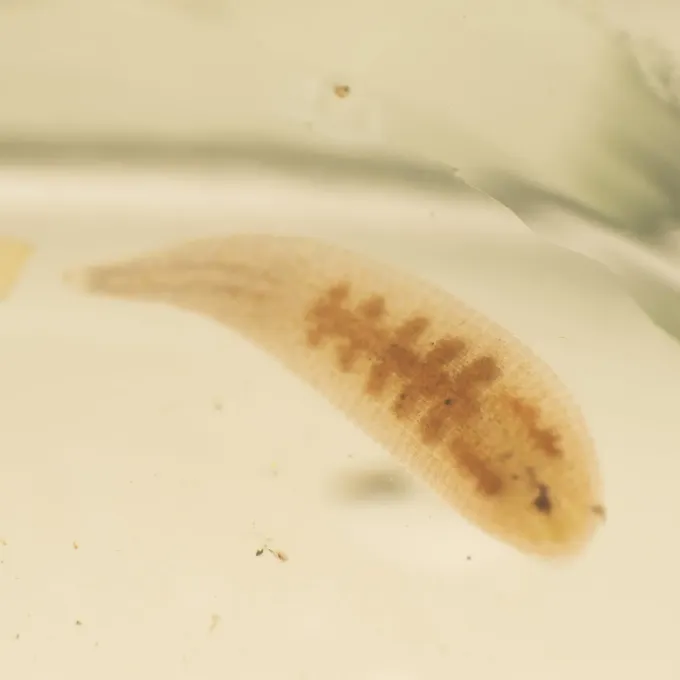
These organisms are typically small, measuring about 8 to 12 mm in length, and are characterized by a flattened, leaf-like body shape.
Their color ranges from pale gray to brownish-transparent, allowing them to blend perfectly with the sediments and aquatic vegetation on the pond floor.
A key identifying feature is the presence of a small, distinct chitinous scute (plate) located on the dorsal side of the anterior end of the body.
Unlike many other leech species, they demonstrate parental care by carrying their offspring attached to the ventral surface of their body.
What it damages
The snail leech is primarily a predator that feeds on various species of freshwater snails, piercing their soft tissues to consume the internal organs.
By decimating snail populations, they disrupt the natural biological balance of aquatic systems, as snails are essential for cleaning water and surfaces.
While not a direct herbivore, their presence can indirectly harm plants by damaging the root systems or stems they use as anchor points.
In high-density populations, their feeding activity can significantly degrade the water quality of small aquatic setups and irrigation tanks.
There is also potential for these leeches to act as vectors for various aquatic pathogens, which can then spread through the tank via the leech's movement.
When it appears
The activity of Helobdella stagnalis is heavily dependent on water temperature, typically beginning in late spring as the water warms up.
During the summer months, they are most active and reach their peak reproductive rate, provided there is a sufficient supply of prey.
As autumn approaches and temperatures drop, the leeches seek shelter in the bottom substrate to enter a state of dormancy for the winter.
The reproductive cycle is tightly synchronized with seasonal warming, ensuring that offspring hatch during the time of highest food availability.
Winter survival is high, as the species is well-adapted to surviving under ice and in cold, oxygen-depleted bottom muds.
Signs of infestation
A noticeable decline in the number of freshwater snails in a water garden or aquarium is the most significant indicator of a leech infestation.
You may spot the leeches themselves by carefully examining the undersides of leaves or submerged branches where they prefer to hide.
The presence of adults with clutches of eggs or small juveniles attached to their bellies confirms an active and reproducing population.
Small, irregular puncture marks on plant stems can sometimes suggest that predators have been feeding in the immediate vicinity.
If the water quality suddenly decreases or debris begins to accumulate, it is often a sign that the natural cleaners (snails) have been compromised.
Control measures
Manual removal is the safest and most effective method for controlling these leeches in small ponds or aquariums without harming the aquatic life.
Maintaining a clean environment by removing decaying plant matter and excess sediment drastically reduces the available hiding spots for the leeches.
Introducing natural predators, such as specific fish species that feed on small invertebrates, can help manage the leech population naturally.
Using bait traps, such as placing raw meat in a small container overnight, is an efficient way to catch and remove a large number of leeches at once.
Avoid excessive nutrient loading in the water, as this fuels the growth of snail populations, which in turn leads to an increase in the number of snail leeches.
Taxonomy
- Latin name
- Helobdella stagnalis
- Family
- Glossiphoniidae
- EPPO code
- HELBST
Discussion
No discussions yet — be the first.