
Saltbush aphid
Hayhurstia atriplicis
Description
How to identify
The saltbush aphid (Hayhurstia atriplicis) is a small, sap-sucking insect belonging to the family Aphididae. Adults typically measure about 1.5–2 mm in length and display a greenish-gray or pale green coloration, making them well-adapted to camouflage on host plants.
The life cycle begins in early spring when overwintering eggs, typically deposited on bark or plant debris, hatch into nymphs. These develop into wingless female founders that initiate rapid colony growth during the warm season.
During the summer, the population structure shifts to include both apterous (wingless) and alate (winged) forms. The winged individuals are crucial for the migration of the species to fresh, healthy plants, enabling the pest to colonize entire fields efficiently.
While the aphid primarily utilizes weeds from the Amaranthaceae family, such as common orache or saltbush, it readily infests cultivated crops like beets and spinach when conditions are favorable for population explosion.
Their ability to hide inside curled leaves provides a natural shield against predators and environmental stress, significantly complicating early detection and management for farmers and gardeners alike.
What it damages
Saltbush aphids cause significant economic damage to beet and spinach production. By piercing the plant tissue and extracting phloem sap, they deplete the plant's essential nutrients and disrupt its vital physiological processes.
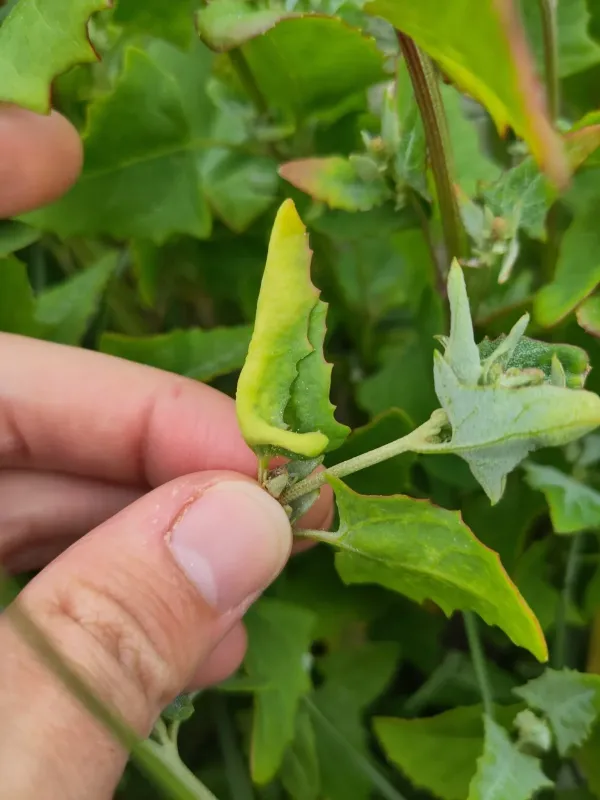
The primary symptom of feeding is the severe curling and distortion of leaves. These damaged leaves often form gall-like structures, which protect the aphid colonies while simultaneously reducing the plant’s overall photosynthetic capacity.
Infested plants exhibit stunted growth, resulting in smaller yields and poor quality of harvested produce. In extreme cases, severe infestations can lead to total crop failure, particularly in young, sensitive plants during early developmental stages.
Beyond direct feeding damage, the species acts as a vector for various plant viruses. Transmission of these pathogens during the feeding process can lead to systemic infections, causing mottled patterns and necrosis that ruin the marketability of the entire crop.
The damage potential is highest during hot, dry spells, which often coincide with peak aphid reproduction. In such periods, the inability of the stressed plant to recover from aphid attacks exacerbates the loss of crop vitality.
Signs of infestation
The most distinctive sign of a saltbush aphid infestation is the presence of tightly curled, deformed leaves that look as if they have been pinched or folded. Opening these structures usually reveals a dense cluster of aphids.
Sticky honeydew secretions are another hallmark sign of infestation. This residue covers the leaves, creating a substrate for the development of sooty mold, a black, crusty fungus that further inhibits sunlight absorption by the plant.
Leaves may transition from healthy green to yellowish or reddish hues as they lose vitality. Heavily infested plants appear weak and wilted, standing out against the healthier, unaffected parts of the field.
Increased ant activity around the plants is a strong indicator of an existing aphid colony, as ants cultivate the aphids to harvest their sugary honeydew, simultaneously protecting them from natural predators.
Visual monitoring must focus on the underside of young leaves and the growing points of the crop. Any sign of leaf curling, even if the aphids are not immediately visible on the exterior, warrants a closer inspection.
Control measures
Effective management begins with strict sanitation and weed control. Removing host weeds like Chenopodium (goosefoot) and Atriplex (saltbush) around the fields prevents the buildup of initial populations and breaks the survival cycle of the pest.
Biological control plays a major role in integrated pest management. Encouraging natural predators, including lady beetles, hoverflies, and lacewings, can drastically reduce aphid numbers without resorting to chemical interventions.
Chemical control is required when the infestation exceeds economic thresholds. Systemic insecticides are preferred as they penetrate the plant tissues, allowing the active ingredients to reach the aphids hidden inside the protected, curled-leaf environments.
- Apply treatments early before leaf curling becomes widespread to ensure contact.
- Use insecticides that are safe for beneficial insects where possible.
- Rotate chemical classes to prevent the development of resistant aphid populations.
Regular scouting schedules should be maintained throughout the growing season. Early detection of the first spring colonies is the most cost-effective way to protect the crop and minimize the need for high-intensity pesticide applications later in the summer.
Taxonomy
- Latin name
- Hayhurstia atriplicis
- Order
- Hemiptera (bugs, aphids, leafhoppers)
- Family
- Aphididae
- EPPO code
- HAYHAT
Discussion
No discussions yet — be the first.