
Hayhurstia
Hayhurstia
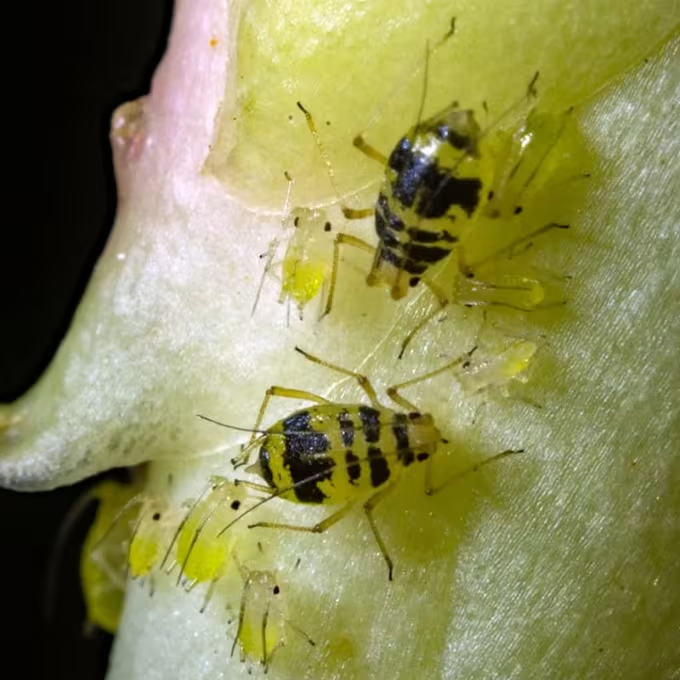
Description
How to identify
Hayhurstia is a genus of insects belonging to the order Hemiptera and the family Aphididae. It is widely recognized in agronomy as a significant pest of brassica crops.
The individuals are small, typically measuring between 1 and 2 millimeters in length. Their coloration ranges from pale green to grayish-green, allowing them to blend in seamlessly with the foliage of host plants.
They possess a specialized piercing-sucking mouthpart used to extract sap from plant phloem. Anatomical features such as the cornicles (siphunculi) on the abdomen are critical for species-level diagnosis.
These aphids exhibit complex life cycles, including both sexual and asexual reproduction, which allows for rapid population growth during favorable environmental conditions.
Winged forms appear during the growing season, facilitating dispersal to new host plants and fields, thereby expanding the area of infestation throughout the agricultural landscape.
What it damages
The primary hosts for Hayhurstia include members of the Brassicaceae family. This includes important crops like cabbage, radish, swede, rape, and various mustard varieties.
By constantly feeding on plant sap, these pests deplete the plant's nutrient reserves, leading to stunted growth, leaf curling, and overall physiological stress.
Severe infestations can cause significant leaf distortion and chlorosis, which hinders photosynthesis and reduces the plant's ability to produce high-quality yields.
Hayhurstia is also known to serve as a vector for various plant viruses, posing an indirect but severe threat to crop production and quality standards.
In cases of heavy infestation, the cumulative damage can lead to the complete loss of marketable parts, such as cabbage heads or leafy greens, making them unsuitable for consumption.
When it appears
The activity of Hayhurstia begins in the early spring as temperatures rise, allowing the eggs overwintering on plant debris or weeds to hatch.
The peak population levels typically occur during mid-summer, when optimal temperatures and abundant host plant growth favor continuous reproduction.
As the season progresses into autumn, the aphid population may decline, with the production of sexual forms designed to lay overwintering eggs for the next cycle.
Hot and dry climatic conditions are particularly conducive to the rapid reproduction of this pest, often leading to explosive population growth in a short time frame.
Agronomic monitoring is most critical during the stages of rapid vegetative growth, as the young, nutrient-rich tissues are the preferred targets for these aphids.
Signs of infestation
One of the earliest signs of infestation is the curling and yellowing of leaves. The foliage often appears distorted or puckered due to the aphids' feeding activity.
A closer inspection of the underside of the leaves reveals dense colonies of small, green insects, often accompanied by their shed skins (exuviae).
The production of honeydew is a characteristic symptom. This sticky substance covers the leaves and serves as a medium for the growth of sooty mold, turning the plant dark and unsightly.
Stunted growth patterns are clearly visible in infected fields, where plants appear significantly smaller and less vigorous compared to healthy specimens.
Ant activity around the crop is a strong indicator of aphid presence, as ants are attracted to the honeydew produced by the aphids and actively protect them from predators.
Control measures
Effective management begins with cultural practices, such as the removal of cruciferous weeds, which act as alternative hosts for the pest throughout the year.
Implementing crop rotation is a vital strategy to break the aphid's life cycle and reduce the likelihood of heavy infestations in the following growing season.
Biological control, utilizing natural enemies like ladybeetles, lacewings, and parasitic wasps, is essential for maintaining aphid populations below economic injury levels.
When chemical intervention is required, the use of systemic insecticides is recommended to ensure effective control within the plant tissues where the aphids feed.
- Frequent monitoring of crop health from the seedling stage onwards.
- Use of pest-resistant cultivars where available.
- Judicious use of fertilizers to maintain plant vigor and natural defenses.
Taxonomy
- Latin name
- Hayhurstia
- Order
- Hemiptera (bugs, aphids, leafhoppers)
- Family
- Aphididae
- EPPO code
- HAYHSP
Discussion
No discussions yet — be the first.