
Witch hazel cone gall aphid
Hamamelistes spinosus
Description
How to identify
The witch hazel cone gall aphid (Hamamelistes spinosus) is a member of the Aphididae family. It is a highly specialized insect that alternates between two distinct hosts: witch hazel and birch trees.
This aphid exhibits distinct morphological forms during different stages of its life cycle, adapting to the specific physiological requirements of its host plants.
Adults are small and often covered in a waxy secretion, which provides protection against environmental stress and some natural predators.
The life cycle is complex, involving both sexual and asexual generations, which allows the population to thrive and spread effectively across the habitat.
Proper identification requires knowledge of the host plants, as the presence of specific galls on witch hazel is the most reliable indicator of this species.
What it damages
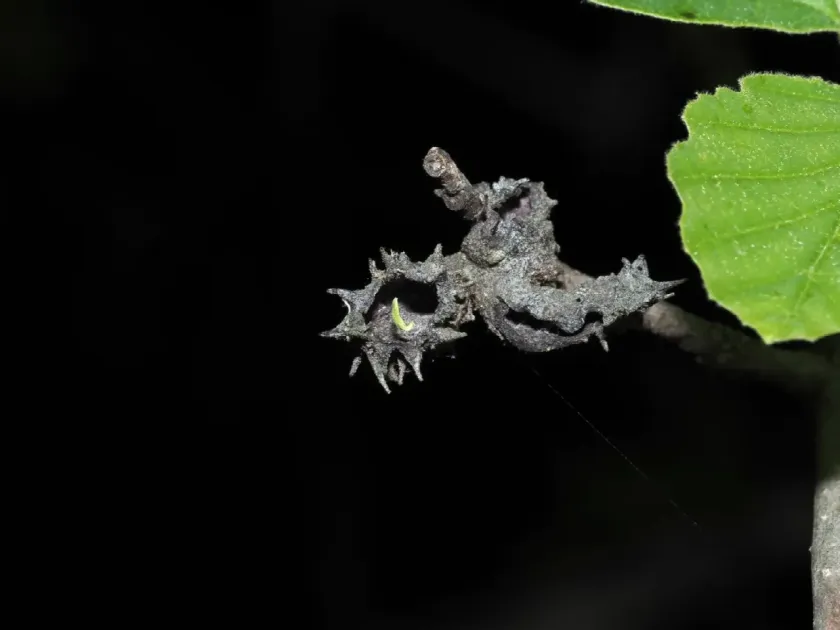
On witch hazel, the aphid induces the formation of large, cone-shaped, spiny galls. These structures are not only unsightly but also cause significant deformation of the stems.
On birch trees, the aphids colonize the leaves, causing curling, yellowing, and premature leaf drop. This infestation reduces the overall vitality of the trees.
Severe infestations can lead to stunted growth and reduced vigor, making the trees more susceptible to secondary issues like drought or disease.
The constant feeding on plant sap drains the energy reserves of the tree, which is particularly damaging to young saplings in nurseries or landscape settings.
In addition to direct physical damage, the sticky honeydew secreted by the aphids serves as a substrate for sooty mold, which impairs photosynthesis.
When it appears
The life cycle begins in early spring when overwintered eggs hatch, and the nymphs migrate to the emerging foliage of the witch hazel.
As the season progresses, winged forms develop and migrate to birch trees, where they establish colonies on the leaves throughout the summer months.
Several generations can occur on birch leaves during the summer, leading to a rapid buildup of the aphid population under warm conditions.
As autumn approaches, a return migration occurs, with specialized forms moving back to witch hazel to lay the eggs that will survive the winter.
The periods of spring bud break and summer leaf development are the most critical times for monitoring population growth and spread.
Signs of infestation
The most iconic sign is the presence of cone-like, spiny galls on the leaves and twigs of witch hazel plants, which are unmistakable once identified.
On birch trees, look for tightly curled leaves, often turning yellow or brown, and the presence of sticky honeydew on the foliage surfaces.
The appearance of a black, soot-like fungal coating on leaves and branches is a clear indication that a significant aphid colony is feeding nearby.
- Cone-shaped spiny galls on witch hazel.
- Curled, deformed leaves on birch trees.
- Sticky honeydew secretions on foliage.
- Increased ant traffic attracted to the sugary waste.
Under close inspection with a hand lens, colonies of small, aphid-like insects can be found on the undersides of the leaves near the midribs.
Control measures
Effective management begins with the timely application of systemic insecticides in early spring, targeting the nymphs before they can establish deep-seated galls.
Mechanical control is highly recommended for witch hazel: prune and destroy the infested twigs and galls before the aphids have a chance to migrate.
Maintaining healthy trees through proper watering and fertilization practices improves the plant's natural resilience to minor aphid infestations.
Biological control, including the encouragement of natural predators like ladybugs and lacewings, can help maintain lower population levels in a balanced garden.
Regular monitoring of your witch hazel and birch trees during the growing season is crucial for catching infestations early and preventing widespread damage.
Taxonomy
- Latin name
- Hamamelistes spinosus
- Order
- Hemiptera (bugs, aphids, leafhoppers)
- Family
- Aphididae
- EPPO code
- HAMMSI
Discussion
No discussions yet — be the first.