
Hamamelis aphid
Hamamelistes
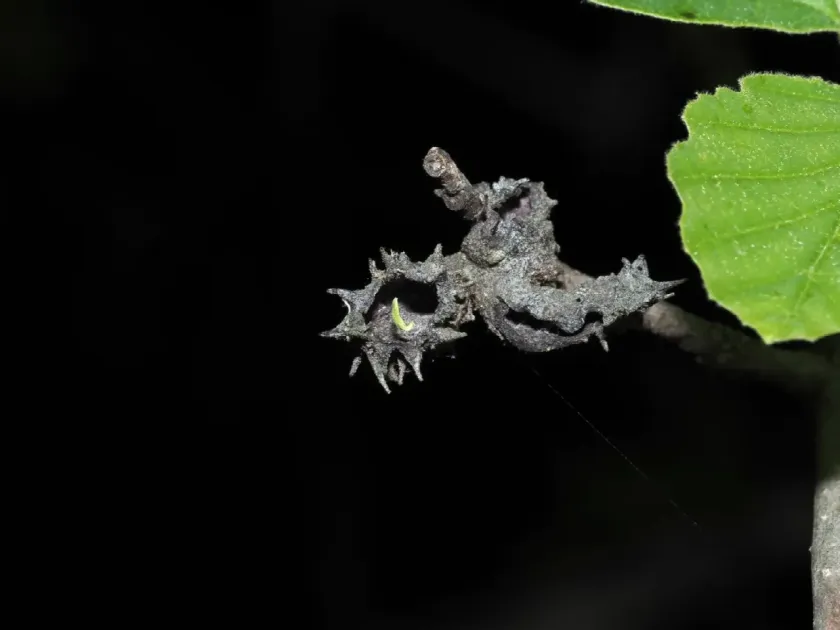
Description
How to identify
The Hamamelis aphid (Hamamelistes) belongs to the family Aphididae (aphids) in the order Hemiptera. It is a specialized pest whose life cycle is often linked to the alternation between primary and secondary host plants.
Visually, these are tiny insects, often covered with a waxy secretion. Depending on their developmental stage, they may exist as winged or wingless forms, adapted for feeding or migration between hosts.
Special attention should be paid to monitoring during the early growing season, when larvae emerge from overwintered eggs. At this point, insects are most susceptible to insecticide treatment.
The development of this pest is closely synchronized with the phenological phases of tree species. Spring temperature regimes significantly affect the rate of population maturation and the severity of bud damage.
Species identification often requires microscopic examination of morphological traits, as they can be easily confused with other leaf-feeding aphid species.
What it damages
Primary crops damaged by this pest include birch (Betula) and witch hazel (Hamamelis). The aphid feeds on plant sap, causing significant tissue deformation.
On birch leaves, the pest often forms specific galls or causes leaf curling. This disrupts the photosynthesis process and leads to premature leaf drop.
In ornamental plant nurseries, Hamamelistes can ruin the aesthetic appearance of saplings, making them unsuitable for sale due to shoot distortion.
During mass outbreaks, the pest can stunt the growth of young trees, slowing down annual growth rates and reducing the cold hardiness of infected specimens.
Beyond direct damage, aphids facilitate the development of sooty mold on honeydew — sugary excretions that attract secondary pests and ants.
When it appears
The active development phase begins in early spring, immediately after buds break on primary host plants. This is when colonies are established.
In mid-summer, winged individuals migrate to secondary host plants. This stage is critical for the development cycle as it allows the population to disperse.
By autumn, the aphids return to the primary host plants to lay eggs, which overwinter on the bark, waiting for favorable spring conditions.
The duration of each stage depends on regional climatic conditions and the proximity of both host plant types to each other.
Regular inspections of plantings during the active bud growth phase allow for the detection of infestation before dense colonies are formed.
Signs of infestation
The first sign of infestation is the appearance of characteristic swellings, spots, or galls on young leaves and buds during the spring season.
On the undersides of leaves, you can find clusters of small insects, as well as cast-off skins (exuviae) left behind after molting.
A sticky residue on the surface of leaves and young branches is a reliable indicator of the presence of sap-sucking insect colonies like aphids.
Gradual curling, yellowing, and drying of leaf edges indicate that the pest has begun actively feeding on the plant's sap.
Increased ant activity on tree trunks also indirectly indicates the presence of aphid colonies, with which ants form symbiotic relationships.
Control measures
An effective protection method is the preventative application of systemic insecticides during the bud swelling and opening period.
In home gardens, it is recommended to use oil-based products to treat tree bark in early spring, which helps destroy the pest's overwintering eggs.
The biological control method involves attracting natural predators such as ladybugs, lacewings, and hoverflies, which effectively suppress aphid populations.
An important agrotechnical practice is the removal and destruction of heavily damaged shoots with galls, which reduces the potential infestation level for the following year.
When selecting chemical control agents, it is essential to rotate products from different chemical groups to prevent the development of pesticide resistance in the pest population.
Taxonomy
- Latin name
- Hamamelistes
- Order
- Hemiptera (bugs, aphids, leafhoppers)
- Family
- Aphididae
- EPPO code
- HAMMSP
Discussion
No discussions yet — be the first.