
Little biting house fly
Haematobosca stimulans
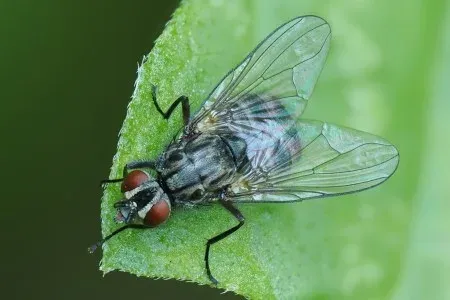
Description
How to identify
The little biting house fly (Haematobosca stimulans) belongs to the Muscidae family of the order Diptera, characterized by its specialized piercing-sucking mouthparts.
Adult flies are approximately 5-6 mm long, featuring a greyish body with dark longitudinal stripes on the thorax, resembling a common house fly but more slender.
The primary diagnostic feature is the rigid proboscis extended forward, which allows the insect to pierce the skin of hosts to feed on their blood.
Larvae are typically found in fresh manure piles, where they develop in protected, nutrient-rich environments until they pupate into the adult stage.
These flies are known for their preference to stay on the host's body for extended periods, remaining anchored while they feed, which distinguishes them from many other fly species.
What it damages
As an obligate blood-feeder, Haematobosca stimulans infests cattle and horses, causing significant physical and physiological stress to the animals.
The persistent biting causes intense pain and itching, leading to restless behavior, decreased grazing time, and lower overall productivity in dairy and beef cattle.
Lesions caused by the bites often serve as entry points for bacterial infections, secondary skin diseases, and can attract other parasitic insects that worsen the condition.
The energy loss resulting from the animal's continuous efforts to repel the flies significantly impacts weight gain and milk production, leading to financial losses for farmers.
Furthermore, these flies can act as vectors for various pathogens, potentially transmitting diseases through their contaminated mouthparts during the blood-feeding process.
When it appears
The active life cycle of Haematobosca stimulans is strictly seasonal, primarily occurring during the warm summer months from May through September in temperate climates.
Peak infestation levels usually coincide with high temperature and humidity periods, which accelerate the larval development within the dung of livestock.
The flies complete several generations per season, allowing their population to build up rapidly in areas where cattle graze without proper pasture management.
Winter survival is achieved by larvae and pupae residing deep within stable manure piles or soil, protected from freezing temperatures until the next spring season.
Adult flies emerge in synchronization with the start of the grazing season, providing immediate pressure on herds as they move into the fields.
Signs of infestation
The most noticeable sign of infestation is the erratic behavior of cattle, such as tail-switching, stamping of legs, and skin-twitching to dislodge the flies.
Clusters of flies may be visually identified on the back, flanks, and belly of the livestock, particularly during the middle of the day when activity levels are highest.
Skin irritation is evidenced by small puncture wounds, pinpoint hemorrhages, or dried blood scabs at the sites where the flies have successfully fed.
Chronic infestations may result in hair loss or thickened skin in affected areas, caused by the animal's constant rubbing against fences or structures to relieve the itching.
Sudden declines in milk yield or failure to thrive in calves are significant indicators that fly pressure in the pasture has reached a critical threshold.
Control measures
Management strategies focus on the use of insecticide-impregnated ear tags and topical pour-on treatments to minimize fly feeding directly on the animals.
Sanitation is paramount, specifically the frequent removal and proper composting of manure, which breaks the lifecycle by destroying the fly's primary breeding grounds.
Pasture rotation and the maintenance of clear, dry areas around water sources can significantly reduce the potential for larval development in the environment.
The use of biological controls, such as naturally occurring predators of fly larvae, can be integrated into a broader pest management program for sustainable farming.
- Routine inspection of herds.
- Chemical control via sprays.
- Manure management.
- Strategic pasture rotation.
- Use of repellents in barns.
Taxonomy
- Latin name
- Haematobosca stimulans
- Order
- Diptera (flies)
- Family
- Muscidae
- EPPO code
- SIPNST
Discussion
No discussions yet — be the first.