
Buffalo fly
Haematobia titillans
Description
How to identify
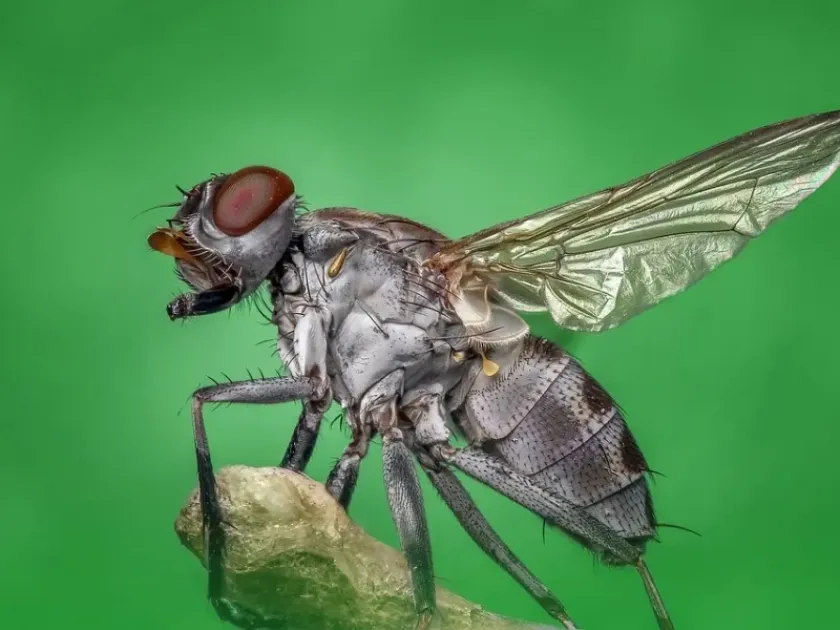
The buffalo fly Haematobia titillans belongs to the Muscidae family of the order Diptera. This small insect resembles a common housefly but possesses a highly specialized mouthpart structure.
A primary distinguishing feature of this species is a rigid, forward-pointing proboscis adapted for piercing skin and feeding on the blood of warm-blooded animals. The insect's body has a gray-brown color with characteristic dark stripes on the thorax.
Adults reach about 5–7 millimeters in size. They have large eyes, which provide excellent vision for locating hosts and reacting quickly to defensive movements made by animals while feeding.
This species prefers to remain near pastures and livestock facilities. Unlike many other fly species, buffalo flies often stay on the animal's body for extended periods, remaining attached even when the animal is in motion.
The biology of the species is closely linked to manure. Larvae develop exclusively in fresh dung, making the cleanliness of pastures and livestock housing a critical factor for managing population density.
What it damages
Although Haematobia titillans does not directly damage plants, it is a significant pest in the agricultural sector. The primary damage is inflicted on livestock, which is an integral component of the agricultural ecosystem.
These flies are obligate blood-feeders. Their constant presence on grazing animals causes extreme distress, which directly impacts the productivity of farming operations.
Repeated bites lead to dermatitis, reduced appetite in cattle, and consequently, a sharp decline in milk production and slower weight gain.
Furthermore, these flies are active vectors for various infectious and parasitic diseases. Pathogens can be transmitted through their bites, necessitating substantial veterinary intervention and expense.
The indirect impact on crop production occurs because parasite-infested animals graze less efficiently, leading to uneven vegetation consumption and the long-term degradation of pasture land.
When it appears
The active life cycle of the buffalo fly begins with the onset of consistent warmth, usually by late spring. Peak insect numbers typically occur in the second half of summer.
The development cycle from egg to adult is highly dependent on ambient temperatures. Under favorable conditions, the entire transformation process can take anywhere from one to three weeks.
These pests are most active during the morning and evening hours when air temperatures are comfortable for flight. During the heat of midday, they often hide in the shade under the animal's belly or flanks.
In autumn, as average daily temperatures drop, fly activity gradually decreases. Larval development in manure slows down, and the population enters a resting state or dies off as frost approaches.
In regions with milder climates, breeding cycles may overlap, ensuring the emergence of several generations throughout a single agricultural season.
Signs of infestation
A primary sign of herd infestation is restless behavior among animals. Cattle constantly flick their tails, twitch their skin, and attempt to shake off the parasites.
Clusters of flies can be observed on the animal's body, particularly on the back, withers, and flanks. Upon inspection, small wounds and dried blood droplets are visible at the bite sites.
Reduced productivity is a key indicator: animals spend less time grazing and more time attempting to protect themselves from insect attacks, which is noticeable through shifts in their daily rhythms.
In areas where livestock gather, intense larval development can be found in fresh manure. The presence of adult flies near pastures is a direct indicator of high infestation risk.
Prolonged exposure can lead to inflammation, eczema, and hair loss on the animal's skin due to constant irritation and scratching of the affected areas.
Control measures
The control system includes a combination of agrotechnical and chemical measures. Primary importance is placed on regular cleaning and proper management of manure, where larval development occurs.
- Application of insecticide-impregnated ear tags for livestock.
- Treatment of animals with systemic repellents and insecticides.
- Maintaining pasture hygiene and timely incorporation of dung into the soil.
- Use of traps for adult flies in areas of high concentration.
An important element is the adherence to pasture rotation principles, which prevents flies from concentrating in one area and disrupts their life cycle.
Veterinary monitoring of animal health allows for the timely detection of massive attack signs and the implementation of preventive herd treatments before the pest's peak breeding season begins.
Taxonomy
- Latin name
- Haematobia titillans
- Order
- Diptera (flies)
- Family
- Muscidae
- EPPO code
- HAEITI
Discussion
No discussions yet — be the first.