
Haematobia minuta
Haematobia minuta
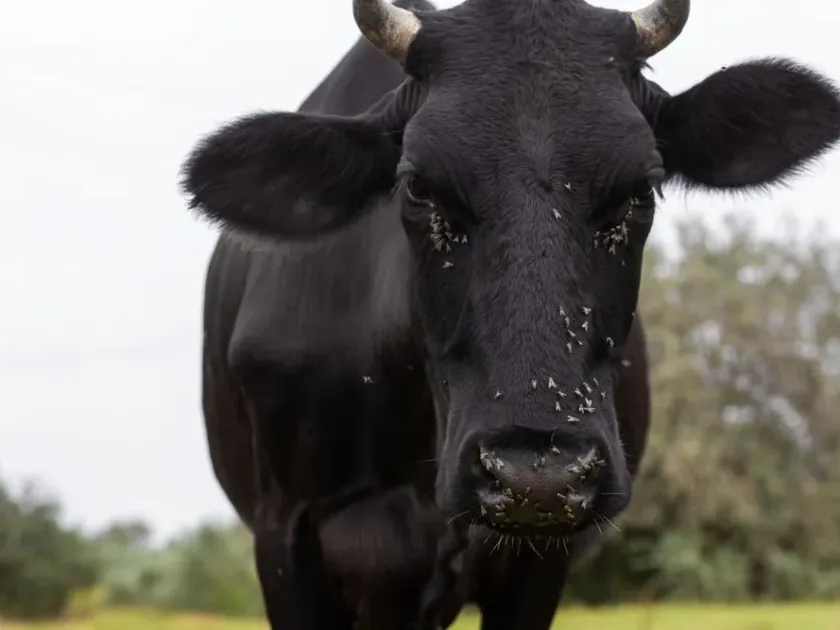
Description
How to identify
Haematobia minuta is a small dipteran insect belonging to the family Muscidae (house flies). It is physically similar to the common house fly but significantly smaller, typically measuring between 3 and 4 mm in length.
The body has a brownish-grey coloration with characteristic dark stripes on the thorax. A key identification feature is the forward-pointing, blood-piercing proboscis used for feeding on the blood of warm-blooded hosts.
The wings are clear with characteristic venation typical of muscid flies. When resting, these flies typically hold their wings flat against their back.
The life cycle of this pest is intimately linked to cattle, as the larval stages develop exclusively in fresh manure dropped on pastures.
This species is an obligate hematophage, meaning that both males and females rely on blood meals from vertebrate hosts for survival and reproduction.
What it damages
The primary host of this pest is cattle, although they may also target horses and other livestock grazing in open fields.
The flies congregate in large numbers on the backs, flanks, and withers of the animals, causing constant irritation through persistent biting.
This relentless harassment prevents cattle from grazing peacefully, leading to reduced feed intake, weight loss, and a significant decrease in milk production.
Beyond the direct impact of blood loss, these flies act as vectors for various infectious diseases and parasites that compromise herd health.
The repeated bites cause localized skin inflammation, sores, and dermatitis, which negatively affect the quality of the animal's hide.
When it appears
The mass emergence of adult flies begins when the ambient temperature consistently remains above 15–18 degrees Celsius, signaling the start of the grazing season.
Population peaks typically occur during mid-summer (July and August), when warm and humid conditions provide the best environment for larval development in manure.
In regions with milder climates, the fly's activity can span from early spring through late autumn, depending on the availability of cattle hosts.
During peak heat, the flies may move to the cooler, shaded parts of the animal's body to minimize exposure to direct sunlight.
The rapid life cycle allows the population to explode, with multiple generations developing within a single grazing season.
Signs of infestation
The most evident sign of an infestation is restless cattle behavior, characterized by constant tail switching, stomping, and skin twitching to dislodge the flies.
Visual inspection reveals clusters of flies resting on the animal's back, particularly along the spine and around the base of the horns.
Affected animals often have small, bloody scabs and localized redness at the sites of previous bites, which may become swollen.
Cattle may group together tightly to minimize the surface area exposed to fly attacks, which disrupts their natural grazing patterns.
In cases of heavy infestation, animals may appear lethargic, show signs of anemia, and exhibit poor condition due to the energy drained by the pest pressure.
Control measures
Effective control involves applying approved insecticides to the animals, including pour-on formulations, sprays, or insecticide-impregnated ear tags for long-term protection.
Sanitation of pastures, such as dragging or harrowing manure piles, is essential to dry out the breeding grounds and disrupt the larval development cycle.
Setting up bait traps or sticky traps in areas where cattle congregate (like milking parlors or night paddocks) can significantly reduce the local fly population.
Practicing rotational grazing helps manage the pest by moving animals away from areas that have become heavily contaminated with larvae.
Maintaining high standards of animal nutrition and health helps cattle better withstand the stress caused by fly pressure throughout the season.
Taxonomy
- Latin name
- Haematobia minuta
- Order
- Diptera (flies)
- Family
- Muscidae
- EPPO code
- SIPNMI
Discussion
No discussions yet — be the first.