
Horn fly
Haematobia irritans
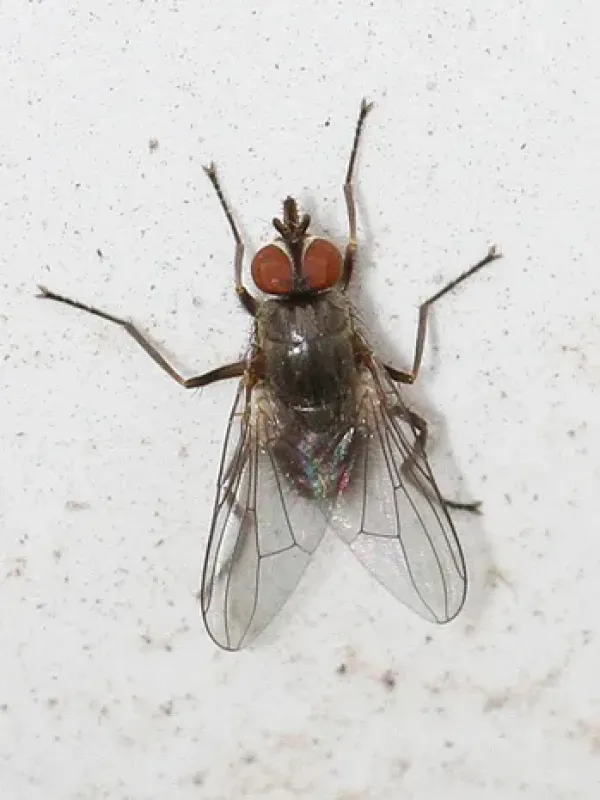
Description
How to identify
The horn fly (Haematobia irritans) is a small dipteran insect belonging to the Muscidae family, typically measuring about 3-5 mm in length.
They are characterized by a prominent proboscis extending forward from the head, which is specialized for piercing the skin of cattle to take blood meals.
Adult flies possess a greyish body with dark stripes on the thorax, distinguishing them from other common stable flies found in pastures.
The female horn fly deposits eggs exclusively into fresh cattle manure, which is essential for the survival and development of the larvae.
The larvae are creamy white, legless, and complete their development within the dung pat before pupating in the soil beneath it.
##damage##As an obligate blood-feeding parasite, the horn fly causes significant irritation and distress to cattle, which impacts their overall health and productivity.
While they do not feed on crops, their presence forces farmers to invest heavily in pest control measures to maintain the quality of their livestock.
Cattle infested with horn flies spend less time grazing and more time attempting to protect themselves, leading to reduced weight gain and lower milk yield.
Frequent blood-feeding causes skin inflammation and potential secondary bacterial infections, requiring additional veterinary intervention.
Economic losses associated with this pest are substantial, often amounting to millions of dollars in the beef and dairy industry annually.
##season##Horn fly populations typically emerge in late spring when ambient temperatures become consistently warm enough to support their rapid life cycle.
The peak activity period occurs throughout the summer months, particularly during humid weather conditions which favor larvae development in manure.
Under optimal conditions, the life cycle is completed in approximately 10 to 14 days, allowing for several generations to develop within a single season.
As autumn progresses and temperatures drop, the fly population declines, eventually dying off as winter dormancy approaches.
In warmer climates, the season for horn fly activity may extend for several months, necessitating prolonged management and monitoring efforts.
##signs##The primary sign of an infestation is observing cattle frequently twitching their skin, flicking their tails, and acting in a restless manner.
Adult flies are commonly seen clustered on the backs, sides, and shoulders of the animals, where they remain to feed for long periods.
Small blood spots or crusty scabs on the animal's skin are evidence of frequent feeding punctures made by the flies' proboscis.
A noticeable decrease in the grazing efficiency of the herd is a key behavioral indicator that the fly population threshold has been exceeded.
The presence of large numbers of flies hovering over fresh manure pats in the pasture is a definitive sign of active breeding sites.
##control##Effective management relies on a combination of chemical control and good pasture hygiene to reduce the availability of breeding sites.
Insecticide-impregnated ear tags are a popular and effective method for providing long-term protection for individual cattle in the herd.
Backrubbers and dust bags can be strategically placed in areas where cattle pass frequently to ensure self-application of insecticides.
- Applying insect growth regulators (IGRs) to feed, which pass through the animal and prevent larvae development in the manure.
- Rotational grazing systems can help limit the build-up of fly populations in specific pastures.
- Biological control through the encouragement of natural predators like dung beetles and parasitic wasps.
Integrated Pest Management (IPM) is crucial, as flies can develop resistance to certain insecticides if the same chemicals are used repeatedly.
Taxonomy
- Latin name
- Haematobia irritans
- Order
- Diptera (flies)
- Family
- Muscidae
- EPPO code
- SIPNIR
Discussion
No discussions yet — be the first.