
Fig aphid
Greenidea ficicola
Description
How to identify
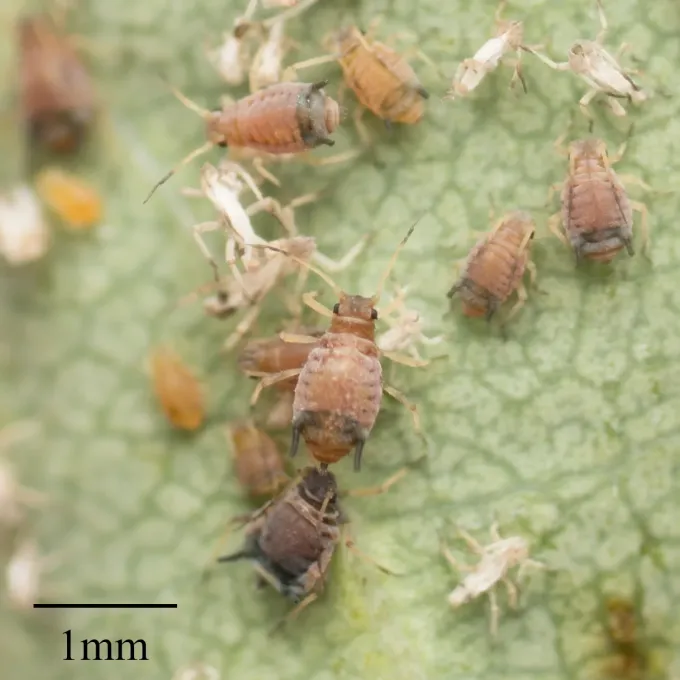
The Fig aphid (Greenidea ficicola) is a member of the Hemiptera order and the Aphididae family. It is characterized by its distinctively long and often curved siphunculi located on the dorsal side of the abdomen, which aids in identification.
Adult aphids typically exhibit a brown to dark green coloration, allowing them to blend seamlessly with the stems and foliage of the host plant. Nymphs closely resemble adults but are generally smaller in size and lighter in color.
The species reproduces primarily through parthenogenesis, enabling rapid population growth in favorable conditions. Winged morphs can easily develop and migrate to neighboring plants, facilitating the spread of the infestation within an indoor collection.
This species is highly adaptable and can thrive in various indoor environments. They tend to hide in secluded areas, such as the underside of leaves or within the growing tips of the host plant, making early detection difficult.
As an invasive species, Greenidea ficicola has spread globally, often hitchhiking on ornamental plants sold through trade nurseries. Recognizing the species is essential for effective integrated pest management.
What it damages
The Fig aphid primarily targets various species within the Ficus genus, including Ficus benjamina, Ficus elastica, and Ficus lyrata. They prefer to feed on young, succulent plant tissues where nutrient concentration is high.
By using their piercing-sucking mouthparts, these aphids drain cell sap, leading to significant nutrient depletion and physiological stress. This damage compromises the plant's overall health and ability to perform photosynthesis efficiently.
Heavy infestations result in a high concentration of aphids on the foliage and stems. Such pressure significantly hinders the plant's development and can lead to severe stunting of growth if left unchecked.
In addition to direct damage, aphids excrete honeydew, a sticky substance that serves as a medium for the growth of sooty mold. This mold covers the leaf surface, further reducing light absorption and weakening the plant.
Persistent infestations lead to a loss of ornamental value, characterized by leaf curling, chlorosis, and eventual defoliation. In extreme cases, the cumulative stress can lead to the death of the ornamental plant.
When it appears
In greenhouses and indoor environments, the Fig aphid can remain active year-round. Population growth is typically most rapid during the spring and summer months when plants are in their active growing phase.
Warm temperatures and stable indoor humidity levels accelerate the aphid's lifecycle. Under such conditions, a single generation can reach maturity in a matter of days, leading to exponential population increases.
While development may slow down during the winter, the aphids do not undergo true diapause in heated homes. They continue to survive and reproduce at a lower rate, ready to bloom as conditions improve.
Infestations are frequently introduced through the purchase of new, infested plants that have not been quarantined properly. Even a single aphid can establish a new colony within a very short timeframe.
Continuous monitoring is recommended throughout all seasons. Inspecting new additions to a collection and checking established plants regularly is the most effective way to prevent widespread outbreaks.
Signs of infestation
A primary indicator of infestation is the presence of a sticky, glistening substance on the foliage, often accompanied by black sooty mold. Deformed or curled young leaves are also common symptoms of aphid feeding.
Careful inspection of the leaf undersides reveals clusters of these aphids. The presence of ants is another common indicator, as they are often attracted to the honeydew produced by the aphid colonies.
Specific signs include:
- Yellowing of leaves and general chlorosis across the canopy.
- Visible white cast skins (exuviae) shed by aphids during their molting stages.
- The development of a black, powdery sooty mold on the leaf surfaces.
- Stunted growth or wilting of terminal shoots.
Severe cases result in premature leaf drop, beginning from the lower parts of the plant. If you notice any of these signs, immediate action is required to contain the pest and protect the plant's health.
Control measures
Early-stage infestations can be managed by mechanically removing the aphids with a soft cloth or by washing the foliage with a mild soap solution. This approach is effective at reducing the population without harsh chemicals.
In protected greenhouse environments, biological control agents such as ladybugs or lacewing larvae can be introduced to manage aphid populations naturally and sustainably.
For more severe cases, systemic insecticides containing active ingredients like imidacloprid or acetamiprid are highly effective. These treatments are absorbed by the plant, making the sap toxic to the aphids.
Adherence to the recommended application frequency is crucial to ensure all life stages of the pest are eliminated. Thorough coverage, especially on the undersides of leaves, is essential for success.
Preventative practices, such as isolating new plants for a 30-day quarantine period and maintaining plant vigor through proper nutrition, are vital. Healthy, well-maintained plants are far more resilient to aphid infestations.
Taxonomy
- Latin name
- Greenidea ficicola
- Order
- Hemiptera (bugs, aphids, leafhoppers)
- Family
- Aphididae
- EPPO code
- GREEFI
Discussion
No discussions yet — be the first.