
Greenidea
Greenidea
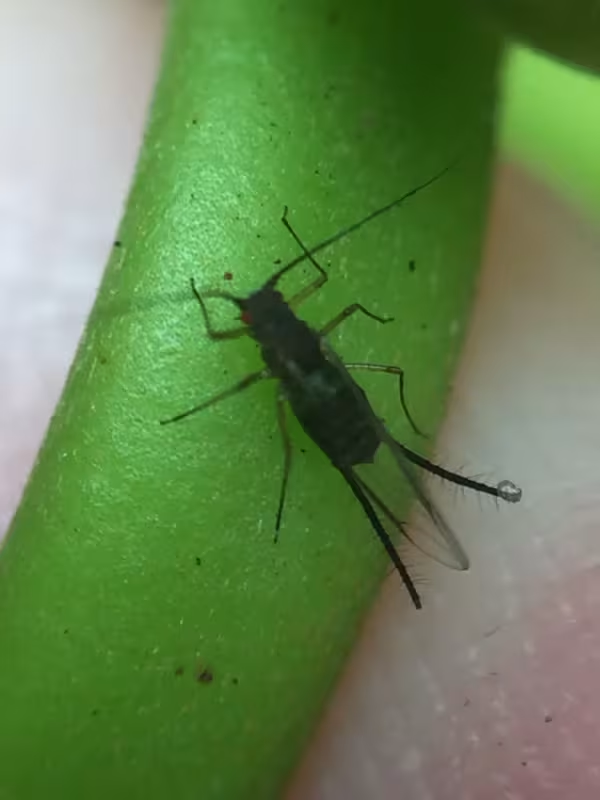
Description
How to identify
Greenidea is a genus of aphids belonging to the family Aphididae within the order Hemiptera. These insects are distinguished by their unique morphology, particularly the elongated, often curved siphunculi (cornicles) on their abdomen.
Adults typically measure between 2 to 3 millimeters in length. Their coloration varies from pale yellow to dark brown, allowing them to blend into the bark and stems of the host plants they infest.
Accurate identification requires magnification, as key taxonomic features like antennal structure and the shape of the cauda are visible only under a microscope. This makes field identification somewhat challenging for non-specialists.
These aphids are generally cryptic, living on the undersides of leaves or near the leaf axils. This positioning provides them with protection from wind, rain, and direct sunlight, allowing them to feed undisturbed for extended periods.
The life cycle includes stages of egg, nymph, and adult. Through parthenogenesis, they can rapidly build up large colonies in favorable environments, leading to significant infestations in a relatively short amount of time.
What it damages
Greenidea aphids are specific pests that primarily target certain fruit and ornamental trees. They are particularly noted for causing economic damage to guava orchards and several other tropical or temperate fruit varieties.
The primary damage is caused by feeding on plant sap. By piercing the soft tissues of young shoots and leaves, the aphid drains vital nutrients, causing the plant to lose energy and exhibit stunted growth.
During the feeding process, they excrete honeydew, a sugary substance that coats the leaves. This becomes a substrate for sooty mold, a fungus that covers the leaf surface in a black layer, effectively blocking photosynthesis.
Heavy infestations lead to leaf curling, chlorosis, and premature leaf drop. In severe cases, the deformation of new growth reduces the aesthetic value of ornamental plants and significantly impacts the fruit production of commercial crops.
Furthermore, Greenidea can act as a vector for various plant viruses. By moving from infected plants to healthy ones, they facilitate the spread of viral diseases that can permanently damage the health of the orchard.
When it appears
The seasonal activity of Greenidea is highly dependent on the local climate. In tropical regions, these aphids remain active year-round, constantly producing new generations without a distinct dormant phase.
In temperate zones, activity begins in the spring when new growth appears. The peak population growth typically occurs during warm, humid periods when plant tissues are rich in nutrients and moisture.
The winged forms of the aphid migrate to new host plants during the active growing season. This ability to disperse allows the pest to spread rapidly throughout an orchard or garden, infecting neighboring trees effectively.
As temperatures drop in late autumn, development slows down. Some species enter a winter diapause in the egg stage, laying their eggs in bark crevices to ensure the species survives the winter cold.
Effective monitoring should begin at bud break. Inspecting the tips of branches and new leaves is crucial, as these are the primary locations where initial colonizing aphids establish their presence.
Signs of infestation
A sticky residue on the upper surface of leaves is usually the first sign of an infestation. This honeydew is a clear indicator that aphids are present on the tree.
The emergence of sooty mold follows the honeydew secretion. Dark, fuzzy patches appearing on the foliage are a sign that the aphid colony has been present for some time and has reached a high population density.
Curling and distorted leaves are significant signs of stress caused by sap feeding. The aphids target the most tender parts of the plant, which prevents proper expansion and leaf development.
The presence of ants is a strong indicator of an aphid colony. Ants form a mutualistic relationship with Greenidea, protecting them from predators in exchange for the sugary honeydew they secrete.
Accumulated white or translucent cast skins (exuviae) left behind after molting are visible on leaves and twigs, confirming that the colony is actively developing and shedding its exoskeleton.
Control measures
Cultural control is the first line of defense. Pruning and removing heavily infested branches helps reduce the overall population size and improves airflow, which makes the plant less hospitable to aphids.
Biological control methods involve encouraging natural enemies such as ladybeetles, lacewings, and hoverfly larvae, which are highly efficient at preying upon aphid colonies in garden and orchard settings.
Chemical control may be necessary during severe outbreaks. Systemic insecticides are generally the most effective as they are absorbed into the plant's vascular system, ensuring the pest consumes the chemical during feeding.
To manage resistance, it is vital to rotate insecticides with different modes of action. Greenidea populations can adapt quickly, so relying on a single class of chemical is discouraged in professional IPM programs.
- Monitor trees regularly during the spring growth flush.
- Manage ant populations to prevent them from protecting aphids.
- Use insecticidal oils or soaps for early-stage contact control.
- Avoid excessive nitrogen fertilization, which creates soft growth attractive to aphids.
- Apply biological control agents where chemical impact must be minimized.
Taxonomy
- Latin name
- Greenidea
- Order
- Hemiptera (bugs, aphids, leafhoppers)
- Family
- Aphididae
- EPPO code
- GREESP
Discussion
No discussions yet — be the first.