
Spotted Graphomyia
Graphomyia maculata
Description
How to identify
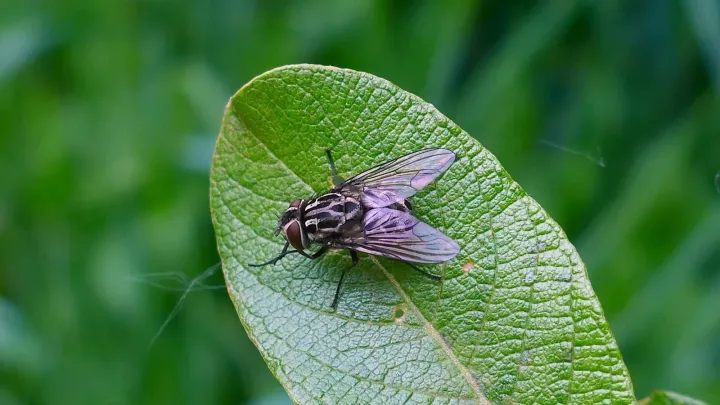
Spotted Graphomyia (Graphomyia maculata) is a member of the Muscidae family. This fly is easily recognizable due to its distinct morphological features that set it apart from other dipterans.
Adult flies typically measure between 6 and 9 mm. The abdomen exhibits a grey to yellowish-brown coloration marked with characteristic dark spots, which gives the species its name.
The head features large, prominent compound eyes. Its wings are clear with specific venation patterns common to the house fly family.
The larvae are cryptic, thriving in decaying organic matter, manure, or humus-rich soils, often found in environments near agricultural operations.
While adults are frequently observed on flowers, the larval stage is the one of primary concern for agronomists due to its life cycle in soil media.
What it damages
Graphomyia maculata is not classified as a primary crop pest, but it can cause indirect damage, particularly in controlled environments like greenhouses.
The main risk comes from larvae feeding on decaying organic materials near the roots, which can occasionally damage the root systems of weakened seedlings.
The adult flies are potential vectors for various plant pathogens, carrying bacteria and fungal spores from infested organic waste to healthy crops.
By damaging the roots, larvae create entry points for secondary infections such as root rot, leading to stunted growth and loss of plant vigor.
Crops grown in soil mixes rich in uncomposted organic matter are the most susceptible to larval presence and potential associated damage.
When it appears
The activity of Spotted Graphomyia begins with the arrival of spring, usually when temperatures consistently remain above +12°C.
Peak population levels of adult flies are typically observed during the mid-summer months, coinciding with the peak vegetative growth phase of crops.
Under optimal conditions, the species can complete multiple generations within a single growing season, allowing for rapid population buildup.
As temperatures decline in autumn, the flies enter a dormant state, overwintering as larvae or pupae within the soil or plant debris.
In greenhouses, if temperature and moisture levels are kept constant, the developmental cycle can occur year-round, requiring continuous monitoring.
Signs of infestation
One of the primary signs of a population increase is the mass presence of adult flies on the soil surface or resting on foliage.
Infested plants often display symptoms of stress, such as leaf yellowing, loss of turgor, and significantly slower development rates.
Inspecting the root zone often reveals the presence of whitish, maggot-like larvae thriving in the moist organic substrate.
Visible decay around the plant collar, accompanied by excessive fly activity, is a clear indicator that the substrate may be over-fertilized with raw organic matter.
Unexpected stunted growth in seedlings despite regular watering and fertilization should prompt an investigation into soil-dwelling insect larvae.
Control measures
Effective management begins with strict agricultural hygiene, primarily ensuring that manure and compost are fully decomposed before application.
Regular cultivation and stirring of the topsoil layers help disrupt the larvae's habitat, exposing them to desiccation and reducing their survival rate.
Yellow sticky traps are highly effective at capturing adult flies, providing a non-chemical method to monitor and reduce the overall population.
- Application of biological insecticides based on entomopathogenic fungi.
- Sanitary removal of all crop residues immediately after harvest.
- Management of soil moisture to prevent anaerobic conditions and decay.
For severe infestations, chemical insecticides approved for the specific crop may be used, provided that safety regulations and application intervals are strictly followed.
Taxonomy
- Latin name
- Graphomyia maculata
- Order
- Diptera (flies)
- Family
- Muscidae
- EPPO code
- GRMYMA
Discussion
No discussions yet — be the first.