
Graphomyia
Graphomyia
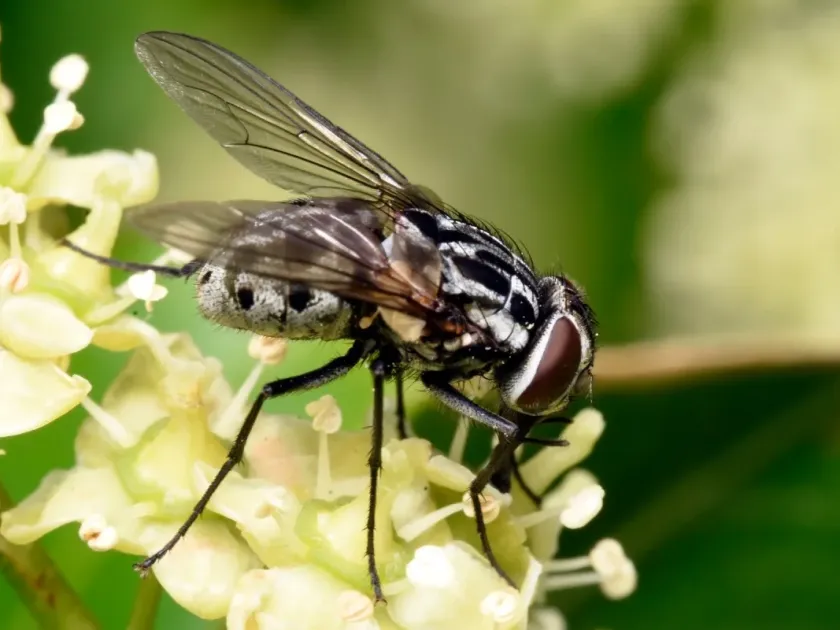
Description
How to identify
Graphomyia is a genus of flies belonging to the Muscidae family within the order Diptera, widely recognized in entomological studies.
These flies are characterized by a distinct, often mottled appearance, which provides camouflage against various environments during their flight.
Morphologically, adults possess standard muscid features, including specific wing venation patterns and specialized mouthparts for liquid feeding.
The developmental process involves a complete metamorphosis, progressing through egg, three larval stages, puparium, and adult stages.
Identification at the species level usually requires microscopic examination of the male terminalia to distinguish between similar-looking muscids.
What it damages
Graphomyia species are generally considered beneficial or neutral in agricultural ecosystems, often acting as predators or saprophytes.
They do not typically consume healthy plant tissue, but they may inadvertently transport spores or pathogens that cause plant diseases.
Direct damage to crops is rare and usually limited to minor physical disturbances caused by female flies during oviposition.
In some agricultural contexts, their role as pollinators for blooming weeds or crops provides a net benefit that offsets minor nuisances.
Heavy infestations of these flies often serve as bio-indicators of excessive organic decay or poor sanitation within the farming facility.
When it appears
Adult emergence typically begins in late spring, once temperatures consistently reach levels suitable for insect metabolic activity.
The flies remain active throughout the summer, with population peaks usually aligning with periods of high humidity and heat.
As autumn approaches and temperatures decline, the population transitions into the pupal stage, which serves as the overwintering form.
Daily activity is most pronounced during warm, sunny hours, when the flies are most mobile and active in foraging for nutrients.
The lifespan of each generation is significantly influenced by the availability of organic matter needed for larval development.
Signs of infestation
The primary sign of a Graphomyia presence is the visual observation of adults resting on plant leaves or floral structures.
Their fecal spots, appearing as small dark droplets on the foliage, can indicate a high density of flies in a specific area.
Evidence of larvae is usually hidden within compost, decaying manure, or moist organic debris located at the base of plants.
Increased fly activity around irrigation sources or damp soil patches is a clear indicator of their presence on the field.
In greenhouse environments, visual monitoring of light traps often yields the first data points regarding local population shifts.
Control measures
Dedicated chemical control programs for Graphomyia are rarely required due to their status as secondary pests or beneficial insects.
Integrated Pest Management (IPM) strategies, such as proper disposal of organic waste and soil management, are sufficient for control.
Maintaining proper ventilation and reducing soil moisture in greenhouses prevents the development of suitable breeding sites for the larvae.
Biological control using parasitic wasps or entomopathogenic fungi can naturally regulate populations if they reach undesirable levels.
If insecticides are necessary for other, more dangerous pests, the application schedule usually provides effective control for Graphomyia as well.
Taxonomy
- Latin name
- Graphomyia
- Order
- Diptera (flies)
- Family
- Muscidae
- EPPO code
- GRMYSP
Discussion
No discussions yet — be the first.