
Maple leaf blotch miner
Gracillaria negundella
Description
How to identify
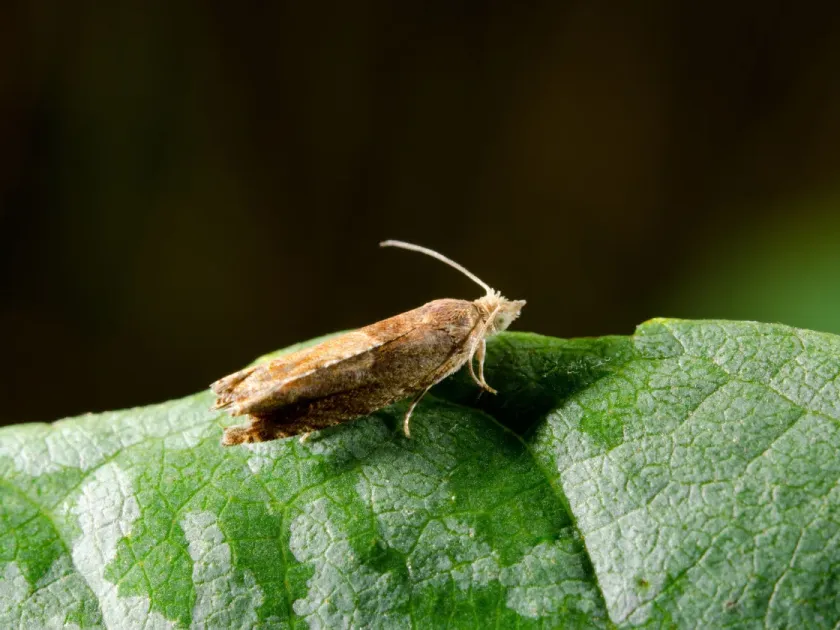
The maple leaf blotch miner (Gracillaria negundella) is a small moth species belonging to the order Lepidoptera and the family Gracillariidae.
These moths are recognized for their very small size, typically having a wingspan of only 10 to 12 millimeters, making them difficult to spot in nature.
The adult moths usually display brown or golden-toned wings with intricate patterns, providing excellent camouflage against the bark of host trees.
The larvae are specialized leaf miners, meaning they live and feed between the upper and lower epidermal layers of the leaf tissue.
Their classification as Gracillariidae highlights their life cycle strategy of creating distinct, often blotch-like or tubular mines in foliage.
What it damages
The primary host for this pest is the maple tree, specifically the boxelder or Manitoba maple (Acer negundo), which is highly susceptible.
The damage is caused by larvae consuming the leaf mesophyll, which creates empty, discolored spots known as mines within the leaf blades.
Heavy infestations reduce the overall photosynthetic capacity of the tree, potentially leading to general weakness and stress in affected plants.
Young trees in nurseries are at particular risk, as significant defoliation can stunt growth and ruin the aesthetic value of the saplings.
In mature trees, while the damage is often cosmetic, persistent multi-year outbreaks can cause premature leaf drop and twig dieback.
When it appears
The life cycle begins in early spring when overwintering adult moths emerge to lay eggs on the newly developing maple leaves.
The first generation of larvae typically appears in late spring, coinciding with the period of rapid foliage expansion on host trees.
This species is capable of completing several generations within a single growing season if the weather remains warm and favorable.
Peak population levels often occur in mid-to-late summer, resulting in the most visible and widespread leaf damage during these months.
As autumn approaches, the final generation enters a pupal stage, often utilizing leaf folds or ground litter as a site to survive the winter.
Signs of infestation
The most prominent sign of infestation is the appearance of pale, discolored blotches or winding tunnels on the surface of the leaves.
As larvae grow and mine larger areas, the damaged leaf tissue often turns brown, dries out, and eventually curls into a tight, webbed tube.
Observing the canopy will reveal clusters of distorted, curled leaves, which serve as a clear indicator of a moth infestation.
Close inspection of the underside of these curled leaves will often reveal the presence of larval frass and remnants of the active mine.
- Small discolored leaf mines
- Curled and webbed leaf tips
- Premature leaf yellowing and drop
- Presence of tiny moths in the canopy
- Visible larval feeding damage
Control measures
Effective sanitation is a critical first step, which involves collecting and destroying fallen leaves to eliminate pupae overwintering on the ground.
Systemic insecticides applied when larvae are in their early stages of feeding can provide significant control and prevent widespread canopy damage.
Biological control, such as encouraging the presence of parasitic wasps, can help keep moth populations below the economic threshold.
Monitoring the flight activity of adult moths using traps helps to determine the precise timing for necessary chemical applications.
Promoting overall tree vigor through adequate watering and fertilization helps trees withstand the impact of minor infestations and promotes faster recovery.
Taxonomy
- Latin name
- Gracillaria negundella
- Order
- Lepidoptera (butterflies)
- Family
- Gracillariidae
- EPPO code
- GRACNE
Discussion
No discussions yet — be the first.