
Beet leaf moth
Gracillaria fidella
Description
How to identify
The beet leaf moth (Gracillaria fidella) is a small lepidopteran insect belonging to the Gracillariidae family, known for its specific impact on the Chenopodiaceae and Amaranthaceae plant families.
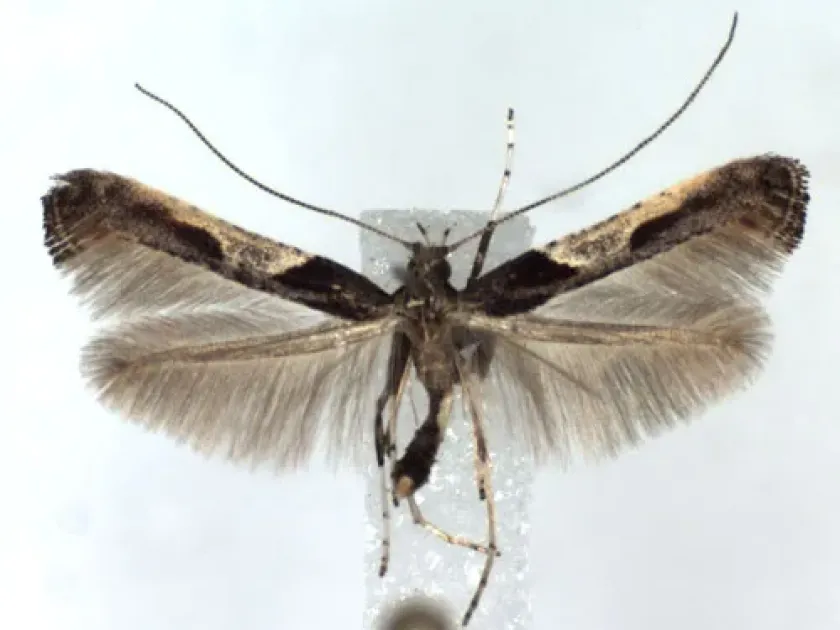
Adult moths are small, with a wingspan of approximately 10–12 mm, featuring complex patterns that provide excellent camouflage on foliage.
The life cycle encompasses four stages: egg, larva (caterpillar), pupa, and adult, with the larval stage being the most destructive to agricultural crops.
Young larvae are strictly leaf-miners, tunneling inside the leaf tissue to feed, while older larvae live externally within rolled leaf structures.
The species usually completes its life cycle several times during the growing season, which allows populations to build up rapidly in favorable weather conditions.
What it damages
While the moth naturally prefers wild Atriplex (orache/saltbush), it causes significant economic damage to sugar, table, and fodder beets.
Larval feeding destroys the photosynthetic leaf tissue, directly impacting the plant's ability to accumulate sugar and grow large roots.
Severe infestations lead to massive defoliation, particularly in younger plants, which can stunt overall crop development significantly.
Damage to the leaf surface creates entry points for secondary pathogens and fungal diseases, further weakening the plant's health.
The physiological stress caused by the pest often leads to premature senescence of the foliage, reducing the final harvest yield and quality.
Signs of infestation
Early infestation is identified by small, translucent mines or winding tunnels created by young larvae inside the leaf tissue.
The most visible symptom is the presence of rolled or funnel-shaped leaves, held together by silk threads produced by the larvae.
Brownish necrotic patches appear on the leaves as the larvae consume the green tissue from the inside out or upon the leaf surface.
Accumulation of larval frass (excrement) within the rolled leaf sections is a clear indication of an active presence of the pest.
Close inspection of the underside of leaves during the early morning can reveal the presence of eggs or recently hatched larvae.
Control measures
Effective control starts with deep autumn plowing to disrupt the pupation cycle of the moth, reducing the overwintering population.
Cultural practices, specifically rigorous weed control (especially of Atriplex species), are crucial to eliminating alternative hosts.
Chemical intervention with systemic insecticides is recommended when larval thresholds are exceeded, ensuring the product reaches the larvae inside the leaves.
Biological control using specific entomopathogenic fungi or bacterial preparations can provide sustainable suppression during the season.
Regular field scouting using pheromone traps allows farmers to monitor population spikes and apply targeted measures at the optimal time.
Taxonomy
- Latin name
- Gracillaria fidella
- Order
- Lepidoptera (butterflies)
- Family
- Gracillariidae
- EPPO code
- GRACFI
Discussion
No discussions yet — be the first.