
Gracillaria
Gracillaria
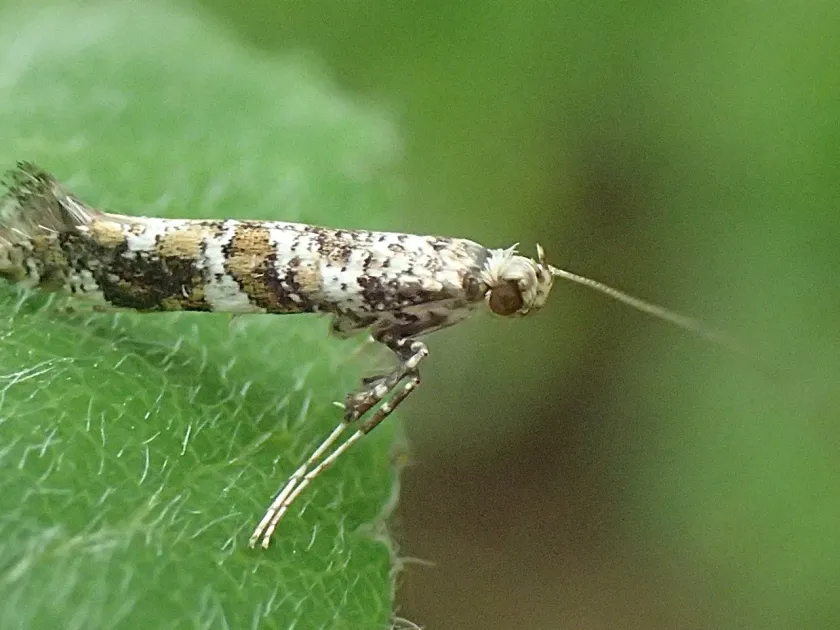
Description
How to identify
Gracillaria is a genus of small moths belonging to the family Gracillariidae. The adult insects are characterized by their narrow wings with intricate patterns and a wingspan of approximately 8–12 mm, usually exhibiting nocturnal or crepuscular activity.
The larvae, commonly known as leaf miners, possess a unique feeding mechanism. During early stages, their body is flattened with specialized mouthparts for tunneling beneath the leaf epidermis, while later stages become more cylindrical.
Taxonomically, this genus belongs to the order Lepidoptera. It contains numerous species, many of which are highly host-specific to certain tree species, making them critical subjects for forestry and agricultural monitoring programs.
Accurate identification of a specific Gracillaria species often requires microscopic examination of genital structures. However, field agronomists typically rely on distinct leaf damage patterns to categorize the pest presence.
The general biological profile includes multiple generations per year. Females deposit eggs directly onto the leaf surface, and the emerging larvae immediately penetrate the parenchymal tissues to begin their feeding cycle.
What it damages
This pest primarily affects broad-leaved trees and shrubs. Species such as maple, willow, alder, and certain fruit crops are highly susceptible, often resulting in significant economic losses in nursery production.
As leaf miners, larvae consume internal leaf tissues, creating characteristic blisters, corridors, or leaf rolls. These damaged zones lose photosynthetic efficiency, directly impacting the plant's overall energy production.
In cases of severe infestation, premature leaf drop is common. This defoliation stresses the host tree, significantly reducing its winter hardiness and its ability to maintain healthy growth in subsequent seasons.
For ornamental plants, Gracillaria is particularly detrimental due to the loss of aesthetic value. Extensive leaf spotting and curling render plants unsuitable for landscaping and urban greening purposes.
Young plantations are at the greatest risk, as immature trees lack the reserve energy to compensate for the loss of a significant portion of their leaf area. Recurring annual damage can eventually lead to seedling mortality.
When it appears
Adult activity begins early in spring as temperatures stabilize. The flight of the first generation often coincides with bud break and the emergence of fresh, tender foliage on host plants.
The life cycle involves multiple overlapping generations throughout the summer. Consequently, it is common to find eggs, larvae of various ages, and pupae present on the same tree simultaneously during mid-season.
Overwintering strategies vary by species. Most commonly, they overwinter as pupae hidden within rolled leaves or in leaf litter, though some species may overwinter as adults tucked into bark crevices.
Population peaks typically occur during the second half of summer when environmental conditions are optimal for rapid reproduction. During this phase, the number of fresh leaf mines increases exponentially.
By autumn, larvae complete their feeding and move to pupate. In regions with prolonged, warm autumns, a facultative extra generation may occur, which significantly increases the overwintering pest population.
Signs of infestation
The initial signs of infection are tiny light-colored spots or winding trails on the leaf surface. As the larva grows, the "mine" expands, eventually becoming a large blotch or a rolled tube of leaf material.
Inside the damaged areas, larval frass (excrement) is often visible as dark, granular deposits. Under close inspection with a magnifying lens, the larva itself can be seen moving within the epidermal layer.
A hallmark sign is the rolling of leaf margins or the formation of cone-shaped pockets. The foliage appears wilted and discolored, often shifting from vibrant green to dull yellow or brown shades.
The presence of adult moths can be monitored using pheromone or sticky traps. These tools help determine the onset of flight periods, allowing for precise timing of integrated pest management interventions.
- Exit holes in mines where larvae emerged for pupation.
- Premature yellowing of the tree crown in mid-summer.
- Silken threads used by larvae to pull leaf edges together.
Control measures
The primary control method is cultural: collecting and destroying fallen leaves. This sanitation practice significantly reduces the overwintering pupal population, preventing large-scale re-infestation.
Systemic insecticides are effective when applied during the period of larval emergence, while they are still on the leaf surface or just beginning to tunnel into the internal tissues.
Biological control options include bacterial formulations based on Bacillus thuringiensis. These are environmentally friendly and demonstrate high efficacy against younger larval instars.
Encouraging natural predators, such as parasitic wasps, helps maintain pest populations at manageable levels. Preserving habitats for these beneficial insects is a cornerstone of sustainable orchard management.
In large-scale plantings, density monitoring is essential. Applications should be restricted to instances where economic damage thresholds are met to optimize costs and minimize chemical exposure.
Taxonomy
- Latin name
- Gracillaria
- Order
- Lepidoptera (butterflies)
- Family
- Gracillariidae
- EPPO code
- GRACSP
Discussion
No discussions yet — be the first.