
Desert beetle
Gonocephalum torridum
Description
How to identify
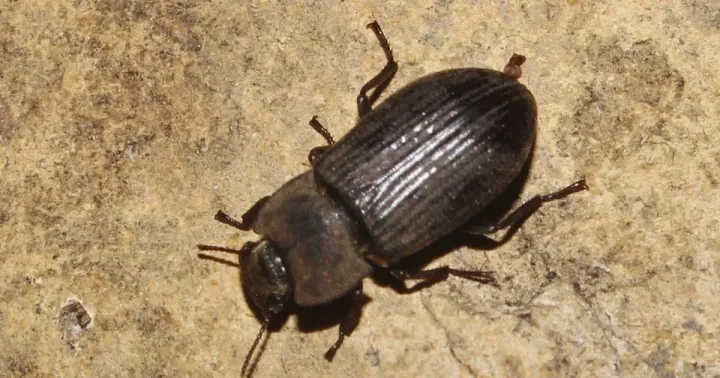
The desert beetle (Gonocephalum torridum) is a member of the Tenebrionidae family, belonging to the order Coleoptera. Adult beetles are typically 7 to 10 mm in length, featuring a matte black or dark brown exoskeleton.
The elytra of the beetle are covered in small tubercles and short bristles, which give the insect a rough texture. This appearance serves as excellent camouflage, allowing the beetle to blend in with soil particles and organic debris.
The larvae, often referred to as false wireworms, have a cylindrical, heavily sclerotized, yellow-brown body. They are distinguished from true wireworms by their slightly flattened shape and the specific structure of their abdominal segments.
Adult beetles are nocturnal, spending the daylight hours buried in soil cracks or hidden under plant residues. This habit makes detection difficult during routine field scouting conducted in the daytime.
The life cycle involves complete metamorphosis, including egg, larval, pupal, and adult stages. Both adults and larvae can overwinter deep in the soil, which increases their resilience to environmental changes.
What it damages
The desert beetle is a polyphagous pest that attacks a wide range of agricultural crops, with wheat, barley, rye, corn, and sunflowers being the most significantly affected plants.
The primary economic damage occurs when adult beetles consume the germ and endosperm of sown seeds. This feeding significantly reduces seed germination rates and creates sparse or patchy crop stands.
Larvae living within the topsoil layer feed on the underground parts of young plants. They bite through roots and the hypocotyl area of seedlings, which leads to wilting and the death of young plants.
Infestations are particularly devastating during dry spring seasons. As wild vegetation withers due to lack of moisture, these beetles migrate to cultivated fields in search of fresh food sources.
Severe infestations often necessitate field replanting, causing substantial financial losses for farmers due to the costs of additional seeds, labor, and delayed planting schedules.
Signs of infestation
A primary indicator of infestation is the sudden appearance of bare patches in the field where seedlings fail to emerge. Closer inspection of these areas often reveals evidence of feeding on the seeds.
Digging in the soil around affected areas allows for the discovery of seeds with hollowed-out cavities, confirming the presence of the beetles feeding on the embryonic tissue.
Presence of adults can be confirmed during early morning or late evening surveys by checking the soil surface near wilted plants; beetles will typically attempt to burrow back into the soil quickly.
Wilted or yellowing seedlings that exhibit severed roots or stem damage just below the soil line are classic signs of larval activity within the root zone.
A rapid decline in plant density shortly after emergence, especially in fields with light-textured or dry soils, serves as a strong warning sign for further field diagnostics.
Control measures
Effective management begins with sound agronomic practices. Deep autumn plowing is a critical measure that disturbs the insect's overwintering sites, exposing larvae to cold temperatures and natural predators.
Using high-quality insecticidal seed treatments is the most effective approach for protecting crops during the vulnerable germination phase. This ensures systemic protection for the developing seedling.
Timely planting is essential to promote rapid germination. Crops that emerge quickly are less susceptible to the feeding pressure of both adult beetles and larvae compared to slow-growing crops.
In cases of high pest pressure, soil-applied insecticides at planting or foliar applications of systemic insecticides may be necessary to suppress beetle populations and prevent economic damage.
- Implementing crop rotation to disrupt the life cycle of soil-borne pests.
- Removing weeds at field margins to eliminate potential pest reservoirs.
- Monitoring pest populations using soil pits and trapping before planting season.
Taxonomy
- Latin name
- Gonocephalum torridum
- Order
- Coleoptera (beetles)
- Family
- Tenebrionidae
- EPPO code
- GONATO
Discussion
No discussions yet — be the first.